


Plastic Pallets For Export Shipping: Why More Companies Are Replacing Wooden Pallets
Many exporters still use wooden pallets because they are familiar and affordable. However, moisture damage, export regulations, and repeated replacement costs can create problems during international shipping.
Plastic pallets are becoming a preferred choice for export shipping because they offer stable dimensions, moisture resistance, reusable performance, and easier international handling compared with traditional wooden pallets.

I have worked in the plastic pallet industry for many years and have supported customers from food, pharmaceutical, chemical, automotive, and logistics industries. Many companies initially choose wooden pallets because of their lower purchase cost. However, when they start managing long-term export operations, they often find that pallet reliability directly affects transportation efficiency and supply chain stability.
At Enlightening Pallet, we see more global buyers looking for export plastic pallets that can support repeated shipping cycles, meet hygiene requirements, and reduce operational risks.
Why Are Companies Switching From Wooden Pallets to Plastic Pallets for Export Shipping?
Wooden pallets remain common in global logistics because they are easy to source and suitable for many basic transportation needs. However, international supply chains are becoming more standardized, and companies need packaging solutions with more predictable performance.
Plastic pallets solve several common problems found in export transportation. They do not absorb water, maintain stable dimensions, and can be reused many times under suitable conditions.
For exporters, the main reasons to replace wooden pallets include better hygiene control, lower maintenance requirements, easier international movement, and more stable long-term costs.

From my experience, companies usually do not switch because wooden pallets completely fail. They switch because plastic pallets reduce uncertainty. A damaged wooden pallet, a moisture problem, or an export inspection issue can affect the entire shipment schedule.
Plastic pallets help companies create a more consistent logistics process.
Plastic Pallets vs Wooden Pallets: What Are the Main Differences?
The biggest difference between plastic pallets and wooden pallets is the material performance.
Wooden pallets are made from natural materials such as pine or hardwood. Their performance can change depending on moisture, storage conditions, and repeated handling. Plastic pallets are manufactured from engineered materials such as HDPE and PP, which provide more stable physical properties.
|
Comparison |
Wooden Pallets |
Plastic Pallets |
|
Material |
Natural wood |
HDPE or PP plastic |
|
Moisture Resistance |
Absorbs moisture |
Water resistant |
|
Export Treatment |
Requires ISPM 15 treatment in many cases |
Generally no treatment required |
|
Cleaning |
Difficult to clean completely |
Easy to wash and sanitize |
|
Service Life |
Limited by damage and moisture |
Suitable for repeated use |
|
Weight Stability |
Changes with humidity |
More consistent |
Wooden pallets can still be a practical option for short-term or low-cost transportation. However, companies with global distribution networks often prefer plastic pallets because they need reliable performance across different countries and environments.
Do Plastic Pallets Avoid ISPM 15 Export Requirements?
One of the biggest advantages of plastic pallets for export shipping is that they are not affected by wood packaging regulations.
Wooden pallets used in international trade are often required to comply with ISPM 15, which controls the treatment of wood packaging materials. This usually involves heat treatment, fumigation, and marking requirements.
Plastic pallets are made from non-wood materials, so they generally do not require ISPM 15 treatment.
For exporters, this can simplify the shipping process. Companies can reduce preparation time, avoid additional treatment procedures, and lower the risk of delays caused by pallet compliance issues.
Many customers who export to Europe, North America, and Australia choose plastic pallets because they want a more predictable international shipping process.
How Do Plastic Pallets Reduce Long-Term Shipping Costs?
Many buyers compare plastic pallets and wooden pallets based only on initial purchase price. In reality, export logistics requires a total cost analysis.
Wooden pallets usually have a lower upfront cost, but they may require more frequent replacement because of broken boards, loose nails, moisture damage, and limited reuse cycles.
Plastic pallets usually have a higher initial investment, but their longer service life and lower maintenance requirements can reduce the cost per use.
For example, a company shipping products internationally may need to consider:
How many transportation cycles the pallet can support
Whether the pallet requires repair or replacement
Whether the pallet weight affects freight costs
Whether the pallet can be reused in a closed-loop system
Plastic pallets also provide stable weight performance. Unlike wood, plastic does not absorb water during storage or transportation, which helps companies better control shipping calculations.
For air freight and export applications where space efficiency matters, nestable plastic pallets can also reduce empty pallet volume and improve transportation efficiency.
Are Plastic Pallets More Durable for International Transportation?
International shipping exposes pallets to different conditions, including humidity, temperature changes, repeated loading, and long-distance handling.
Wooden pallets may experience cracking, deformation, mold growth, and surface damage after repeated use. These problems can affect warehouse operations and increase maintenance requirements.
Plastic pallets made from HDPE or PP provide better resistance against moisture, impact, and many common chemicals.

However, pallet durability depends on correct selection. A lightweight pallet designed for simple transport may not be suitable for heavy industrial applications.
Before purchasing export plastic pallets, buyers should confirm:
Static load capacity
Dynamic load capacity
Racking requirements
Transportation method
Warehouse conditions
At Enlightening Pallet, we help customers select pallet structures based on their actual applications instead of choosing only by appearance or price.
Why Are Plastic Pallets Preferred in Food and Pharmaceutical Export?
Food and pharmaceutical industries have higher requirements for cleanliness and material safety.
Wooden pallets have natural pores that can absorb moisture, stains, and contaminants. They are also more difficult to clean completely.
Plastic pallets have smooth and non-porous surfaces, making them easier to wash and sanitize. This makes them suitable for industries that require better hygiene management.
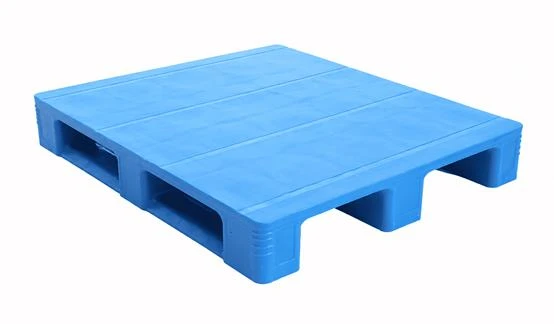
In food processing, beverage, and pharmaceutical logistics, companies often focus on long-term reliability rather than only the initial pallet cost.
Plastic pallets are commonly used for:
Food ingredients
Frozen products
Beverage distribution
Medical supplies
Clean warehouse operations
How to Choose the Right Plastic Pallets for Export Shipping?
Choosing the right export plastic pallet requires understanding the actual working environment.
First, buyers should consider the cargo. Heavy products require stronger structures, while lightweight products may benefit from nestable designs that save transportation space.
Second, the transportation method is important. Sea freight usually requires strong and moisture-resistant pallets. Air freight focuses more on lightweight designs and volume reduction.
Warehouse conditions also affect pallet selection. Companies using automated warehouses or racking systems need pallets with accurate dimensions and suitable load performance.
The right pallet is not always the cheapest option. It should match the company's transportation cycle, storage system, and long-term operating requirements.
Applications of Export Plastic Pallets
Export plastic pallets are widely used in industries that require reliable international transportation.
Food and beverage companies use plastic pallets for clean and efficient product handling. Pharmaceutical companies use them for controlled logistics environments. Chemical and automotive manufacturers choose them because of their durability and repeat-use capability.
At Enlightening Pallet, we provide plastic pallet solutions for manufacturers, distributors, and logistics companies worldwide.
FAQ About Plastic Pallets for Export Shipping
Q: Are plastic pallets better than wooden pallets for export shipping?
A: Plastic pallets provide advantages such as moisture resistance, reusable performance, and stable dimensions. The suitable choice depends on cargo requirements, transportation methods, and operating conditions.
Q: Do plastic pallets need ISPM 15 certification?
A: No. ISPM 15 applies to wood packaging materials. Plastic pallets generally do not require this treatment.
Q: How long do plastic pallets last?
A: The service life depends on material, design, load conditions, and usage environment. Properly selected plastic pallets can be reused for many years.
Q: Are plastic pallets suitable for international shipping?
A: Yes. Plastic pallets are widely used for sea freight, air freight, and global distribution because they provide stable performance.
Q: What size plastic pallet is commonly used for export?
A: Common export sizes include 1200×1000mm and 1200×800mm. The suitable size depends on container utilization, warehouse systems, and destination requirements.
About Enlightening Pallet
Enlightening Pallet is a professional plastic pallet manufacturer in China with more than 20 years of production experience.
We provide OEM and ODM plastic pallet solutions for global distributors, manufacturers, and logistics companies. With production facilities in Shanghai and Ningbo, we have advanced manufacturing equipment and extensive mold resources to support customized projects and large-volume orders.
Our services include:
Custom colors and logo printing
Customized pallet designs
OEM manufacturing support
Export packaging solutions
We focus on quality control through material inspection, production monitoring, and finished product testing. Our products support applications in food, pharmaceutical, chemical, automotive, and logistics industries.
Conclusion
Plastic pallets are becoming an important solution for export shipping because they provide stable performance, easier maintenance, and long-term value.
For companies managing international logistics, the right pallet choice can improve supply chain efficiency and reduce transportation risks.
Contact Enlightening Pallet for customized export plastic pallet solutions based on your cargo requirements, transportation methods, and warehouse conditions.
