Q: What does a spill pallet do?
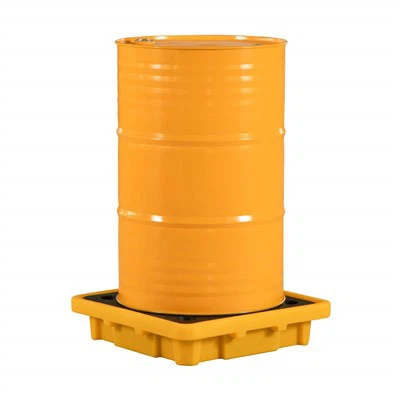
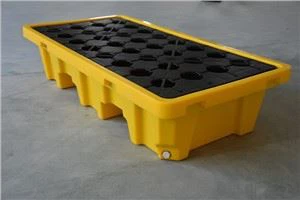
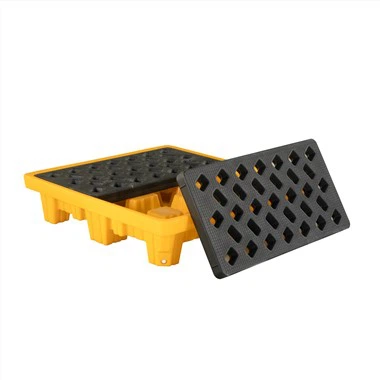
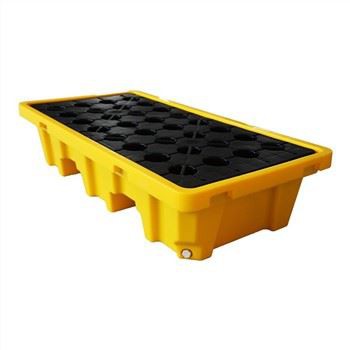
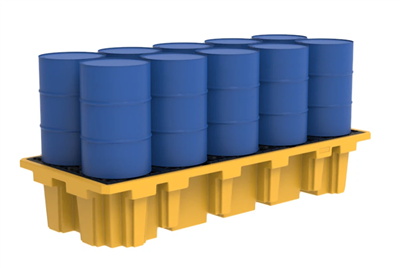
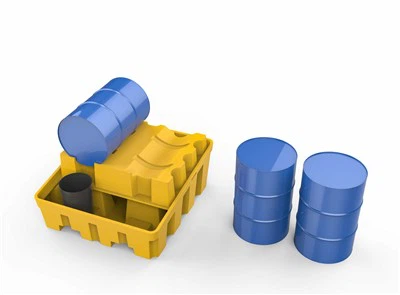
A: Spill pallets are rigid secondary spill containment systems designed to store drums and other containers of hazardous chemicals, oils and fuels. Spill containment pallets feature built-in containment sumps to prevent any spillage from leaking out and contaminating the immediate vicinity.
Q: What is the difference between a spill deck and a spill pallet?
A: Spill decks have a much lower profile than spill pallets. Many spill pallets today are around 12-14″ tall for four-drum models, and up to 17″ tall for two-drum pallets. This is because spill pallets are designed to contain larger spills in their integrated sump without any additional accessories.
Q: What is a chemical oil drum spill containment and prevention pallet?
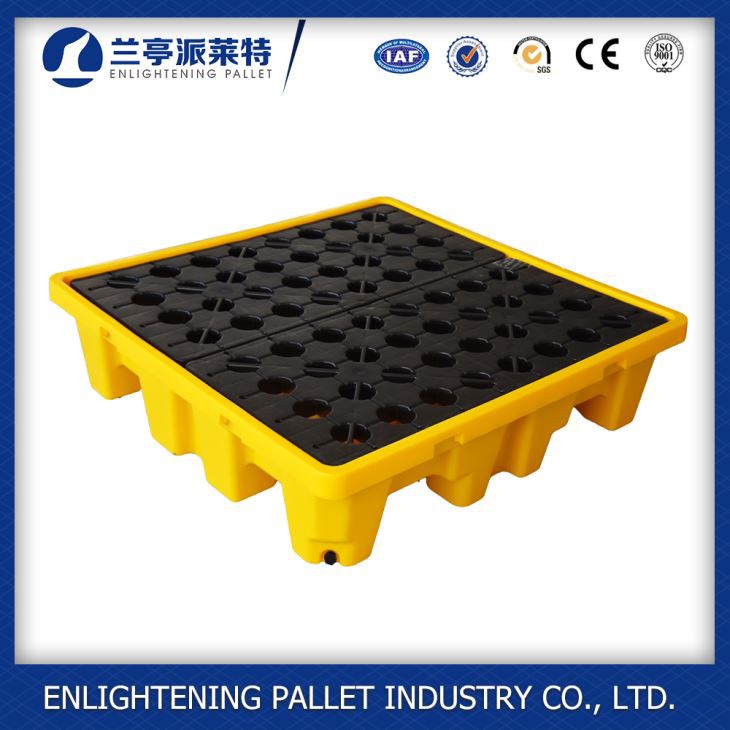
A: Chemical, oil, drum spill containment, and prevention pallet. The poly spill pallet is actually a spill-proof plastic pallet with a control sump and forklift groove. It can be used for storing, handling, and transferring oil drums and chemical drums.
Q: How do you cut plastic pallets?
A: Depending on the type of plastic you need to cut through, use a fine-toothed saw, a hacksaw, or a non-melting table saw blade. You can also drill small holes to make the plastic easier to cut through or slice through thick plastic with a piece of string.
Q: Are these spill pallets forkliftable from all four sides?
A: The 4-drum model is forkliftable from all four sides. The 1,2, and 3-drum models are forkliftable from two sides.
Q: Can I move spill pallets with drums on them?
A: No, we do not recommend moving loaded pallets.
Q: What is an anti-spill pallet?
A: Anti-spill pallet is a large tray or container that provides overflow space for liquids. Barrels, drums or other industrial containers such as an ibc sit on top of a spill pallet, and any leaks or spillages flow into the ‘sump space’ below.
Q: How does a spill pallet work?
A: A spill pallet is designed to catch any overflow liquids. It does this by providing a stable base on which barrels or drums can sit. If the barrel leaks or is damaged, the liquid inside is channelled into the overflow space (or 'sump space), where it's collected.
Q: What are spill pallets made of?
A: A vast majority of spill containment products are made from polyethylene. In many ways, polyethylene is the perfect material for spill containment applications. It's strong, moldable and has outstanding chemical resistance.
Q: Where can spill pallets be used?
A: Spill pallets should be used wherever oils and chemicals are being transported and stored in containers. Industries ranging from light manufacturing and workshops to mines and factories can all benefit from the use of spill pallets.
Q: How do you clean a spill pallet?
A: If a spill occurs into a spill pallet, the spill must be cleaned using a spill kit.
Q: Why should I use a spill pallet?
A: Spill pallets are the first line of defence to contain spills before they spread.
Q: What does a spill pallet do?
A: Spill pallets are rigid secondary spill containment systems designed to store drums and other containers of hazardous chemicals, oils and fuels. Spill containment pallets feature built-in containment sumps to prevent any spillage from leaking out and contaminating the immediate vicinity.
Q: Can you use plastic pallets?
A: Plastic models are durable and can be re-used. They are also easy to clean, making them suitable for more hygienic requirements, including the food and pharmaceutical industries. Plastic pallets can be made from recycled components and can also be recycled themselves when no longer needed.
Q: Are plastic pallets strong?
A: Plastic pallets are stronger than wood, sometimes vastly stronger. For instance, an igps plastic pallet can hold 2,800 pounds edge-rackable.
Q: How long do plastic pallets last?
A: Heat moulded plastic pallets retain their strength and structure over a 10-year lifespan. Realistically, this means that plastic pallets are usable for upwards of 10 years.
Q: Do plastic pallets rot?
A: Plastic pallets are not porous, making them immune to the damage moisture can cause, such as mold and rot.
Q: How do you clean plastic pallets?
A: High pressure washers along with an all-purpose soap can be useful to sanitize plastic pallets.
Q: Can you use plastic pallets for decking?
A: Hubs gets them free from work, they will never rot. We're using plastic pallets for the deck/base. Hubs gets them free from work, they will never rot.
Q: How do you dry plastic pallets?
A: The final stage of the pallet washing process is the drying stage. During this stage, the pallets are dried using either hot air or infrared lamps. This ensures that the pallets are completely dry before they are stored or shipped.