


Collapsible Bulk Container With Lid: When Is It Necessary?
Collapsible bulk containers are widely used for industrial storage, transport, and returnable packaging. Some models have a lid, while others have an open top. The right choice depends on the goods, the transport route, and the way workers load and unload the container.
A lid helps protect goods from dust, loss, direct contact, and unauthorized access. However, it is not necessary for every application. Large and stable parts may not need a lid when they move only inside a clean factory.
A standard lid also has limits. It does not always keep out rain, and it does not automatically increase load capacity. Buyers should understand what a lid can and cannot do before they place an order.
When Is a Lid Necessary?
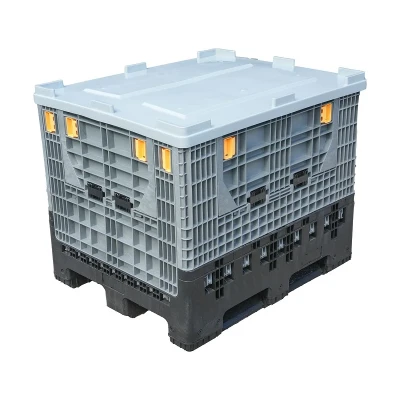
When the Goods Must Stay Clean
Electronic parts, automotive trim, precision components, and cleaned semi-finished goods often need a clean surface. Dust and warehouse debris can affect product appearance, assembly, or later processing.
A lid closes the top of the container and reduces direct exposure. It can also reduce the need for extra cleaning before the parts enter the next production step.
⚠️However, a standard lid does not make the container fully sealed. Fine dust or moisture may still enter through small gaps around the lid.
When Small or Light Items May Fall Out
Small parts and light materials can move during forklift handling or truck transport. The risk becomes higher when the goods sit close to the top edge of the container.
A lid helps keep loose goods inside. It is useful for plastic parts, hardware, packaging materials, textiles, and other light products.
⚠️The lid cannot stop parts from moving inside the box. Goods that may hit each other still need dividers, liners, foam, straps, or custom fixtures.
When the Route Has Several Transfer Points
Some goods move only inside one plant. Others pass through a warehouse, truck, logistics center, and customer site. Each transfer adds more contact with people, equipment, dust, and mixed cargo.
A collapsible bulk container with lid keeps the load covered through these steps. It is useful for third-party logistics, long transport routes, and multi-site supply chains.
The lid also reduces the chance that paper, packaging waste, or other loose materials will fall into the container during transfer.
When Goods Wait in Open Areas
Goods may wait at a loading dock, warehouse entrance, or temporary yard. These places can expose the load to dust, wind, light splashes, and sudden weather changes.
A lid gives basic top protection during short waiting periods. It can reduce direct exposure, but it does not guarantee that rainwater will stay out.
⚠️For outdoor use, buyers should check the lid edge, locking system, drainage design, and test results. Goods that are very sensitive to water may also need a waterproof liner.
When Access Must Be Controlled
High-value parts, inspection goods, and customer-owned materials may need tighter control. An open box gives no sign that someone touched or removed the goods.
A lockable lid, seal hole, or tie point can help control access. These features also show whether the container was opened during transport.
⚠️A loose-fit lid only covers the goods. It does not provide real security because anyone can lift it.
When Is a Lid Usually Not Necessary?
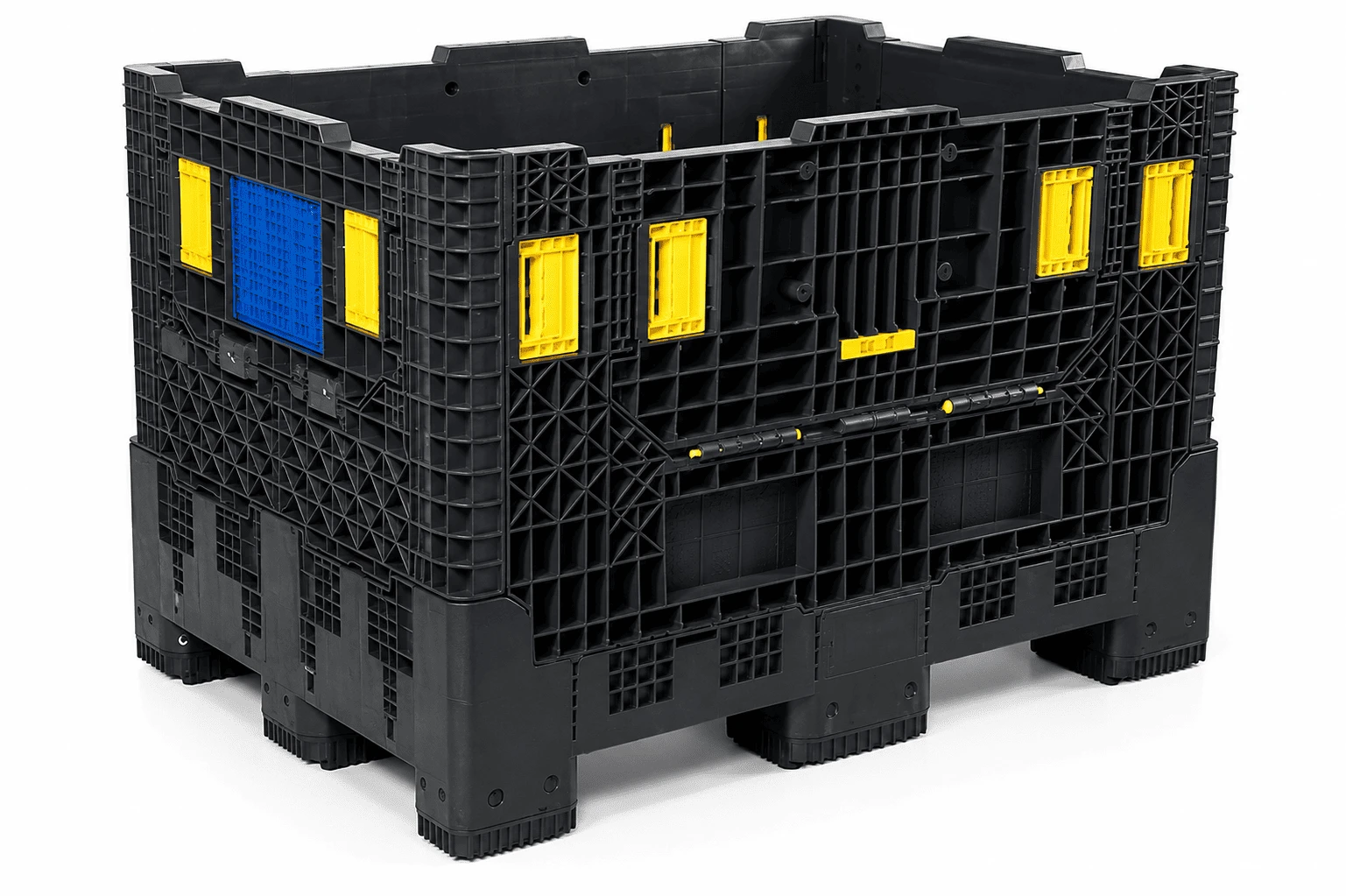
Clean Indoor Closed-Loop Transport
A lid may add little value when the container stays inside a clean plant. The route may only include the warehouse, production line, and assembly area.
If the goods do not need dust protection and cannot fall out, an open-top box may be enough. It also gives workers faster access to the contents.
⚠️Buyers should still check the load height. Goods that extend above the sidewalls may need a taller container or another packing method.
Large and Stable Parts
Large metal parts, castings, and molded components are less likely to spill out. Some of these products also have no strict surface-cleanliness requirements.
An open collapsible bulk container may suit this work. Buyers should still check the center of gravity, load position, and sharp edges.
⚠️A lid is also not suitable for parts that extend above the top of the container. The lid must sit flat on the upper rim to work correctly.
Frequent Top Loading and Picking
Some production lines need workers to load and pick goods from the top many times each day. A large removable lid adds another step to every operation.
An open-top container may be faster in this situation. A hinged lid or drop-down side door can also reduce the need to lift the full lid.
The buyer should compare the need for protection with the number of daily picking operations. A lid that slows work may not be the best choice.
How Much Protection Does a Lid Provide?
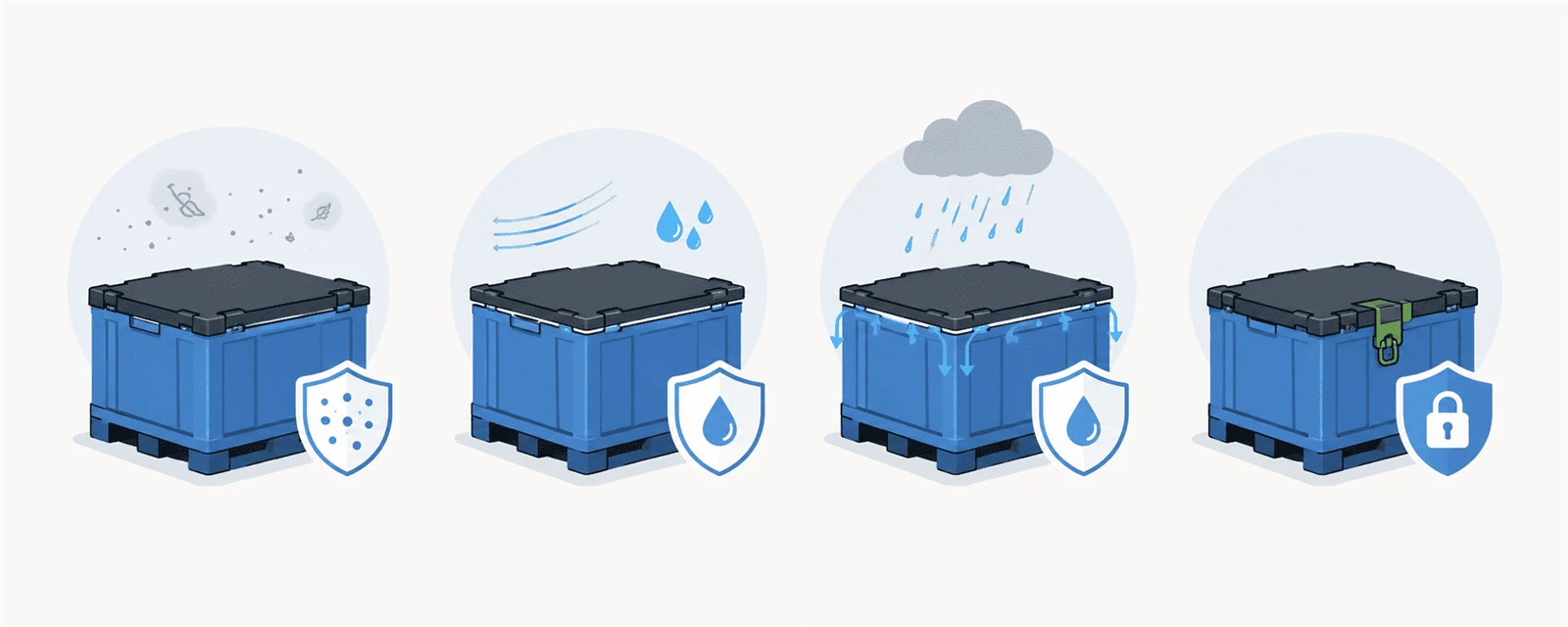
The main role of a standard lid is dust protection. It helps block paper scraps, packaging waste, and normal warehouse dirt. It also reduces direct contact with the goods.
Dust protection is not the same as sealed protection. Most lids sit on the top rim, and small gaps may remain. Fine dust, moisture, and liquid may still enter.
Water protection needs a stronger design. Buyers should check the overlapping edge, latches, seals, drainage channels, and rain test results.
Security also depends on the lid structure. A loose lid can hide the goods, but it cannot control access. A lock, seal point, or tamper-evident feature is needed when security matters.
What Can a Lid Not Solve?
It Does Not Automatically Raise Load Capacity
Static load, dynamic load, rack load, and stack load depend on the base, sidewalls, corner posts, and full container structure. A standard lid normally does not carry the main load.
A container with a lid is not always stronger than an open-top container. The load rating must come from tests on the exact model.
Buyers should ask how the load was spread and how the container was supported. Floor storage, forklift transport, stacking, and rack use create different load conditions.
It Does Not Replace Internal Packaging
A lid closes the top, but it does not stop parts from moving inside. Precision parts may still scratch, bend, or hit each other.
Dividers can separate products. Foam or EPP liners can protect surfaces. Straps and custom fixtures can hold heavy parts in place.
Use a lid to reduce top exposure. Use internal packaging to control movement, impact, and surface damage.
It Does Not Guarantee Hygiene Compliance
A lid can reduce outside dirt, but it does not make a container suitable for food, medical, or clean production by itself. Material, surface design, cleaning, and handling rules still matter.
Buyers should check material documents and the cleaning process. Grooves, hinges, and latch areas should be easy to wash and drain.
The lid must also stay clean during use. Placing it on a dirty floor can move dust back into the container.
Which Lid Type Should Buyers Choose?
Different lids solve different problems. Buyers should not only ask whether the container has a lid. They should also check how the lid connects to the box and how it stays closed.
|
Lid Type |
Main Use |
Best For |
Main Limit |
|
Loose-fit lid |
Basic dust protection |
Indoor storage and general parts |
Easy to lose and not secure |
|
Latching lid |
Keeps the lid in place |
Truck transport and repeated handling |
Latches may wear |
|
Lockable lid |
Controls access |
High-value or customer-owned goods |
Adds more operating steps |
|
Tamper-evident lid |
Shows if the box was opened |
Inspection goods and cross-company transport |
Seals need replacement |
|
Hinged lid |
Supports fast opening and closing |
Frequent warehouse picking |
Hinges need maintenance |
|
Removable lid with side door |
Keeps the top closed during access |
Line-side supply and partial picking |
Door locks need regular checks |
A loose-fit lid is simple and works well for basic dust protection. It is often enough for indoor warehouse storage and short transport routes.
A latching or lockable lid is more suitable for repeated handling and complex supply chains. Buyers should check whether the latch is easy to use and whether damaged parts can be replaced.
A side access door is useful when workers need the goods often. They can open the door and keep the top covered. This structure supports both product protection and fast picking.
How Does a Lid Affect Daily Use?
A large removable lid needs space during loading and unloading. Workers should not place it on a dirty floor because the inner surface may carry dirt back to the goods.
The container can fold after unloading, but the lid usually cannot. Buyers should confirm whether lids can nest, stack, or sit safely on folded containers during return transport.
Lids also create a spare-parts need. Removable lids may be lost, while hinges, latches, and corners may wear after repeated use.
Buyers should check replacement cost, spare-part supply, and delivery time. Easy access to replacement parts helps control long-term packaging costs.
Cleaning also needs attention. Deep grooves, complex locks, and damaged edges may hold water or dirt. A simple lid surface is easier to wash and inspect.
How Should Buyers Decide Before Ordering?
First, check the goods. Ask whether they need protection from dust, moisture, contact, loss, or unauthorized access. Also check whether the parts need dividers, liners, or fixing systems.
Second, review the full route. Include the loading point, warehouse, truck, transfer center, and final unloading point. Open areas and repeated handling increase the need for a lid.
Third, confirm the loading method. Frequent top access may suit an open box or hinged lid. Side picking may suit a container with a drop-down door.
Fourth, verify the test conditions. Ask for static, dynamic, rack, and stack load data for the exact model. Confirm whether the test included the lid and the same support method used in the real application.
Fifth, check daily management. Find out how the lid will be stored, cleaned, tracked, and replaced.
Enlightening Pallet recommends that buyers provide these details before product selection. This information helps compare an open-top container, a loose-fit lid, a lockable lid, and a side-access design.
|
Actual Condition |
Recommended Choice |
|
Precision parts must stay clean |
Use a lid |
|
Small loose parts may fall out |
Use a lid |
|
Goods pass through several logistics points |
Use a lid |
|
Access to high-value goods must be controlled |
Use a lockable or sealed lid |
|
Goods move a short distance inside a clean plant |
The lid may be optional |
|
The load contains large and stable industrial parts |
An open top may be enough |
|
Workers pick from the top many times each day |
Use no lid or a hinged lid |
|
Workers pick while containers are stacked |
Use a lid with a side door |
|
Goods wait outside for a short time |
Add basic top protection |
|
Goods stay outdoors for long periods |
A standard lid is usually not enough |
Conclusion
A collapsible bulk container with lid is useful when goods need protection from dust, loss, direct contact, or unauthorized access. It also adds value on long routes, at transfer points, and in open loading areas.
A lid is not always necessary. Large and stable parts may move safely in an open-top container when the route stays inside a clean plant.
Buyers should check the lid type, protection level, loading method, and test data before placing an order. Enlightening Pallet can recommend a suitable collapsible bulk container based on the load size, weight, transport route, warehouse conditions, and picking method. Contact Us to discuss your application and receive a suitable product recommendation.
Common Questions About Bulk Container Lids
Is a collapsible bulk container lid waterproof?
A standard lid mainly reduces dust and light splashes. For waterproof use, check the seals, locking system, lid edge, and rain test.
Does the lid increase stacking capacity?
Not always. Stack strength mainly depends on the base, corner posts, sidewalls, load spread, and test conditions.
Can the container stack without a lid?
Some models can stack without a lid. Always check the design and test data for the exact model.
Can a standard lid be locked?
A loose lid usually cannot be locked. Use latches, padlock holes, or seal points when access control is required.
Can workers reach the goods without removing the lid?
Yes, if the container has a drop-down side door. This structure works well for line-side supply and frequent warehouse picking.
Can a damaged lid be replaced?
Most removable lids can be replaced, but the size and model must match. Confirm spare-part supply before ordering.
Is a lid needed for indoor warehouse storage?
A lid may be optional in a clean warehouse when the goods are stable and do not need dust protection. Use one when cleanliness or item loss is a concern.
