


What Size Plastic Pallet Do I Need? A Complete Pallet Size Guide
Choosing the wrong pallet size can cause load overhang, wasted warehouse space, poor rack fit, and higher shipping costs. I see these problems often.
I choose plastic pallet size by checking the goods first, then the rack, forklift, warehouse system, transport method, and destination.
When buyers ask me for a pallet size, I rarely give an answer from the country name alone. I first look at how the pallet will actually be used. A common size is useful only when it fits the whole logistics system.

What Plastic Pallet Sizes Do We Commonly Supply?
A buyer can easily find many pallet dimensions online. The problem starts when those dimensions do not match the products that a supplier actually makes.
At Enlightening Pallet, the main sizes I work with include 1200×800 mm, 1200×1000 mm, 1100×1100 mm, 48×48 inches, and 1500×1200 mm. We also manufacture smaller pallet pads and custom-size plastic pallets for special projects.

I normally divide these sizes by the type of load rather than simply calling one size better than another.
|
Pallet Size |
Approx. Inches |
Typical Positioning |
Typical Applications |
|
1200×800 mm |
47.2×31.5 in |
Euro-size footprint |
Food, pharmaceutical, warehouse, export |
|
1200×1000 mm |
47.2×39.4 in |
General industrial footprint |
Manufacturing, racking, warehouse, distribution |
|
1100×1100 mm |
43.3×43.3 in |
Square footprint |
Bulk goods, bags, manufacturing, logistics |
|
1219×1219 mm |
48×48 in |
Large square footprint |
Industrial handling, large cartons, factory storage |
|
1500×1200 mm |
59.1×47.2 in |
Oversized footprint |
Large industrial loads and factory handling |
I do not treat this table as a final buying answer. Two pallets can have the same length and width but completely different deck structures, bottom designs, materials, and load ratings. For example, our 1200×800 mm range includes hygienic designs for applications where cleaning and controlled handling matter. Our 1200×1000 mm range includes export, stacking, racking, and heavy-duty structures.
This is why I use pallet dimensions as the first filter, not the final specification.
How Do I Match Plastic Pallet Size to My Goods?
I have seen buyers start with a familiar pallet size and then try to make their cartons fit. I prefer to work in the opposite direction.
I first calculate the loaded footprint of the cartons, bags, drums, crates, or parts. I then choose a pallet that supports the load without excessive overhang or unnecessary empty deck space.
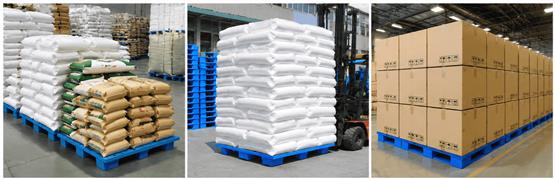
Check the Real Loaded Footprint
Suppose a buyer has cartons that create a loaded footprint close to 1180×980 mm. I would first look at a 1200×1000 mm plastic pallet. If I put the same load on a 1200×800 mm pallet, part of the cartons may extend beyond the pallet edge. The outside cartons receive less support. The load can also become less stable during forklift handling.
The opposite problem also happens. A buyer may choose a 1500×1200 mm pallet for goods that only need a 1200×1000 mm base. The larger pallet takes up more warehouse and transport space without giving the buyer a clear benefit.
I also check the shape of the load. Rectangular cartons often fit 1200×800 mm or 1200×1000 mm pallets well. A square load may work better on a 1100×1100 mm or 48×48 inch pallet. Large industrial parts may need a 1500×1200 mm footprint.
Check the Carton Arrangement
The size of one carton does not tell me enough. I also need to know how many cartons the buyer wants on each pallet layer and how many layers will be stacked.
For example, changing the direction of a carton can sometimes allow more cartons to fit on a 1200×1000 mm pallet. In another project, a square pallet may give better deck use. For a distributor or manufacturer buying large quantities, this matters. Even one extra carton per pallet can affect warehouse efficiency and transport cost across many shipments.
The basic rule I use is simple: the pallet should fit the load instead of forcing the load to fit the pallet.
Should I Choose a 1200×800 mm or 1200×1000 mm Plastic Pallet?
These are two of the plastic pallet sizes buyers ask me about most. I do not choose between them by dimensions alone.
I use 1200×800 mm when the buyer needs a Euro-size footprint or compatible handling equipment. I consider 1200×1000 mm when the cargo needs a wider deck or the existing warehouse system already uses this size.
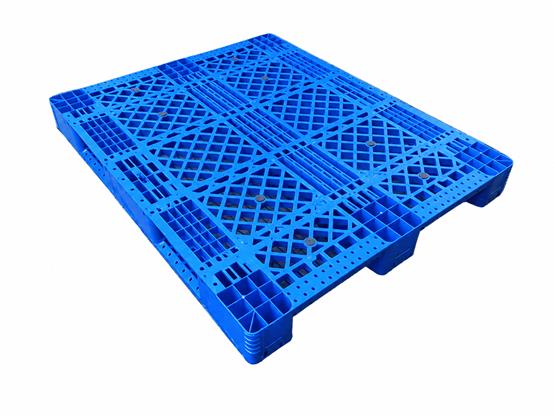
1200×800 mm Plastic Pallets
We manufacture 1200×800 mm plastic pallets for food handling, pharmaceutical logistics, warehouse storage, export, and hygienic applications. I pay special attention to this size when the buyer already uses equipment designed around a 1200×800 mm footprint.
However, pallet dimensions do not tell me whether the pallet is suitable for racking. A 1200×800 mm hygienic pallet may use a closed deck, reinforced runners, or steel reinforcement. A lightweight export pallet with the same footprint can have a completely different structure.
This is why I always check the application after confirming the size.
1200×1000 mm Plastic Pallets
Our 1200×1000 mm range covers many industrial applications. I often work with this footprint for manufacturing plants, warehouses, food and beverage operations, distribution centers, and heavy-duty storage. The extra width provides more deck area for wider cartons, bags, containers, and industrial products.
But I still check the warehouse first. If racks, conveyors, pallet wrappers, or production machines were designed around another size, changing the footprint can create compatibility problems.
I therefore do not ask which size is better in general. I ask which size fits the customer's goods and existing logistics system.
When Should I Use a 1100×1100 mm or 48×48 Inch Plastic Pallet?
Rectangular pallets work for many applications, but some loads fit better on a square base.
I consider 1100×1100 mm and 48×48 inch plastic pallets when the cargo needs a square loading area. I then compare the product dimensions, storage layout, handling equipment, and available floor space.
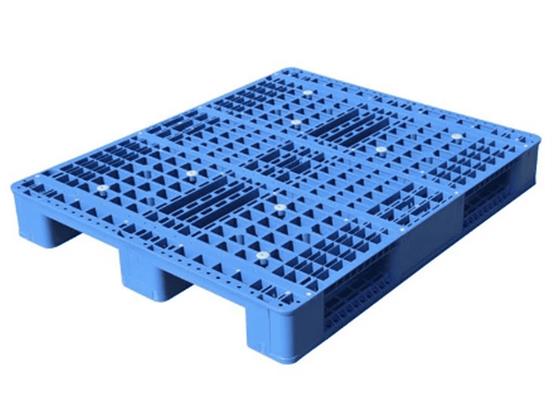
The 1100×1100 mm plastic pallet gives the buyer a balanced square loading surface. I often look at this footprint for bagged goods, bulk materials, cartons, factory materials, and other loads that do not fit a narrow rectangular deck well.
The 48×48 inch plastic pallet measures about 1219×1219 mm. It provides more loading area than a 1100×1100 mm pallet. I consider it for larger square loads and industrial handling systems where the customer's equipment already accepts this footprint.
I do not treat these two sizes as interchangeable. The difference affects warehouse floor use, truck loading patterns, rack compatibility, and the amount of support under the cargo. When a buyer wants to replace an existing square pallet, I usually ask for the current pallet dimensions, photos, or technical drawing first. This helps me avoid recommending a pallet that looks similar but does not work with the customer's equipment.
Does Plastic Pallet Size Determine Load Capacity?
A larger pallet does not automatically mean a higher load capacity. I never select a pallet by size alone.
Plastic pallet load capacity depends on the structure, material, pallet weight, bottom design, reinforcement, support points, and load condition. I check static, dynamic, and racking loads separately.

I explain the three load types in a simple way.
|
Load Type |
Meaning |
|
Static Load |
The loaded pallet stays on a flat floor. |
|
Dynamic Load |
A forklift moves the loaded pallet. |
|
Racking Load |
The loaded pallet sits across rack beams. |
Racking load needs special attention. When a pallet sits on the floor, the floor supports most of the pallet base. When it sits on rack beams, only certain parts of the pallet receive support. The center of the pallet can bend if the structure is not suitable.
I often compare this with standing on the ground and standing on a bridge. The weight may be the same, but the support underneath is different.
We manufacture different 1200×1000 mm plastic pallets for different conditions. One model may be a lightweight export pallet. Another may use three runners and steel reinforcement for repeated warehouse or racking use. The outer dimensions can be almost the same, but the actual working capacity is very different.
So when a customer tells me, "I need a 1200×1000 mm pallet," I still need to know how much weight it carries and how it will be stored.
How Do Racks and Forklifts Affect Plastic Pallet Size?
A pallet can fit the cargo and still cause problems in the warehouse. I see this when buyers check equipment compatibility too late.
I confirm rack beam spacing, forklift entry, pallet truck access, conveyor support points, and automation requirements before finalizing a plastic pallet size. The footprint must match both the cargo and the handling system.
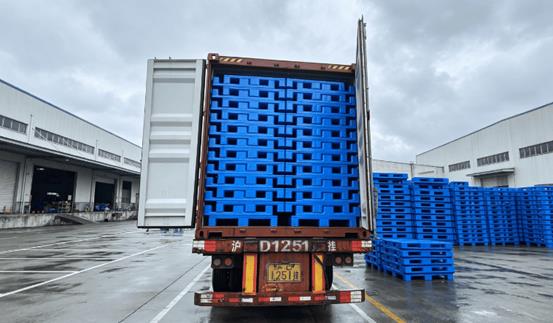
Floor storage normally gives buyers more flexibility. Rack storage is different. I need to know the beam spacing, pallet orientation, support position, and required racking load.
Forklift handling also needs more than the outside pallet dimensions. I check fork opening size, entry direction, runner structure, and whether the buyer uses forklifts, hand pallet trucks, or both. Many industrial plastic pallets provide four-way forklift entry, but the bottom structure can affect pallet truck access.
Automated warehouses require even more care. If the customer uses conveyors, AGVs, AS/RS equipment, shuttle systems, robotic palletizers, or automatic wrapping machines, I usually ask for the equipment drawing or current pallet specification.
I then compare pallet length, width, height, runner position, fork opening, support points, deck flatness, and load distribution. A small size difference may not matter to a forklift driver, but it can matter to an automated system.
Does Plastic Pallet Size Affect Container Loading?
Buyers sometimes compare pallet prices before they calculate transport efficiency. I prefer to look at the pallet and the shipment together.
Plastic pallet size affects cartons per pallet, pallets per container, floor-space use, and freight cost per unit. I compare the cargo footprint and container space before recommending a pallet for export.
A smaller pallet does not always mean better container use. For example, a 1200×1000 mm pallet may allow the buyer to place more cartons on every pallet with very little unused deck area. In this case, it can provide better overall efficiency than a smaller footprint.
The opposite is also true. If the products are small, a 1500×1200 mm pallet may create unused deck space and reduce the number of loaded pallets that fit into the transport space.
I usually look at three things together: carton size, loaded pallet size, and transport space. I also check the empty pallets. Nestable export pallets can save space when buyers need to store or return empty pallets. Heavy-duty rackable pallets usually take more space, but they are designed for repeated warehouse use.
For export projects, I normally ask buyers to send the carton dimensions, quantity per shipment, target pallet size, and container type. This helps me compare the pallet purchase cost with the actual logistics cost.
When Do I Need a Large or Custom Plastic Pallet Size?
Standard sizes solve many projects, but some industrial loads do not fit normal pallet footprints. Using a pallet that is too small can create overhang and poor load support.
I consider large or custom plastic pallets when standard sizes do not fit the goods, equipment, rack, or handling process. Our range includes large 1500×1200 mm pallets, smaller pallet pads, and custom-size pallet solutions.
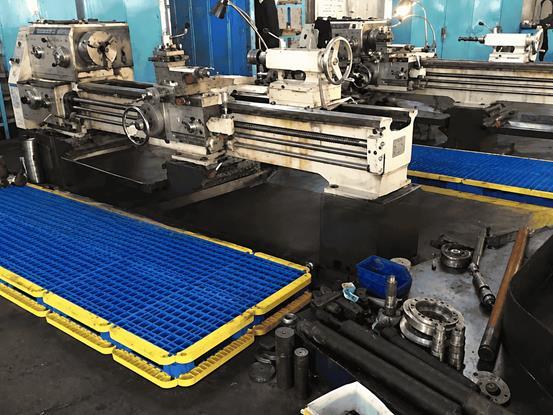
Our 1500×1200 mm heavy-duty pallet is a good example of a larger footprint. I would normally consider this size for large industrial goods, wide bags, production materials, large components, or factory transfer applications. I would not select it for normal cartons if a smaller pallet already supports the load well.
We also manufacture smaller pallet pads. For example, 600×400 mm pallet pads can work for smaller loads, floor separation, warehouse storage, food handling, and pharmaceutical applications where a full-size pallet is not required.
When neither a standard large pallet nor a smaller pad fits the project, I start looking at customization. Before developing a new mold, I always check our existing molds first. A plastic pallet mold requires a much larger investment than changing the pallet color or adding a logo. Using an existing mold can reduce cost and shorten the project process.
For a custom pallet project, I need the required dimensions, cargo weight, deck design, bottom structure, forklift entry, rack condition, material, reinforcement requirements, annual quantity, and operating environment.
What Information Should I Send a Plastic Pallet Supplier?
If a buyer only sends me a pallet size, I still need more information before I can recommend the correct model.
I recommend sending the pallet size, cargo type, maximum load, storage method, forklift requirements, application, destination, and purchase quantity. These details help me match an existing pallet to the project.
A simple project description can look like this:
|
Information |
Example |
|
Required Pallet Size |
1200×1000 mm |
|
Cargo |
Bagged flour |
|
Maximum Load |
1,000 kg |
|
Storage Method |
Floor storage or racking |
|
Handling Equipment |
Forklift / pallet truck |
|
Application |
Warehouse / factory / export |
|
Destination |
Customer's market |
|
Purchase Quantity |
500 pcs |
This information saves time for both the buyer and the supplier. For example, a message saying, "I need a 1200×1000 mm pallet" is not enough for me to select the right structure. A message saying, "I need 500 pieces of 1200×1000 mm pallets for 1,000 kg of bagged flour, moved by forklift and stored on racks" gives me a much clearer picture.
If the buyer can also send rack dimensions, cargo dimensions, current pallet photos, or technical drawings, I can narrow the choices further. My goal is not to send the buyer dozens of plastic pallet models. I prefer to remove the unsuitable options first and recommend a smaller group that actually matches the project.
Conclusion

I choose plastic pallet size by matching the goods, warehouse, equipment, load, and transport plan. The right footprint should work with the complete logistics system.
If you are not sure which pallet size fits your application, contact our team to discuss your load, storage, and handling requirements.
About Enlightening Pallet
Enlightening Pallet is a plastic pallet manufacturer based in China with more than 20 years of manufacturing experience. We provide plastic pallet solutions for brands, wholesalers, distributors, manufacturers, warehouses, and logistics companies.
We operate more than 60 injection molding and rotational molding machines. Our production and quality teams control key production steps to maintain stable quality for bulk orders.
Our Services
Products: One-stop plastic pallet solutions for warehouse, export, racking, food, pharmaceutical, manufacturing, and logistics applications.
Customization: Custom colors, logos, pallet structures, sizes, and molds based on project requirements.
International Certifications: ISO 9001, CE, REACH, RoHS, SGS, FDA, and GRS for applicable products and projects.
Quality Control
Raw Material Inspection: We check materials according to product and project requirements, including relevant RoHS and REACH requirements.
Production Control: We use automated molding equipment and controlled production processes to maintain stable pallet dimensions and structure.
Finished Product Inspection: We inspect finished pallets before shipment and use ISO 9001 quality management procedures for production and sampling control.
Production Capacity
We operate more than 60 injection molding and rotational molding machines. We manufacture standard plastic pallets in different sizes and structures. We also support custom pallet projects when existing models cannot meet the buyer's loading, equipment, or storage requirements.
Global Supply
We supply plastic pallets and reusable logistics packaging to customers in international markets. For each project, we prefer to understand the actual goods, load, equipment, warehouse, and shipping conditions before recommending a pallet. This helps buyers reduce purchasing risk and avoid compatibility problems.
