


Open Deck vs Solid Deck Plastic Pallets: Which One Should You Choose?
Choosing the wrong deck design can create cleaning problems, unstable loads, poor drainage, or extra pallet cost that could have been avoided.
Open deck plastic pallets are usually better for ventilation, drainage, lighter handling, and general logistics. Solid deck plastic pallets provide a flat loading surface and are often preferred for bags, food processing, pharmaceutical operations, and applications that need easier surface cleaning.
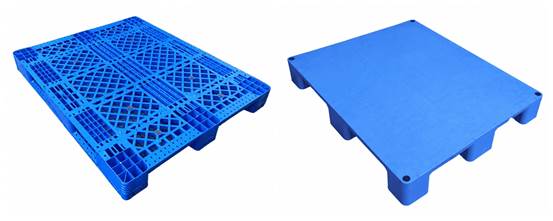
In my experience at Enlightening Pallet, I rarely choose a pallet based on the top surface alone. I first look at the product, load, warehouse conditions, cleaning method, forklift equipment, and whether the pallet will enter a rack. Once these conditions are clear, the choice between open deck and solid deck becomes much easier.
What Is the Difference Between Open Deck and Solid Deck Plastic Pallets?
A buyer can easily focus on the appearance of the pallet and miss the practical difference that the deck structure makes during daily use.
An open deck plastic pallet has holes or a grid surface that allows air and water to pass through. A solid deck plastic pallet has a continuous top surface that gives goods more complete support and reduces direct contact with dirt or debris from below.
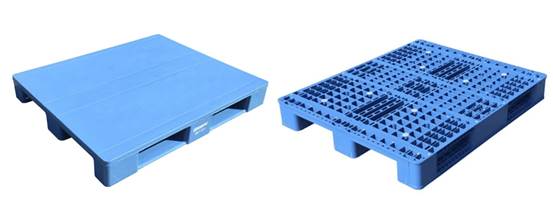
The difference sounds simple, but it affects much more than appearance. I often explain it by comparing a kitchen draining rack with a table. A draining rack lets air and water pass through easily. A table provides a flat surface that supports almost everything placed on it. Open deck and solid deck pallets follow a similar idea.
An open deck pallet normally uses a grid, perforated, or ventilated top. This structure is common in warehouses, retail distribution, beverage logistics, cold storage, agriculture, and general transport. A solid deck pallet uses a flat upper surface and is common where bags, small packages, food ingredients, or clean production environments are involved.
The table below gives buyers a quick starting point.
|
Factor |
Open Deck Plastic Pallet |
Solid Deck Plastic Pallet |
|
Top Surface |
Grid or ventilated |
Flat and solid |
|
Airflow |
Better |
Limited |
|
Drainage |
Faster |
Slower |
|
Product Support |
Good for cartons and crates |
Better for bags and small packages |
|
Surface Cleaning |
More openings to clean |
Smooth top is easier to wipe |
|
Typical Use |
Warehousing, produce, cold chain |
Food, pharma, bagged goods |
I still do not use this table as the final selection rule. The pallet base, material, reinforcement, load rating, and operating temperature can be just as important as the deck.
When Should You Choose an Open Deck Plastic Pallet?
An open deck pallet may look simpler, but using it in the wrong application can still create packaging or load stability problems.
I normally recommend open deck plastic pallets when airflow, water drainage, lower pallet weight, and general warehouse handling are more important than having a completely flat loading surface.
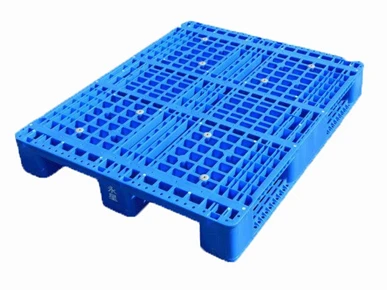
The open surface is especially useful when air needs to move around the load. Fresh fruit, vegetables, chilled food, beverage crates, and packaged frozen products are common examples. In cold storage, good air circulation around the load can help the warehouse system work more effectively.
Drainage is another practical reason. If a pallet is washed often, used in a wet processing area, or stored outdoors, water can pass through the deck instead of staying on the top surface. I have seen buyers focus only on hygiene and assume a solid surface is always easier to manage. That is not always true. If the main cleaning method uses large amounts of water, fast drainage can be a real advantage.
Open deck pallets can also reduce pallet weight because the top does not use a complete sheet of plastic. This does not mean every open pallet is lightweight or weak. Rib design, wall thickness, runners, steel bars, and resin quality still control much of the pallet's strength.
For large logistics projects, open deck pallets can also offer a practical balance between purchase cost, handling weight, and performance. I would still check the actual load before choosing one, especially if the goods include flexible sacks or small packages that could press into the deck openings.
When Should You Choose a Solid Deck Plastic Pallet?
A solid surface looks cleaner and stronger, but it does not automatically make a pallet suitable for every food, pharmaceutical, or heavy-duty application.
I normally recommend solid deck plastic pallets when goods need continuous bottom support, when small items or bags may sag through openings, or when buyers need a smooth top surface that is easier to wipe and inspect.
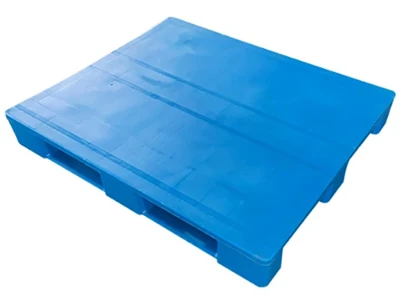
The biggest practical difference is product support. Think about a bag of flour or plastic resin sitting on a grid. The bag can press down between the openings over time. A solid deck spreads the contact area more evenly. This is why solid deck pallets are common for flour, powders, ingredients, small cartons, and flexible packaging.
The flat surface can also help reduce contact between the goods and dust or debris from below. In food processing and pharmaceutical applications, this feature can be useful when the pallet is part of a controlled handling system.
However, I always remind customers that a solid deck pallet is not automatically a hygienic pallet. A standard solid pallet may still have deep ribs, cavities, seams, or areas underneath where dirt and water can collect. A true hygienic plastic pallet usually goes further. It often has sealed surfaces, smooth corners, and fewer dirt traps.
Solid deck designs may also use more material than comparable open deck designs. This can increase pallet weight and cost. In return, the buyer gets a continuous loading surface. The value of that trade-off depends on the product being handled.
Which Plastic Pallet Is Easier to Clean and Keep Hygienic?
Many buyers tell me they want a hygienic pallet, but they often use the words "solid deck" and "hygienic pallet" as if they mean the same thing.
A solid deck pallet is usually easier to wipe across the top, while an open deck pallet allows wash water to drain faster. True hygiene depends on the whole pallet design, including ribs, corners, seams, cavities, and the way the pallet is cleaned.
I look at the cleaning method before I judge which design is easier to maintain. If workers use pressure washing, automatic washing equipment, or large amounts of water, an open deck can make drainage faster. Water and detergent can flow through the openings instead of sitting on the surface.
If workers mainly wipe, spray, or inspect the top deck, a solid surface is simpler. There are fewer openings around the load contact area, and dirt is often easier to see. This can be useful in food plants, pharmaceutical operations, clean warehouses, and ingredient handling areas.
The underside still matters. A solid deck pallet with complicated ribs underneath can take more time to clean than a well-designed open deck pallet. This is why I do not recommend buying a pallet based on a photo of the top surface alone.
For strict hygiene applications, I would check whether the pallet has sealed construction, smooth surfaces, limited cavities, and materials that can handle the customer's cleaning chemicals and temperature. The cleaning process should guide the pallet choice, not just the words "open" or "solid."
Which Deck Type Is Better for Different Industries?
Industry names can help narrow the choice, but two companies in the same industry may still need completely different pallet structures.
Open deck pallets are common in cold chain, produce, beverage, retail, and general logistics. Solid deck pallets are often used for food ingredients, pharmaceuticals, bagged goods, and operations where a flat loading surface and controlled cleaning are important.
I prefer to look at the actual task inside each industry. A food company may use solid hygienic pallets inside its production area but use open deck pallets to move packaged products to supermarkets. A beverage factory may use open deck pallets for bottled products because the cartons or crates already have strong bases. The same company may use a solid surface for bags of raw ingredients.
|
Application |
Common Choice |
Main Reason |
|
Fresh Produce |
Open Deck |
Airflow and drainage |
|
Cold Storage |
Open Deck |
Ventilation and water drainage |
|
General Warehousing |
Open Deck |
Weight and handling efficiency |
|
Retail Distribution |
Open Deck |
Good support for packaged goods |
|
Food Ingredients |
Solid Deck |
Flat support and easier surface cleaning |
|
Pharmaceutical Handling |
Solid or Hygienic Deck |
Clean surface and product protection |
|
Flour and Powder Bags |
Solid Deck |
Prevents bags sagging into openings |
|
Wet Outdoor Areas |
Open Deck |
Faster drainage |
I treat this table as a guide, not a fixed rule. A cold-storage customer may still need a solid deck because of the type of packaging. A food customer may use an open deck because the products are already sealed inside rigid cartons.
The product, load pattern, handling equipment, and cleaning rules should always come before the industry label.
Does Deck Type Affect Load Capacity and Racking Performance?
Buyers sometimes assume a solid deck must carry more weight because it has more plastic on the top, but pallet strength does not work that way.
Open deck and solid deck pallets can both handle heavy loads. Load capacity depends more on the complete structure, resin, ribs, runners, steel reinforcement, and support conditions than on whether the top deck has holes.
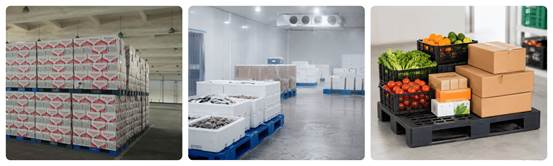
When we discuss pallet loads at Enlightening Pallet, I separate static load, dynamic load, and racking load. Static load describes the load while the pallet rests on a flat floor. Dynamic load refers to the load while a forklift or pallet truck moves the pallet. Racking load refers to the weight supported when the pallet spans warehouse rack beams.
These numbers should not be mixed together. A pallet may support a large static load on the floor but carry much less in a rack. The reason is simple. On the floor, the load is supported across much of the pallet base. On a rack, only selected parts of the pallet may touch the beams, so the pallet can bend between them.
Deck type alone cannot tell me whether a pallet is rackable. I need to know the bottom structure, rack beam spacing, load distribution, product weight, steel reinforcement, and working temperature.
I also pay attention to long-term deformation. A pallet may look strong during a short test but slowly bend when a heavy load stays on it for weeks. For racking projects, buyers should provide their rack dimensions and load conditions before placing a bulk order.
What Else Should You Check Before Buying Plastic Pallets?
Choosing between open and solid deck designs is useful, but buyers can still end up with the wrong pallet if they ignore the rest of the specification.
Before purchasing, I recommend checking load type, pallet size, racking conditions, forklift access, material, operating temperature, cleaning method, and whether the pallet is for reusable circulation or one-way export.
Pallet size is one of the first points I confirm. Common sizes include 1200 × 1000 mm, 1200 × 800 mm, 1100 × 1100 mm, and 1219 × 1016 mm. A pallet may perform well but still waste truck or warehouse space if the footprint does not match the customer's system.
I also check the bottom structure. Nine-foot pallets, three-runner pallets, and full-perimeter pallets behave differently. A forklift may work with all of them, while a manual pallet jack may need specific entry space. This should be confirmed before purchase.
Material also matters. HDPE is widely used when impact resistance and lower-temperature performance are important. PP can offer higher stiffness in suitable conditions. I do not select a pallet based on material name alone because structure and working conditions have a major effect on performance.
The final question is how long the pallet needs to stay in circulation. A one-way export pallet usually focuses more on weight, nesting, and purchase cost. A reusable pallet should focus more on impact resistance, cleaning, load performance, and long-term consistency.
At Enlightening Pallet, we normally ask customers for the product weight, pallet quantity, load method, warehouse conditions, and handling equipment before recommending a model. These details reduce the risk of paying for features that the operation does not need.
What Common Mistakes Should Buyers Avoid?
Most pallet purchasing mistakes do not happen because buyers ignore specifications. They happen because one specification gets too much attention while the actual working conditions are overlooked.
The most common mistakes are choosing only by price, assuming heavier means stronger, treating every solid deck pallet as hygienic, and using static load figures to judge racking performance.
I often see buyers compare pallet weight first. A heavier pallet contains more material in many cases, but extra kilograms do not automatically mean better performance. Rib layout, resin quality, wall thickness, mould design, and reinforcement can make a large difference. A well-designed lighter pallet may perform better in a specific job than a poorly designed heavier one.
Price creates another common problem. An open deck pallet may cost less because it uses less plastic, but buying the lowest-priced model can become expensive if it breaks during forklift handling or cannot support the required load. A solid deck pallet can also be a waste of money if the customer does not need the flat surface or added material.
I also advise buyers not to judge hygiene from the top surface alone. They should look at the underside, corners, cavities, and cleaning method.
For warehouse racking, I would never use a static load figure as the main decision point. Rack beam distance, load distribution, temperature, and pallet reinforcement all need to be checked together.
Conclusion
I choose between open deck and solid deck plastic pallets by checking the load, hygiene, drainage, racking, handling equipment, and storage conditions instead of deck style alone.
About Enlightening Pallet
We are Enlightening Pallet, a China-based plastic pallet manufacturer with more than 20 years of manufacturing experience. We supply plastic pallet solutions for brands, wholesalers, distributors, logistics companies, food businesses, pharmaceutical operations, and industrial buyers.
Our production system includes more than 60 injection moulding and rotational moulding machines. Our quality control team monitors production to help maintain stable dimensions, structure, and product performance across bulk orders.
We provide standard plastic pallets as well as OEM and ODM services. Custom options include pallet colours, logos, structures, and mould development for qualified projects. Our product and quality systems support requirements related to ISO 9001, CE, REACH, RoHS, SGS, FDA, and GRS according to the applicable product and project requirements.
For bulk purchasing projects, customers can provide us with their required pallet size, quantity, cargo weight, racking conditions, handling equipment, and application. We can then help identify a suitable open deck or solid deck plastic pallet based on the actual operating conditions.
If you are planning a bulk order, contact Enlightening Pallet with your pallet requirements, and our team will help you confirm the right solution for your application.
Open Deck vs Solid Deck Plastic Pallets FAQ
Q: Are open deck plastic pallets cheaper than solid deck pallets?
A: Open deck pallets can be more economical because they often use less plastic, but final cost also depends on pallet weight, resin, reinforcement, mould structure, and order quantity.
Q: Which plastic pallet is easier to clean?
A: Solid deck pallets usually have a smoother upper surface for wiping, while open deck pallets allow water to drain faster during washing. I choose based on the customer's cleaning process.
Q: Which pallet is better for food applications?
A: Both types can work in food logistics. I normally use solid or hygienic designs in controlled processing areas and open deck pallets for packaged food, produce, cold storage, and distribution.
Q: Can solid deck plastic pallets be used in cold storage?
A: Yes. I focus more on resin type, operating temperature, impact conditions, and load requirements than on the deck style alone.
Q: Can open deck and solid deck pallets be used on warehouse racks?
A: Some models can, but deck type does not determine racking performance. I always check runners, reinforcement, rack beam spacing, load distribution, and rated racking load first.
Q: Can both pallet types work with forklifts and pallet jacks?
A: Yes, but compatibility depends on the bottom structure and fork-entry design. I recommend confirming the equipment dimensions and required entry directions before bulk purchasing.
