


Where Can I Dispose Of Sharps Containers:The Complete Guide To Every Disposal Option
In 2024, Assateague Island's beach was temporarily closed after used needles washed ashore - a direct result of improper sharps disposal. It's a public health problem that happens more often than most people realize, and it's entirely preventable.
If you're looking for where to dispose of sharps containers, there are four main options: community drop-off sites (pharmacies, health departments), mail-back programs, authorized collection events, and professional pickup services for businesses. The right choice depends on two things - where you're located and whether your container meets the site's acceptance requirements. Both matter more than most guides will tell you.
Can You Just Toss a Sharps Container in the Trash?
The short answer is no - and in most U.S. states, it's also illegal.
Regulations vary by state. Some have explicit laws prohibiting household sharps from going into regular trash or recycling. Others have softer guidance, but the safety risk is the same everywhere: waste handlers face real puncture injury risk when loose needles or inadequately sealed containers end up in the garbage stream.
A sealed, FDA-cleared sharps container is a different matter from loose needles - but even sealed containers are not accepted in standard trash in many jurisdictions. If you're unsure what applies in your area, check safeneedledisposal.org or contact your local health department - the rules are not uniform, and assuming it's fine is the one mistake worth avoiding.
Where Can You Actually Drop Off a Sharps Container?
Finding a nearby site is simpler than it used to be - but only if your container qualifies.
Do CVS, Walgreens, or Other Pharmacies Accept Sharps Containers?
Many major pharmacy chains participate in sharps disposal programs, but participation is location-specific and volume-limited.
CVS and Walgreens do accept sharps containers at select locations - typically through in-store kiosks - but these programs are designed for personal or household use only. If you're managing higher-volume disposal (for a small clinic, a veterinary practice, or any business context), these pharmacy drop-off options won't work for you. Always call ahead before making a trip, because not every branch has the kiosk.
What About Local Health Departments and Community Sites?
Many counties and cities run free sharps drop-off programs through public health departments, and some also offer HHW (Household Hazardous Waste) facilities that accept sealed sharps containers.
To find what's available near you, go to safeneedledisposal.org and enter your zip code. The site lists nearby collection points, specifies which container types and sizes each location accepts, and notes whether the service is free.
This step matters: not every site accepts every container, so confirming before you show up saves a wasted trip. Coverage varies significantly by region - rural areas tend to have fewer options, which makes mail-back programs a more practical solution for many households.
What Is a Sharps Mail-Back Program?
A sharps mail-back program lets you ship your full sharps container to a certified disposal facility using a prepaid, pre-labeled package - no drop-off trip required.
This option works best for people who live far from community collection sites, travel frequently, or simply prefer the convenience of home-based disposal. It's also a reliable fallback when local options are limited.
Most programs sell the shipping kit separately from the container itself, which means the container you're already using needs to match the kit's size specifications - a detail that's easy to overlook when ordering. If you're selecting a sharps container with mail-back disposal in mind, check the program's accepted sizes before purchasing.
Programs like Sharps Compliance and Stericycle offer mail-back sharps disposal kits directly to consumers and small businesses, with options ranging from 1-quart to several-gallon capacities.
Some states - California notably among them - have state-run mail-back programs specifically for residents, which are often subsidized or free. If you're a sharps container supplier or distributor, this is worth knowing: end-users who understand the mail-back process are more likely to select containers in compliant sizes from the start, which reduces returns and complaints downstream.
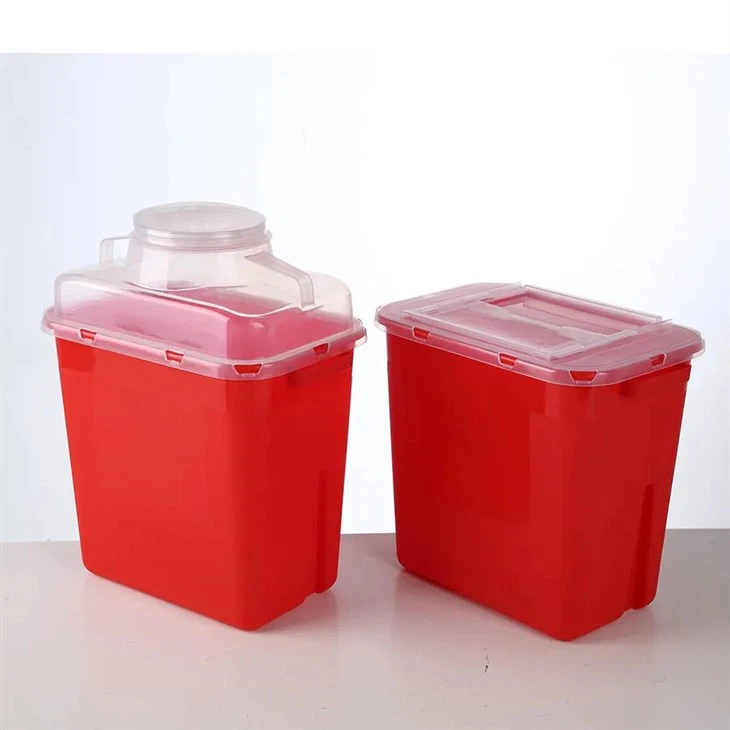
Does the Container You Use Actually Affect Your Disposal Options?
Yes - and this is the point most people miss until they're turned away at a drop-off site.
Collection sites, pharmacies, and mail-back programs all have specific container requirements. A container that isn't FDA-cleared, isn't properly sealed, or isn't the right size for a mail-back kit may simply be rejected.
FDA-cleared sharps disposal containers must be puncture-resistant, leak-proof, sealable, and labeled with a biohazard symbol. These aren't just regulatory checkboxes - they're what ensures the container can actually be handled safely at every stage of disposal.
Where Can You Get a Free Sharps Container?
If you're starting from scratch, several sources offer free containers before you even need to think about disposal.
Pharmaceutical manufacturers often provide free sharps containers to patients using their injectable medications. Eli Lilly (Mounjaro, Zepbound) and Novo Nordisk (Ozempic, Wegovy) both have patient support programs that include sharps disposal resources - check the manufacturer's website or ask your pharmacy.
Some states also require pharmacies to provide free sharps containers to patients who need them, particularly for insulin users. Local health departments are another source, especially in areas with active needle exchange or harm reduction programs.
Getting a free, FDA-cleared container up front means you start with something that will actually be accepted when it's time to dispose of it - no surprises at the drop-off counter.
Traveling, on Campus, or Injecting Daily?
Your situation changes the logistics more than you might expect.
Traveling with Sharps: What TSA Actually Allows
The TSA permits syringes and sharps containers in both carry-on and checked baggage, provided the needles are capped and the container is sealed.
That said, different airlines and destination countries have their own rules, so checking ahead is worth the five minutes. Travel-size sharps containers (typically 1 quart or smaller) are designed specifically for this use - they meet FDA standards while fitting easily into a carry-on. If you're traveling internationally, plan for disposal at your destination rather than bringing a full container back through customs.
Using Insulin or GLP-1 Medications? Plan Your Disposal Cycle Early
The higher your injection frequency, the faster your container fills - and the sooner you need a disposal plan in place.
Insulin-dependent diabetics typically inject multiple times per day, which means a standard 1-quart needle disposal container may be full within weeks. GLP-1 users (Ozempic, Mounjaro, Wegovy) inject once weekly and will fill the same container over several months.
These are very different timelines, and they affect both which container size makes sense and how often you need to locate a disposal site. For high-frequency injectors, setting up a mail-back program or identifying your nearest community drop-off before your current container is full is a much smoother approach than scrambling when it's already at capacity.
When Should You Start Looking for a Disposal Option?
The FDA recommends disposing of your sharps container when it's three-quarters full - not when it's overflowing.
At three-quarters capacity, the container is still easy to seal and transport safely. Waiting until it's packed makes proper sealing harder and increases spillage risk. The practical implication: start researching your local disposal options before you reach that point, not after. If you're relying on a mail-back program, order the prepaid kit in advance so it's ready when you need it.
Which Option Actually Fits Your Situation?
If you're a household user close to a major metro area, a pharmacy kiosk or community drop-off through safeneedledisposal.org is probably your easiest path - free, no shipping required. If you're in a rural area or simply prefer not to make a trip, a mail-back sharps disposal program gives you compliant disposal from home.
If you inject frequently (insulin users in particular), match your container size to your actual usage rate. A larger container means fewer disposal cycles to coordinate, which reduces friction over time. GLP-1 users can typically manage with a smaller container - the 1-quart size is usually sufficient for a full treatment course.
If you're a small business - a tattoo studio, veterinary clinic, or dental practice - the situation is fundamentally different. Community drop-off programs and pharmacy kiosks do not accept commercial volumes of medical needle disposal. Your only compliant path is a licensed professional sharps pickup service, such as those offered by Stericycle or Sharps Compliance. These services also require that the containers you use meet OSHA standards - which overlap with, but are not identical to, the FDA-cleared standards that apply to household users.
Conclusion
Compliant sharps disposal starts with the right container. Once you have an FDA-cleared container that matches your usage volume, your disposal options open up significantly - drop-off sites, mail-back programs, or professional pickup all become accessible.
The container isn't just a storage vessel; it's what determines where and how you can safely get rid of it.
If you're sourcing sharps containers at volume - for distribution, healthcare supply, or commercial use - container compliance and size selection are the decisions that affect every downstream step.
