What Are The 7 Key Benefits Of Using Plastic Bulk Containers?
Packaging failures cost more than the damaged goods. They slow down operations, inflate return shipping costs, and create waste that compounds over time. If your team is still relying on cardboard or wood for bulk storage and transport, the question isn't whether to switch - it's how much longer you can afford not to.
Plastic bulk containers offer seven core advantages over traditional packaging: superior durability, space-saving collapsible design, lower return shipping costs, better long-term cost efficiency, versatile industry applications, compatibility with automated warehouse systems, and measurable sustainability outcomes. Together, these make them the go-to choice for B2B operations across manufacturing, food, agriculture, chemical, and logistics sectors.
The sections below address each benefit directly - starting with the most fundamental one.
Benefit 1: Exceptional Durability Across Hundreds of Use Cycles
Most packaging fails not from a single impact, but from repeated stress across dozens of handling cycles.
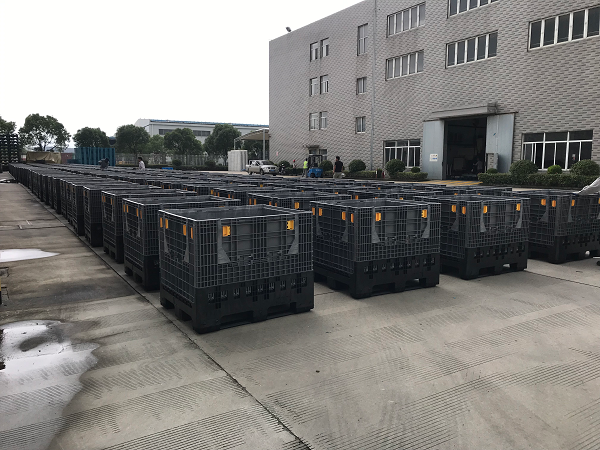
HDPE (High-Density Polyethylene) and PP (Polypropylene) are the two materials behind most quality plastic bulk containers. Both resist moisture, chemicals, and physical impact - and both are built to handle hundreds of use cycles in industrial environments, something cardboard manages once and wood manages inconsistently.
Cardboard loses structural integrity after a single trip in humid conditions. Wood absorbs moisture, warps over time, and introduces contamination risk from splinters and debris. Rigid bulk containers made from HDPE or PP hold their shape, clean easily, and don't degrade under the conditions that break everything else.
There's also a practical safety point: no sharp edges, no exposed nails, no splinter risk - details that matter when warehouse teams handle hundreds of units per shift.
Plastic vs. Wood vs. Metal: A Direct Comparison
Knowing where each material fails helps you make the right call.
| Plastic (HDPE/PP) | Wood | Metal | |
|---|---|---|---|
| Moisture resistance | Excellent | Absorbs moisture, warps | Depends on coating |
| Chemical resistance | Good | Absorbs residue | Varies by alloy |
| Weight | Lightweight | Medium | Heavy |
| Hygiene | Easy to sanitize | Difficult | Moderate |
| Export compliance | No fumigation needed | ISPM 15 required | No fumigation needed |
| Upfront cost | Mid-range | Lower | Higher |
One point often overlooked: wood packaging used in international shipments must be treated and certified under ISPM 15 (International Standards for Phytosanitary Measures No. 15) - a requirement that adds processing time and cost to every export.
Plastic bulk containers carry no such restriction. Metal outperforms plastic in extreme load-bearing scenarios, but for most standard industrial and food-grade applications, plastic offers the best balance of cost, hygiene, and practical performance.
Benefit 2: Collapsible Design That Cuts Storage Footprint by Up to 75%
Empty containers are a hidden storage problem that most operations don't account for until they've already run out of floor space.
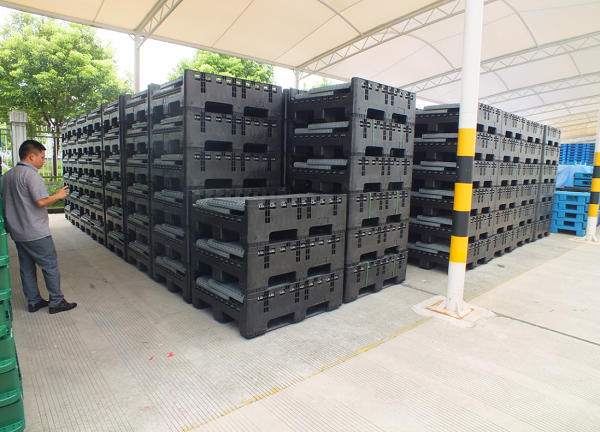
Collapsible bulk containers fold flat to roughly one-quarter of their upright volume. The same floor space that holds 10 rigid containers can hold 40 collapsed ones - a direct reduction in idle storage footprint that frees warehouse space for productive use.
When containers aren't in use, rigid units pile up in corners and block aisles. Collapsible plastic bulk containers solve this without requiring extra storage infrastructure - fold them, stack them, and store four times the quantity in the same footprint.
This space efficiency also translates directly into how many units you can move per vehicle on return journeys, which connects to the next benefit.
Benefit 3: Lower Return Freight Costs with Folding Bulk Containers
Return logistics is where most operations quietly lose money, and rigid containers are a significant part of why.
On an outbound trip, a truck carries loaded containers and uses its cargo space efficiently. On the return, rigid empty containers occupy the same volume they did when full - you're paying to move air. Folding bulk containers collapse to roughly one-quarter of their loaded volume, which means one return truck carries back proportionally more units per trip.
Over a year of regular cycles - dozens to hundreds of return shipments - that difference accumulates. The per-unit freight cost on return trips drops because each vehicle carries far more bulk containers back with the same fuel and driver cost.
For operations running high-frequency supply chains, this restructures a meaningful portion of the logistics budget. Most container articles note that collapsed units save space; few explain why that directly lowers your transport spend.
Benefit 4: Long-Term Cost Efficiency with Reusable Bulk Containers
Plastic bulk containers cost more upfront than cardboard or wood - that's true, and there's no reason to avoid saying it.
But the relevant comparison isn't unit price. It's total cost across the full usage cycle. A single reusable bulk container can be used hundreds of times. A cardboard box is used once. Over a 3-to-5-year window, the per-trip cost of reusable bulk containers typically falls well below any single-use alternative.
Here's how the cost structure actually breaks down. Purchase frequency drops sharply - you're not reordering every shipment. Product damage rates fall because rigid, consistent container walls protect contents more reliably than cardboard.
Labor costs decrease because your team isn't repacking, taping, or disposing of spent boxes.
And HDPE retains recyclable material value at end of service life, rather than becoming a disposal expense. The right comparison isn't what a container costs to buy - it's what it costs per use, per trip, and over time.
Benefit 5: Versatile Applications Across Industries and Cargo Types
Plastic bulk containers work across a wide range of sectors, but the reasons they work vary significantly by industry. The configuration that serves a reusable automotive bulk container application looks very different from what a produce distributor needs. Understanding which features matter in your context helps you choose the right specification - not just the standard option.
Food, Beverage, and Agricultural Bulk Container Use
Fresh produce, packaged food, and beverages need containers that can be thoroughly cleaned between uses without degrading.
HDPE is non-porous, so it doesn't absorb moisture, odor, or bacterial residue the way wood does. Containers made from food-grade resins can withstand repeated wash-down cycles in food processing environments, and vented sidewall designs allow airflow around fresh produce during cold chain transit.
For agricultural bulk container applications with export markets, the ISPM 15 point applies here too - wood requires fumigation certification before crossing most international borders, adding time and paperwork to every outbound shipment. Plastic skips that step entirely.
Automotive Parts and Industrial Bulk Storage Containers
Heavy components - castings, brackets, and subassemblies - need containers that hold structural integrity under load and make parts accessible without excessive handling.
Drop doors (side panels that open outward) allow operators to access contents from the side rather than reaching over the top or unstacking the load. Custom dunnage (internal cushioning shaped to match specific part geometry) protects irregularly shaped parts during transit in a way that standard padding cannot.
These aren't optional features for automotive supply chains - they're standard practice because the alternative is more damage and more downtime.
Chemical and Liquid Bulk Container Applications
HDPE and PP maintain chemical resistance across a broad range of industrial substances, making bulk liquid containers a reliable default for storing and transporting non-reactive liquids, powders, and granules.
Unlike metal, plastic doesn't corrode in acidic or salt-heavy environments. Unlike wood, it doesn't absorb chemical residue or retain contamination between uses. For hazardous material applications, bulk packaging containers can be specified to meet relevant transport safety standards without requiring custom fabrication from scratch.
Benefit 6: Compatible with Automated Handling and Industrial Bulk Container Systems
If your warehouse is running automation - or planning to - container compatibility isn't a minor detail.
Standard-dimension industrial bulk containers are designed to work with both forklift and AGV (Automated Guided Vehicle) handling systems. Four-way fork entry allows equipment to engage the container from any side without repositioning the load - a small feature with an outsized impact in tight automated environments.
RFID tags can be embedded directly into container walls, enabling a WMS (Warehouse Management System) to track each unit's location, fill status, and maintenance schedule in real time.
When your entire fleet of bulk containers shares consistent dimensions, automated sorting and picking systems make fewer errors and require less manual correction. For operations planning an automation upgrade, container standardization is one of the easiest infrastructure decisions to get right early.
Benefit 7: Measurable Sustainability Outcomes with Bulk Reusable Containers
"Sustainable packaging" gets said a lot. Here's what it actually means in operational terms.
Every reusable bulk container replaces dozens to hundreds of single-use cardboard or wood shipments over its service life - directly reducing the volume of packaging waste your operation generates per unit of goods moved. That's a measurable, trackable outcome, not a marketing claim.
HDPE is one of the most widely recycled industrial plastics. At end of service life, the material re-enters the supply chain rather than going to landfill.
For companies with ESG reporting requirements or supplier sustainability audits, switching to bulk reusable containers is one of the most straightforward ways to demonstrate packaging waste reduction with numbers you can actually verify.
Fewer disposable packaging units per shipment means less waste generated, less energy spent on single-use material production, and a smaller compliance gap to close.
Get a Quote for Plastic Bulk Containers
If you're sourcing collapsible or rigid plastic bulk containers - whether for automotive parts, agricultural produce, chemical storage, or general industrial use - we supply direct from the factory with flexible configurations for load capacity, drop doors, and custom dunnage.
Tell us your cargo type, volume, and any compliance requirements. We'll respond with specifications and pricing within one business day.
Contact us to get started.