


How To Choose The Right Plastic Storage Bin For Warehouse And Industrial Use
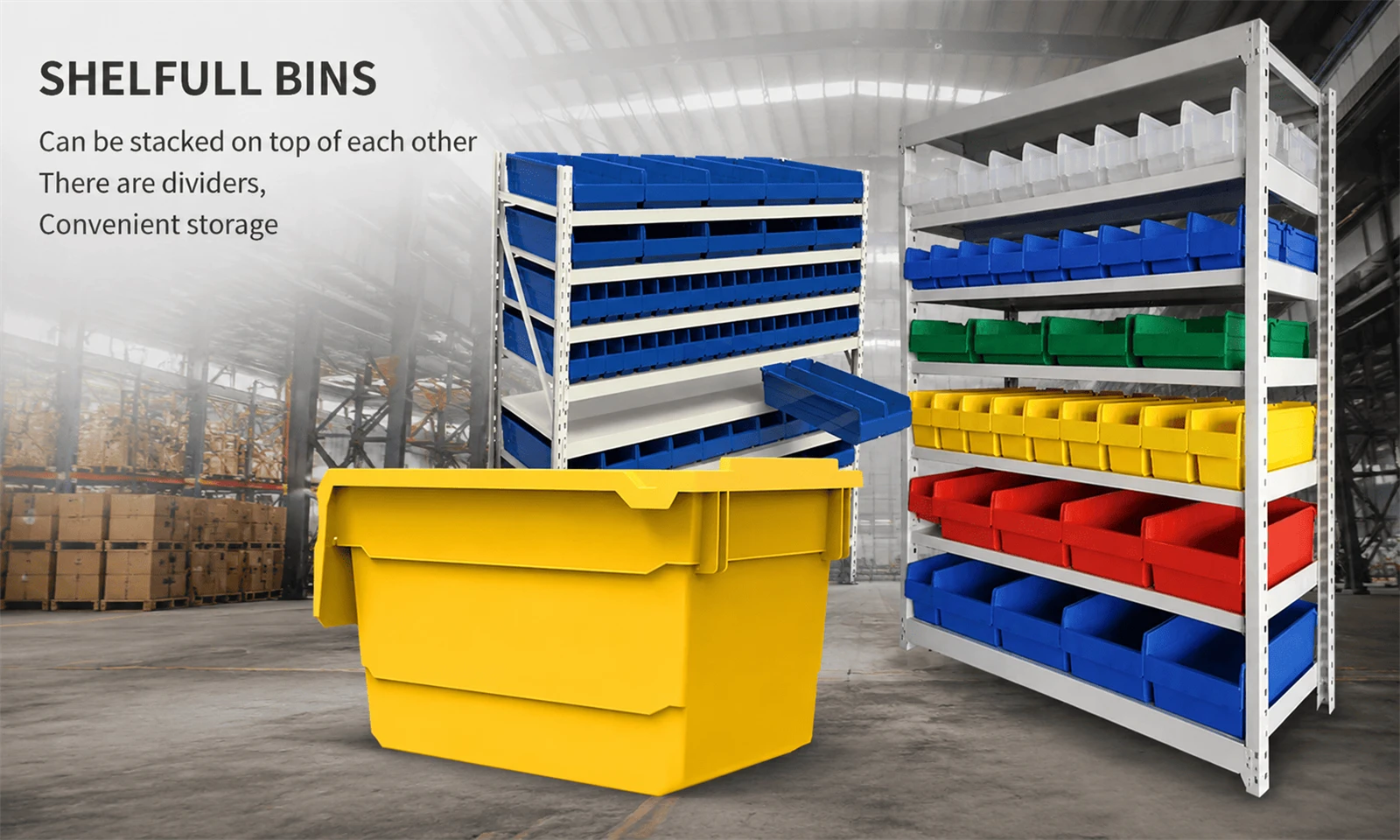
In warehouses and factories, plastic storage bins are used for storing parts, tools, components, and production materials. Although a storage bin looks simple, choosing the wrong one can create many problems.
A bin that is too small cannot hold enough products. A weak structure may deform after long-term stacking. A wrong design can also make daily picking, storage, and transportation less efficient.
Plastic storage bins are widely used because they are durable, waterproof, and suitable for repeated use. Most industrial bins are made from PP or PE materials, which provide stable performance for warehouse storage, production lines, workshops, and logistics operations.
However, choosing the right plastic storage bin is not only about price or appearance. Buyers need to consider the stored items, working environment, storage method, and long-term usage requirements.
Understand the Material Before Choosing a Plastic Storage Bin
PP and PE Are Common Materials for Industrial Storage Bins
Most plastic storage bins are made from PP (Polypropylene) or PE (Polyethylene).
Both materials are safe, durable, and resistant to moisture. Compared with cardboard boxes or other traditional storage solutions, plastic bins do not absorb water and are easier to clean. This makes them suitable for warehouses, factories, and logistics systems.
Different applications require different material features. Choosing the right material helps the storage bin maintain good performance during daily use.
PP vs PE: Which Material Is Better for Your Application?
PP plastic storage bins usually have better rigidity and dimensional stability.
They are suitable for:
Warehouse storage
Production line material management
Frequent daily use
For example, when workers need to open, move, and organize bins many times every day, PP material can help the bin keep its shape after repeated use.
PE plastic storage bins usually provide better impact resistance.
They are suitable for:
Frequent handling
Areas where bins may receive impacts
Low-temperature environments
For example, during logistics circulation, bins may experience drops or collisions. PE material can provide better protection in these situations.
There is no single best material for every application. The right choice depends on how the storage bin will be used.
Choose the Right Plastic Storage Bin Type for Your Application
Different storage environments require different bin designs. Selecting the right type can improve warehouse organization and reduce daily handling problems.
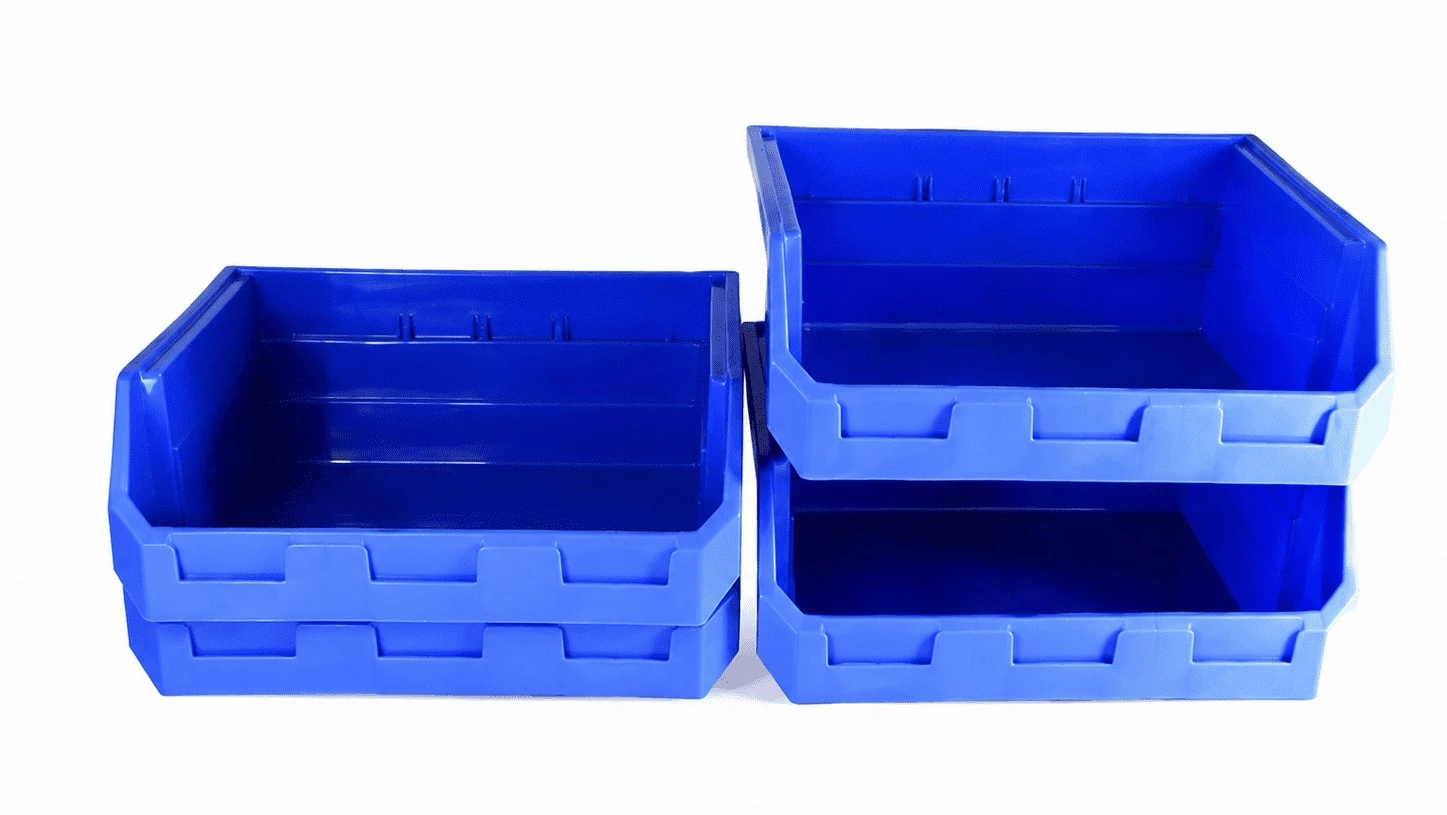
Stackable Plastic Storage Bins
Stackable plastic storage bins are designed for vertical storage.
They allow multiple bins to be placed on top of each other, helping companies use warehouse space more effectively.
They are commonly used for:
Factory material storage
Warehouse inventory management
Production line parts organization
When selecting stackable bins, buyers should check the reinforced edges and stacking structure.
A bin that looks strong when empty may not perform well under long-term stacking conditions. The stacking design is important because the bottom bin needs to support the weight of all bins above it.
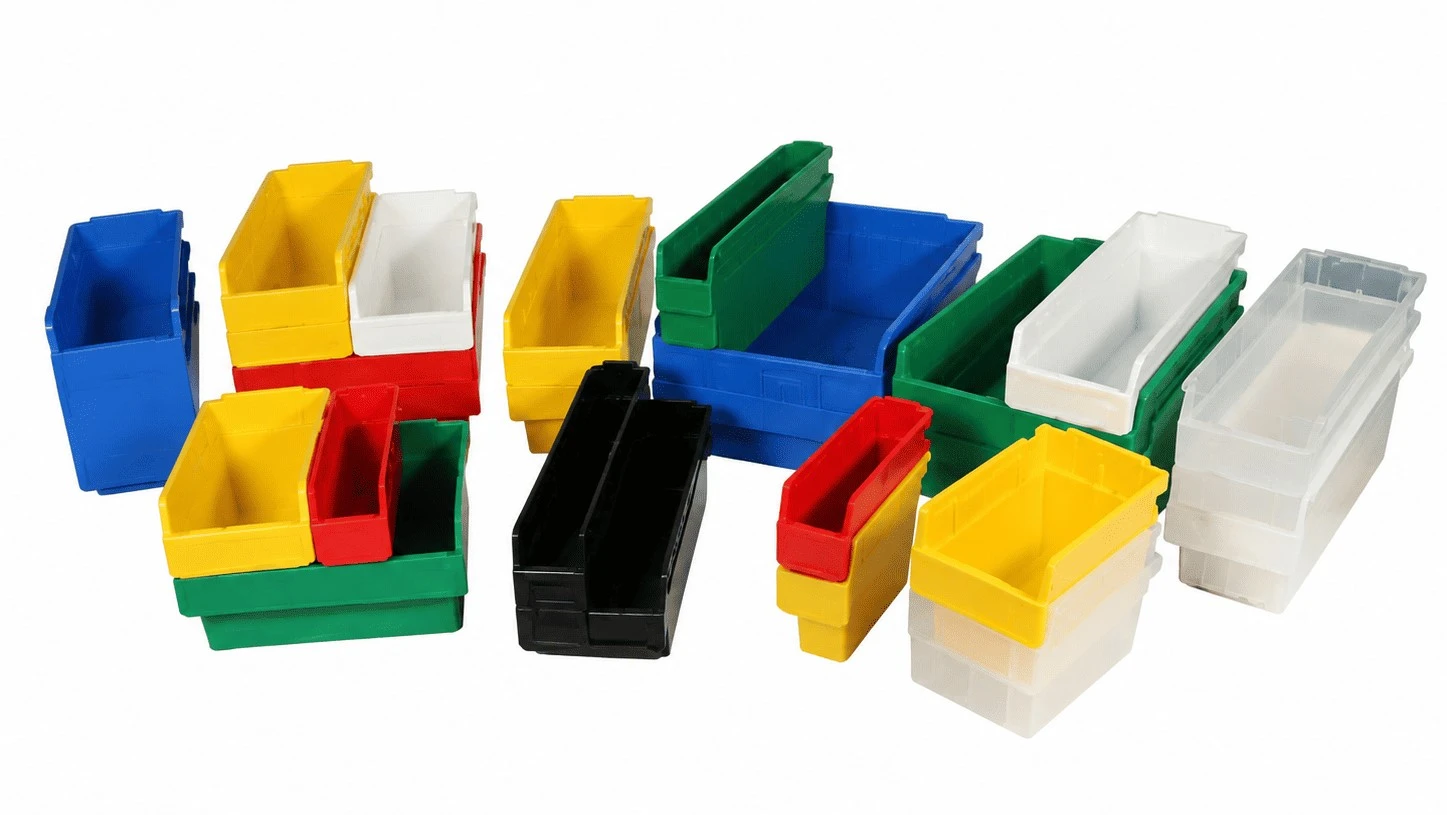
Shelf Storage Bins
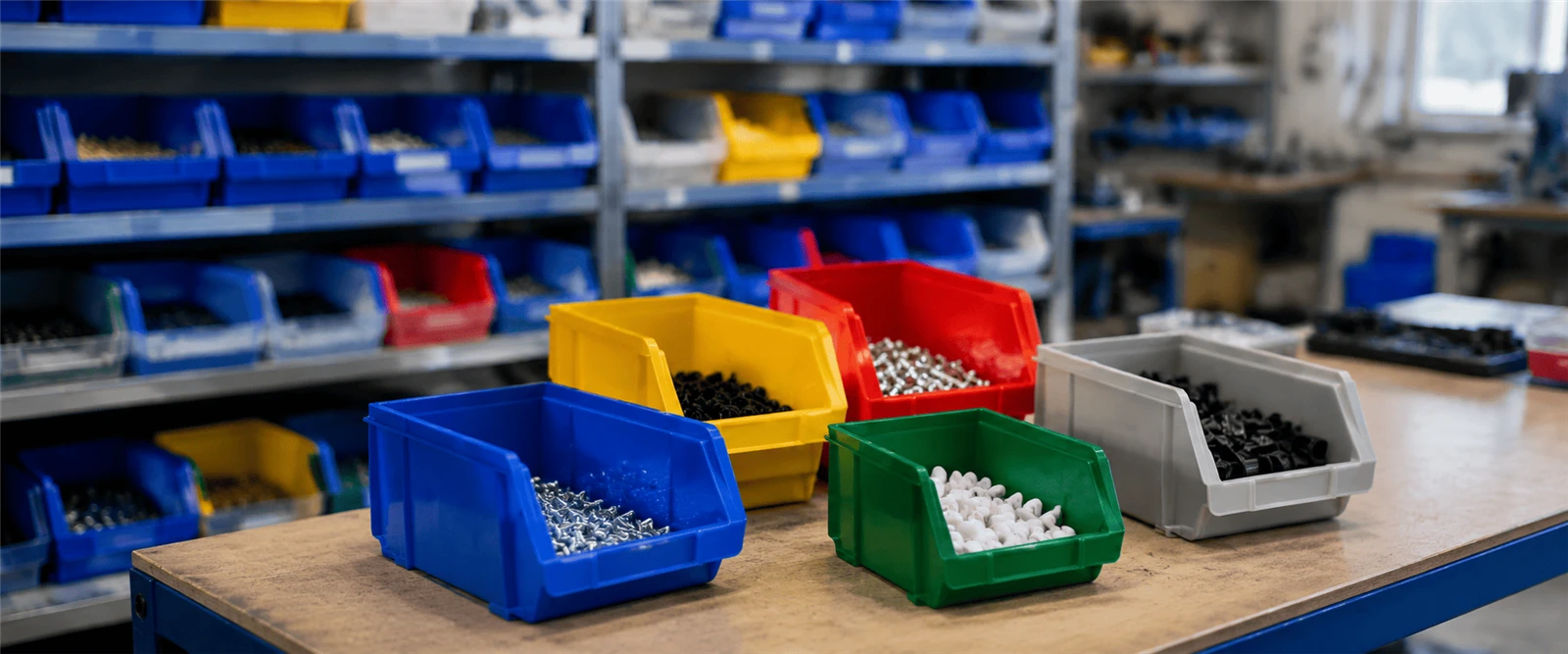
Shelf storage bins are designed for quick access and small parts management.
They are commonly used for:
Screws
Electronic components
Hardware parts
Maintenance supplies
Unlike closed storage containers, shelf bins allow workers to identify and pick items quickly without moving the entire box.
For warehouses with many SKUs, shelf bins combined with labels can make inventory management easier and reduce searching time.
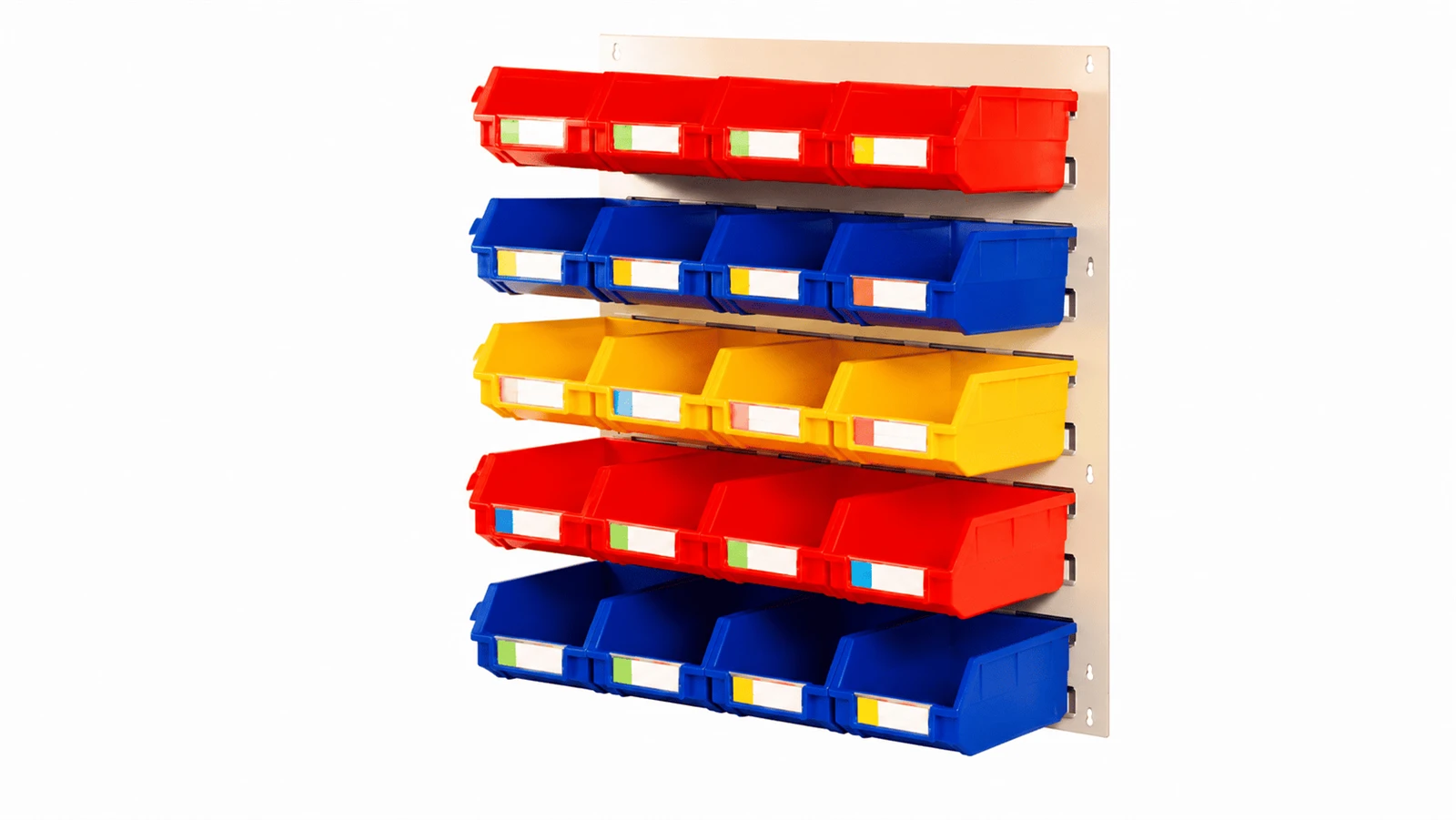
Straight Wall Containers
Straight wall containers provide more usable internal space because the side walls remain vertical.
They are suitable for:
Bulk storage
Warehouse circulation
Pallet transportation
Compared with some tapered containers, straight wall containers reduce wasted space and make better use of storage volume.
They are often used in companies that need standardized storage systems and repeated material movement.
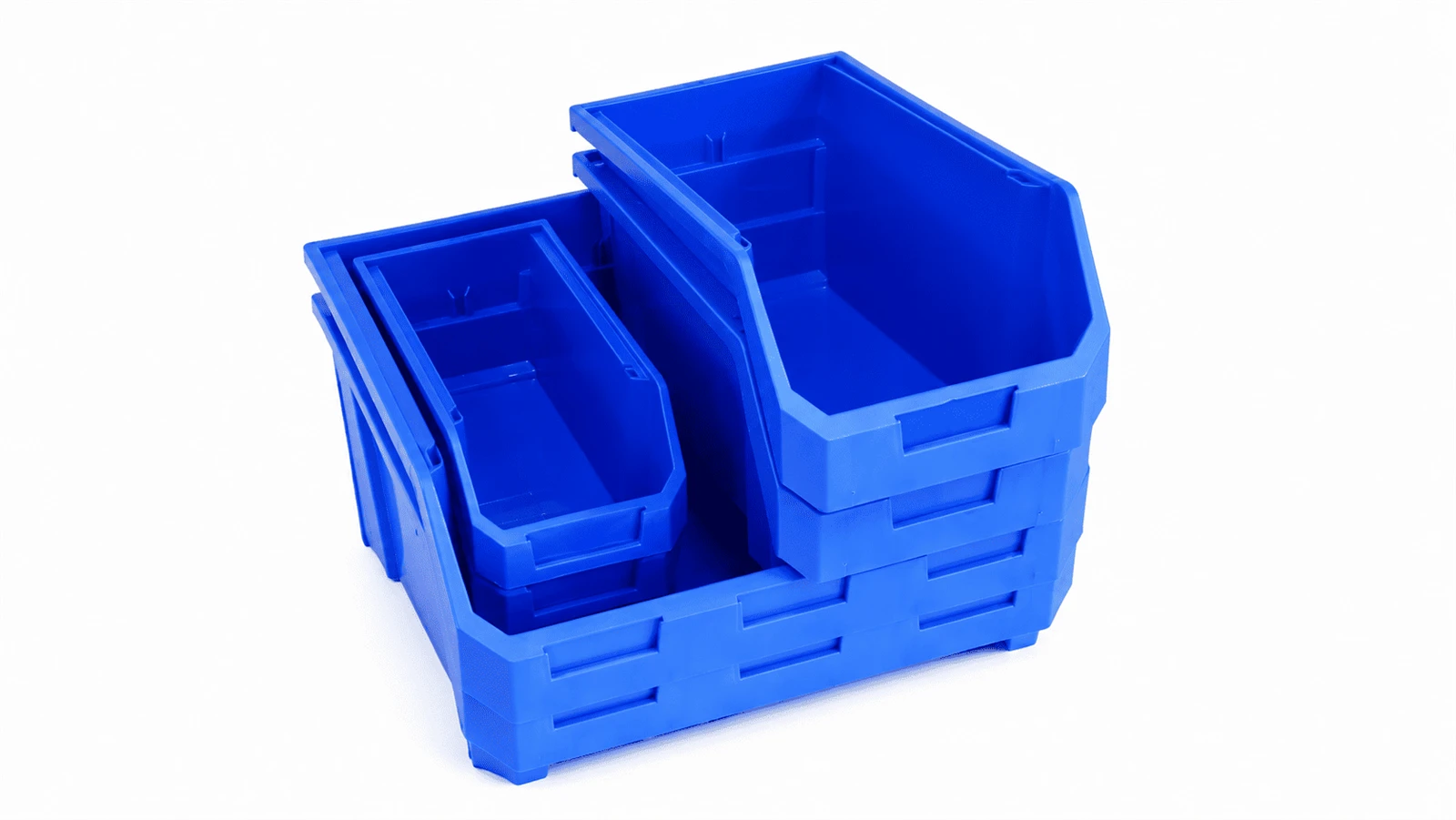
Stack and Nest Containers
Stack and nest containers provide two functions.
When loaded, they can be stacked. When empty, they can be nested together to save space.
They are suitable for:
Multi-location transportation
Return logistics
Space-saving storage
For companies that frequently move empty containers between factories or warehouses, reducing return transport space can lower logistics costs.
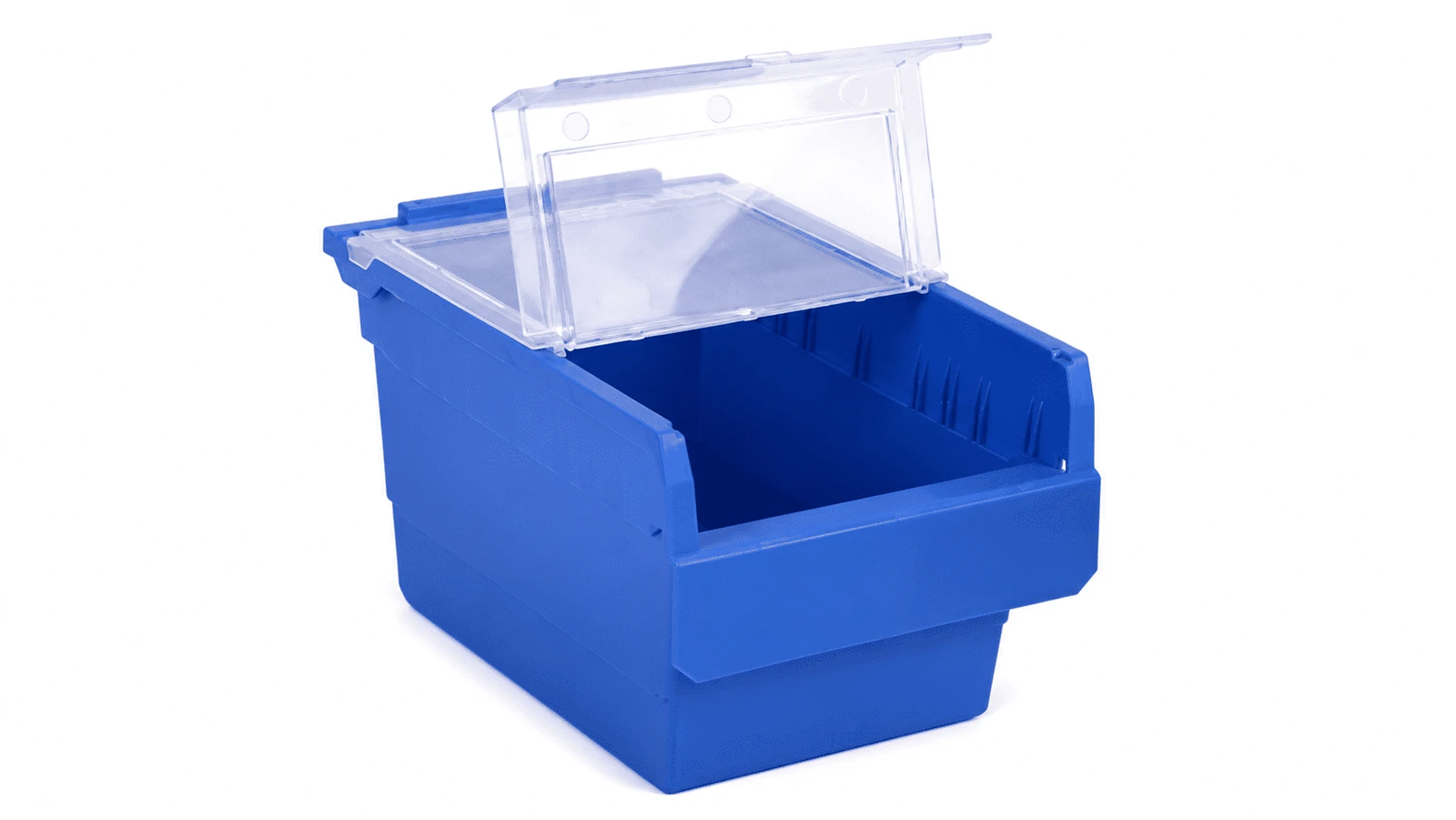
Attached Lid Containers
Attached lid containers are suitable for applications that require better product protection.
They are commonly used for:
Long-distance transportation
Dust protection
Long-term storage
The lid helps prevent dust and external contamination. It also keeps products from falling out during transportation.
For warehouses with strict cleanliness requirements or products that need extra protection, attached lid containers are a practical choice.
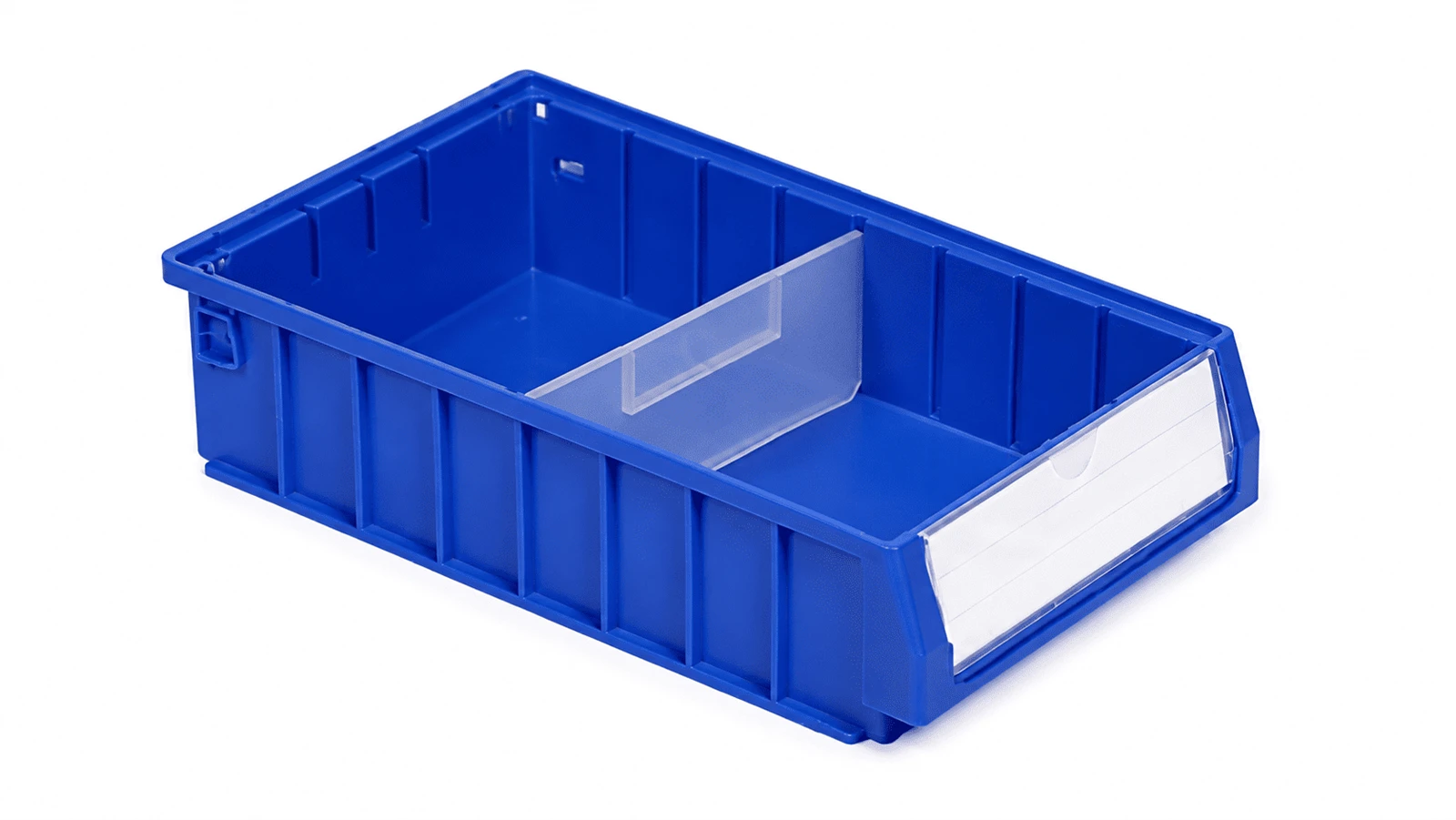
Divided Storage Bins
Divided storage bins are designed for organizing small items.
They are suitable for:
Small hardware parts
Electronic components
Maintenance accessories
Internal dividers separate different products in one container, which helps prevent mixed storage.
For factories with many small SKUs, divided bins can make daily picking and inventory control easier.
Choose the Storage Bin Based on Your Working Environment
The same plastic storage bin may perform differently in different environments.
Before purchasing, buyers should understand the actual working conditions.
Temperature and humidity are two important factors.
For warehouses with large temperature changes, choosing a suitable material is important. For areas with high humidity, waterproof and moisture-resistant storage solutions are preferred.
Other factors should also be considered:
Dust levels
Chemical exposure
Cleaning requirements
Static electricity risks
For example, electronic component storage may require anti-static solutions. Food-related applications may require materials that meet specific safety requirements.
The correct storage bin should match the environment where it will be used.
How to Choose the Right Size of Plastic Storage Bin
Choosing the correct size is one of the most important steps when buying plastic storage bins.
Before selecting a bin, buyers should check:
Product length, width, and height
Product weight
Quantity stored in each bin
Storage and handling method
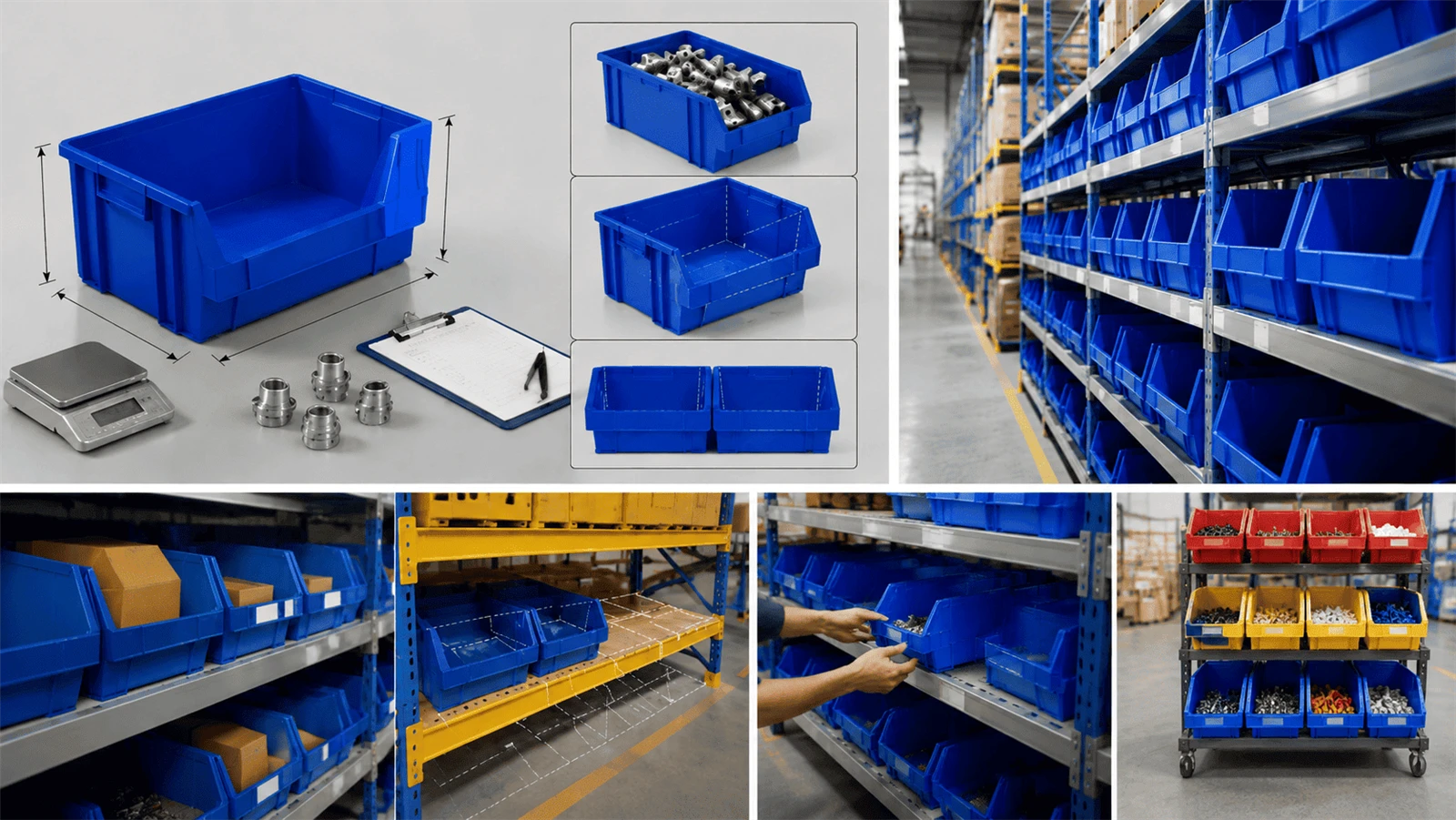
Many buyers only check the outside dimensions of a bin. However, the actual usable space depends on the internal dimensions.
The internal length, width, height, and bottom space determine how much product the bin can really hold. Some bins have tapered designs, which means the top opening may be larger than the bottom area. If buyers only check the external size, they may overestimate the storage capacity.
The bin should also match the existing warehouse system.
Before purchase, confirm:
Shelf depth and width
Number of bins placed on each shelf
Available picking space
Compatibility with pallets or handling equipment
A suitable storage bin should not only hold products but also fit smoothly into the existing storage process.
Consider Load Capacity and Stacking Performance
Load capacity directly affects the safety and service life of plastic storage bins.
However, buyers should understand that there are different types of load requirements.
Single Bin Load Capacity
Single bin load capacity refers to how much weight one bin can hold during normal use.
This is important for daily handling. If a bin is too heavily loaded, it may become difficult to move and may experience more stress during operation.
For manual handling applications, the weight inside the bin should match the worker's operation method.
Stack Load Capacity
Stack load capacity is important when bins are stored vertically.
When multiple bins are stacked, the bottom bin needs to support the weight of all bins above it.
If the stacking capacity is not suitable for the application, problems may occur:
Bin deformation
Unstable stacking
Product damage
For warehouses that require long-term stacking or high-frequency circulation, reinforced storage bins are usually a better choice.
Check These Details Before Purchasing Plastic Storage Bins
Material, size, and load capacity are important, but small design details also affect daily operation.
Label Holder
A label holder helps workers identify products quickly.
For warehouses with many SKUs, clear labeling reduces searching time and improves picking accuracy.
01
Reinforced Edges
Reinforced edges improve the overall strength of the bin.
They are especially important for stackable applications because the upper edge supports part of the stacking pressure.
02
Handles
Handles make transportation easier and safer.
For bins that are moved frequently between workstations or storage areas, a comfortable handle design can improve daily operation.
03
Color Options
Different colors can be used for product classification.
For example, companies can use different colors for different:
- Production areas
- Product categories
- Storage zones
This simple management method can make warehouse organization clearer.
04
Common Mistakes When Buying Plastic Storage Bins
Understanding common purchasing mistakes can help companies avoid unnecessary costs.
Choosing Only Based on Price
Price is important, but it should not be the only factor.
Low-cost bins may have weaker structures or shorter service life. If bins need frequent replacement, the total cost can become higher.
For industrial applications, buyers should consider:
Material quality
Product structure
Expected service life
Replacement cost
A durable storage solution usually provides better value over time.
Ignoring Future Storage Needs
Many companies only consider current requirements.
However, warehouse needs often change as product types and inventory levels increase.
If storage bins do not follow a standard size system, future expansion may become difficult.
Choosing compatible bin sizes from the beginning can make future warehouse management easier.
Buying Without Sample Testing
Sample testing is recommended before large orders.
Companies can check:
Actual storage capacity
Stacking stability
Handling convenience
Shelf compatibility
Long-term usage performance
Testing samples before mass production helps reduce risks and avoids large-scale replacement problems.
How to Choose a Reliable Plastic Storage Bin Manufacturer
Choosing the right product is only part of the purchasing process. A reliable supplier is also important, especially for companies that need long-term supply.
1. Check Manufacturing Capability
A professional manufacturer should have stable production capability.
Important factors include:
Own injection molding equipment
Mold development capability
Experience with large-volume production
Manufacturers with their own production systems can better control product quality, delivery time, and product consistency.
This is especially important when companies need repeated purchases of the same storage bin model.
2. Check Quality Control and Product Consistency
Industrial storage bins need to handle repeated use, stacking, and transportation.
A reliable supplier should have control over:
Product dimensions
Material quality
Production consistency
Inspection procedures
Quality management systems such as ISO 9001 can help buyers understand whether the manufacturer has established standardized production processes.
For special applications, buyers should also confirm material safety and industry requirements.
3. Consider Customization Support
Different companies have different storage systems.
A suitable manufacturer should be able to provide customization options, such as:
Size customization
Color customization
Logo printing
Label area design
Packaging solutions
Divider or lid options
For large companies, customized storage solutions can help create a more organized and standardized warehouse system.
Plastic Storage Bin Purchasing Checklist
Before placing an order, buyers can review the following points:
|
Item |
What to Confirm |
|
Stored products |
Product size, weight, and quantity |
|
Bin type |
Stackable, shelf, nestable, attached lid, or divided bin |
|
Dimensions |
External size and internal usable space |
|
Load requirement |
Single bin load and stacking load |
|
Material |
PP or PE material |
|
Environment |
Temperature, humidity, dust, chemicals, static requirements |
|
Accessories |
Labels, dividers, lids, and other options |
|
Supply plan |
Order quantity, lead time, and long-term supply |
A clear checklist helps companies choose a storage bin that fits both current and future needs.
Conclusion
Choosing the right plastic storage bin is not only about comparing prices or selecting the largest size.
A better approach is to first understand what products need to be stored, then choose the right structure, material, and size based on the working environment and handling method.
A suitable storage bin can help companies organize inventory, improve warehouse space usage, and reduce long-term management costs.
If you are not sure which storage bin fits your application, you can share details such as product size, storage environment, handling method, and order quantity with a professional supplier.
Enlightening Pallet specializes in plastic logistics and storage solutions. Based on different warehouse and industrial applications, we help customers select suitable Plastic Storage Bin solutions, including product types, sizes, structures, and customization options.
If you are looking for a reliable storage solution for your warehouse, production line, or logistics system, feel free to contact Enlightening Pallet and discuss your requirements. We can help you find a more suitable solution based on your actual application.
FAQ About Plastic Storage Bins
What materials are plastic storage bins made from?
Plastic storage bins are commonly made from PP or PE materials. Both materials provide good durability, water resistance, and long-term performance for warehouse and industrial applications.
Can plastic storage bins be stacked?
Yes. Stackable plastic storage bins are designed with reinforced structures that allow stable stacking when used within recommended load limits.
How do I choose the right size plastic storage bin?
The right size depends on the stored product dimensions, required capacity, shelf space, and handling method. Internal dimensions are important because they determine the actual usable storage area.
Are plastic storage bins suitable for industrial use?
Yes. Industrial plastic storage bins are widely used for parts storage, warehouse organization, production line material handling, and logistics circulation.
Can plastic storage bins be customized?
Yes. Manufacturers can provide customization options such as size, color, labels, accessories, and packaging based on specific project requirements.
