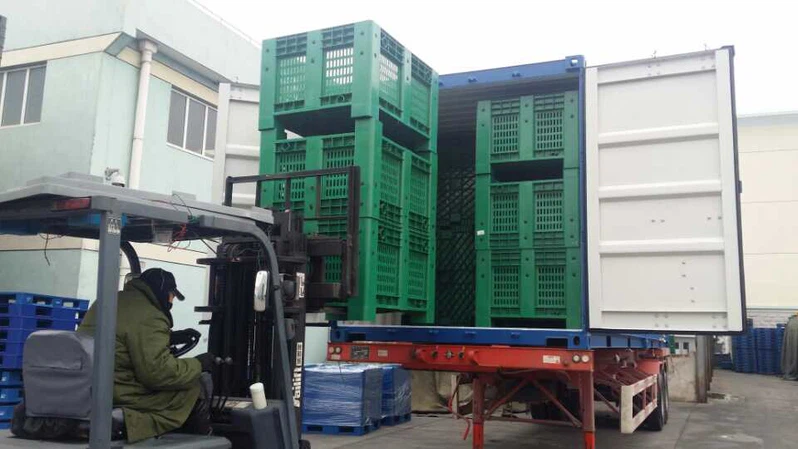
How Do Rigid Plastic Pallet Boxes Actually Cut Your Logistics Costs?
Your client places an order for automotive components. You source a plastic container, pack the goods carefully, and ship. By the time the cargo reaches them, the box has taken enough impact in transit that the parts inside aren't clean anymore - some are damaged.
You absorb the loss, reorder the packaging, and move on. But here's the thing: this keeps happening. And the container cost never shows up as a line item anyone questions, because individually, it looks small.
That's exactly how plastic pallet box spend stays invisible - until you add it up across a quarter.
Why Your Current Pallet Box Is Costing More Than Its Unit Price
The unit price of a wooden pallet box looks reasonable. But wood is a porous, moisture-sensitive material - its load-bearing capacity shifts with humidity, temperature, and how many times it's been stacked and unstacked.
By the second cold-storage transfer point, the structure is already giving. By the time your client unloads at the destination, the damage is done - and it gets written off as "transit loss" rather than what it actually is: a container failure.
If you're repurchasing packaging every few shipments, you're not paying the unit price. You're paying the unit price multiplied by replacement frequency, plus the cost of whatever was inside the box when it gave out. That's the real number - and for most operations running bulk plastic containers at volume, it's significantly higher than anyone has formally calculated.
What Makes Rigid Solid-Wall Plastic Pallet Containers Different
Not all plastic pallet containers are built the same way, and the construction type is what actually determines performance under load.
A rigid solid-wall container has fixed, unbroken walls moulded from a single piece of HDPE or PP. No hinges, no fold points, no flex under weight.
That's structurally different from both wooden boxes and collapsible plastic alternatives - and that difference is where the performance gap opens up.
| Wooden pallet box | Collapsible plastic box | Rigid solid-wall plastic pallet box | |
|---|---|---|---|
| Load capacity | Variable - degrades with moisture and repeated use | Moderate - fold joints are the weak point | High - uniform wall, no flex points |
| Hygiene | Poor - porous surface traps residue | Moderate - joints are harder to clean | Good - non-porous, fully washable |
| Cost over time | Low upfront, high from damage and replacement | Medium | Higher upfront, lower across a full use cycle |
| ISPM 15 fumigation | Required in most export markets | Exempt | Exempt |
One point worth addressing directly: collapsible plastic pallet boxes make sense in closed-loop, round-trip networks where empty containers come back regularly and return freight costs are a real factor.
But if your goods are moving one way - export shipments, single-destination deliveries - the fold joints become the structural liability, and the cost advantage disappears under real load conditions.

How a Heavy Duty Plastic Pallet Box Performs Across the Full Logistics Chain
Warehouse Stacking and Automated Systems
A heavy duty plastic pallet box with uniform wall rigidity can be stacked four or five units high without the lean or compression failure that develops in wooden alternatives by the third layer. Load distribution stays consistent across every layer, and no additional securing materials are needed.
For operations running automated storage - conveyors, robotic picking, ASRS - dimensional consistency is a hard requirement, not a preference. A container that deforms slightly under load triggers recognition errors and manual interventions that cut throughput. Rigid plastic pallet boxes hold their stated dimensions across hundreds of load cycles, which is what automated systems are calibrated to.
Freight Packing and Cost Per Unit Shipped
Consistent external dimensions mean forklift handling is the same every time - no improvised manoeuvring, no edge damage from misaligned entry. At volume, small handling inefficiencies compound fast.
Inside a shipping container, dimensional stability allows precise load planning. A box that holds its shape under weight lets you maximise cargo per container, which feeds directly into freight cost per unit shipped - a metric that matters more the higher your shipment frequency gets.
Cold Chain and Multi-Point Handling
A non-porous plastic pallet container doesn't absorb moisture, residue, or contaminants between uses. For goods moving through multiple cold-storage environments, that surface consistency reduces contamination risk without any additional treatment between trips - which matters both operationally and for compliance documentation.
Plastic Pallet Containers and ISPM 15: What Export Buyers Need to Know
If you're shipping into the EU, North America, or Australia, wood packaging is subject to ISPM 15 - the international phytosanitary standard that requires fumigation and certification before timber crosses regulated borders.
The costs attached to that requirement are real: fumigation fees per shipment, phytosanitary certificates, and in some cases third-party inspection. If a shipment arrives with missing or non-compliant documentation, goods get held at port - storage fees accumulating daily - or refused entry.
Rigid plastic pallet containers are exempt from ISPM 15. Plastic is not a host material for the organisms the standard targets. No fumigation, no certificate, no compliance risk. Across dozens of annual shipments into regulated markets, that's a cost that simply stops appearing on your logistics invoices when you switch packaging material.
Which Supply Chains Benefit Most from Plastic Pallet Box Solutions
Automotive components - Heavy assemblies under repeated load across long supply chains need a container that maintains structural integrity end to end. A rigid plastic pallet box eliminates the deformation risk that compromises how parts are packed and protected.
Food and fresh produce - Non-porous, fully sanitisable walls are a food safety requirement in cold-chain environments, not a preference. A food grade plastic pallet box removes the contamination risk that wooden packaging carries by design.
Pharmaceutical and medical devices - Full sanitisation between uses, cleanroom-compatible handling, and traceable documentation all point toward rigid plastic for regulated pharma supply chains.
Chemical and industrial materials - HDPE offers strong resistance to a wide range of chemical exposure. Bulk plastic containers in this material class also remove the wood packaging compliance layer from your export documentation entirely.
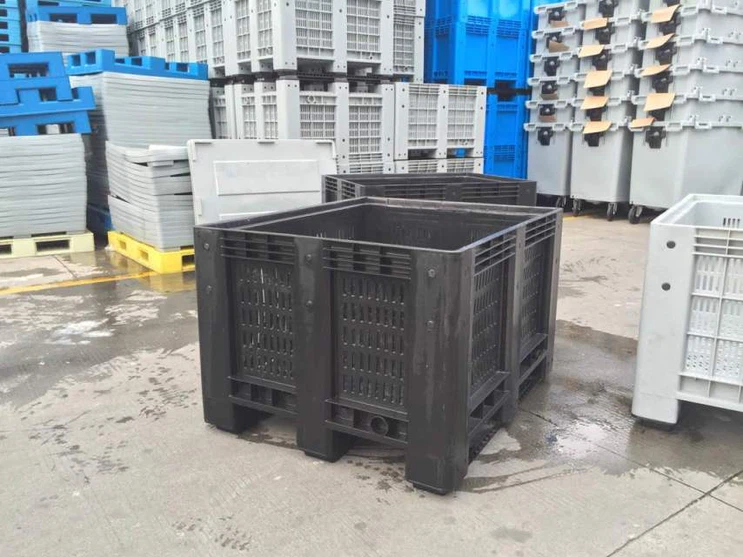
How to Evaluate a Plastic Pallet Box Manufacturer Before You Commit to Volume
Not all plastic pallet box manufacturers produce to the same specification, and the details that get overlooked at the quoting stage tend to surface under real operating conditions.
Before ordering at scale, confirm the following in writing:
- Material grade - HDPE and PP both perform well, but the specific grade determines load capacity and chemical resistance. Don't accept a material label without the spec sheet.
- Static and dynamic load ratings - a box rated for 1,000 kg static may perform differently under dynamic load in transit. You need both figures.
- Base runner dimensions - confirm compatibility with your forklift channels and conveyor systems before committing.
- Certifications - for food and pharma supply chains, confirm FDA, EU food-contact, or other applicable standards are documented, not just claimed.
- Customisation - a capable plastic pallet box supplier should accommodate custom dimensions, colour coding, or logo marking without requiring a minimum order that makes no sense for your volume.

Plastic pallet boxes wholesale pricing becomes competitive at full container quantities, but any reputable manufacturer will send samples for load testing before you scale.
Shipping Into Regulated Markets? Here's Where to Start.
If you're exporting heavy goods into the EU, North America, or Australia and still paying fumigation fees on every wood-packaged shipment - the switch to rigid plastic pallet containers pays back faster than the unit price difference suggests.
Send us your load weight, route, and annual volume, and we'll put together a spec and landed-cost comparison built around your actual operation.