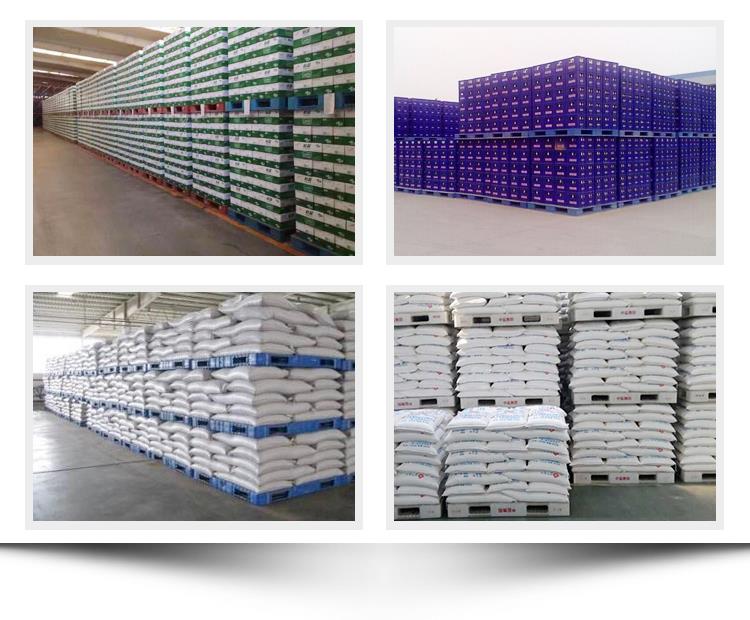
6 Reasons Stackable Plastic Pallets Outperform Wood in Warehouses
Wood pallets look cheaper on paper - and for a single purchase, they are. But the purchase price is only one part of what a pallet actually costs to operate. Replacement cycles, repairs, downtime, and compliance work all add up, and most of that spending never appears on a procurement report.
Stackable plastic pallets carry a higher upfront price, and we're not going to pretend otherwise. What we will show is why that gap closes faster than most buyers expect - and what the total 12-month cost of staying on wood actually looks like.
One definition before we start: a "stackable" pallet uses a corner post or leg structure to transfer vertical load directly to the ground, rather than spreading it across the deck boards. That structural difference is the reason plastic outperforms wood in most of the situations we'll cover - but we'll also be clear about where wood still makes more sense.
Here are the 6 reasons stackable plastic pallets outperform wood in warehouse operations:
- Superior structural design - consistent load path, tighter tolerances, better stacking stability
- Lower total cost over 12 months - 100+ cycles vs. wood's 15–20, plus lower repair and freight costs
- Compatibility with automated systems - dimensional consistency that AGVs and AS/RS require
- Cold chain performance - stable from -30°C to +80°C, mold-resistant, easy to sanitize
- Reduced hidden operating costs - fewer injuries, less downtime, simpler compliance documentation
- Simpler international shipping - exempt from ISPM-15, no heat treatment or customs paperwork required
1. Are Stackable Plastic Pallets Actually Built Differently from Wood?
Yes - and the structural difference is what drives every performance gap we'll cover.
Understanding stackable pallets meaning starts with how each pallet carries weight. Wood pallets spread load horizontally across deck boards, which concentrates stress at the corners every time pallets are stacked.
Add moisture into the mix - common in most warehouse environments - and wood shifts dimensionally by 5–10mm, causing boards to bow or crack over time.
Stackable plastic pallets route load vertically through post or leg structures straight to the floor, so each tier in a stack carries its own weight independently. The bottom pallet isn't absorbing the load of everything stacked above it.
Because plastic pallets are injection-molded, every unit comes out within ±2–3mm of the same dimensions. That level of consistency matters more than it sounds - automated equipment is calibrated around exact pallet dimensions, and we'll get into why in section 3.
Non-stackable pallets still have a place: one-way outbound shipments with light cargo, or irregular loads that don't fit standard footprints. Knowing when a stackable design doesn't apply is just as useful as knowing when it does.
| Stackable Plastic Pallet | Wood Pallet | |
|---|---|---|
| Load path | Vertical, through posts/legs to floor | Lateral, across deck boards |
| Dimensional tolerance | ±2–3mm (injection molded) | ±5–10mm (humidity-dependent) |
| Stacking behavior | Each tier structurally independent | Bottom pallet bears cumulative load |
2. Is the "Cheaper" Wood Pallet Still Cheap After 12 Months?
The unit price is real - but it only tells part of the story.
A GMA-spec wood pallet costs $12–25. A quality plastic pallets stackable option starts at $30–80. That gap is real, and on a single purchase order, wood wins. The problem is that cost comparison assumes both pallets last the same amount of time - and they don't. Wood pallets average 15–20 cycles before failure. Plastic pallets reach 100+ cycles under the same conditions. When you calculate cost per cycle instead of cost per unit, the numbers flip.
Repairs compound the issue further. Each wood pallet repair runs roughly 20% of its original purchase price, and it repeats every time a board splits or a nail loosens. Those costs rarely get tracked line by line, but they accumulate steadily across a high-volume operation.
Two more factors that almost never appear in procurement conversations: weight and downtime. A standard wood pallet weighs 32–70 lbs; a comparable plastic pallet weighs 13–30 lbs.
That difference adds up on every air freight shipment and reduces physical strain on warehouse staff across every shift. And when a wood pallet sheds debris onto a conveyor line, the average stoppage runs 20–40 minutes - which, at several hundred orders per hour, turns into a measurable throughput loss every time it happens.
When Does the Investment Pay Off?
For most closed-loop operations, the break-even point arrives sooner than expected.
In a closed-loop system - where pallets return to the same facility - plastic typically recoups its higher upfront cost after 5–6 cycles. Every cycle after that is net savings. The math only works, though, if the plastic pallet is built to last.
The cheap plastic pallets segment ($17–$80+) varies significantly in material grade, load rating, and service life - a low-cost unit can fail just as quickly as wood and deliver none of the savings. There's no such thing as plastic pallets for free; there are only costs that haven't been counted yet.
When you're ready to buy plastic pallets, that price range is the first thing worth understanding.
3. Can One Warped Pallet Bring Down Your Automated Warehouse?
In automated systems, a few millimeters of dimensional variance is enough to cause real operational failures.
AGVs (Automated Guided Vehicles), AS/RS (Automated Storage and Retrieval Systems), and high-speed conveyor lines are built to handle pallets within tight physical tolerances - typically ±2–3mm. Wood pallets absorb moisture and release it with temperature changes, and that causes dimensional shift over time.
A pallet that's a few millimeters off can misalign with AGV forks, trigger conveyor sensors mid-run, or cause scan failures in your WMS (Warehouse Management System). These aren't catastrophic events - they're frequent, low-level disruptions that add up across thousands of daily pallet movements.
Injection-molded plastic pallets stackable designs produce the same dimensions in every unit, every batch. That consistency means your automated systems are working with a stable input instead of a variable one. Stacking pallets in a warehouse running AGVs or conveyors isn't just a storage question - the pallet format is a system specification, and dimensional inconsistency creates friction across the entire flow.
Heavy duty plastic pallets and large plastic pallets for industrial environments also support RFID tag integration through embedded slots, which improves scan reliability across large distribution networks and reduces the "lost pallet" disputes that drain time and margin quietly in the background.
4. Why Do Cold Storage Warehouses Move Away from Wood?
Cold chain environments expose three specific failure modes in wood that plastic avoids entirely.
First, freeze-thaw cycling. As temperatures drop and rise, wood fibers expand and contract repeatedly - warping the pallet deck over time and creating instability when pallets are stacked.
Second, cold-temperature brittleness: wood that has dried out at low temperatures loses impact resistance, and a pallet that performs fine at ambient conditions can crack under normal forklift pressure at -18°C.
Third, mold growth: high-humidity cold storage accelerates microbial development in wood grain, creating a food safety risk that visual inspection alone can't reliably detect or prevent.
Plastic pallets made from engineering-grade polymers hold their shape across a range of approximately -40°C to +80°C, and because the surface is non-porous, they can be cleaned with high-pressure water without pushing contamination deeper into the material.
That makes cleaning faster, more thorough, and easier to document - which matters when surface hygiene is part of your compliance record.
For supply chains subject to FDA material requirements or HACCP (Hazard Analysis and Critical Control Points - a food safety management framework) audits, custom plastic pallets built to certified material grades are often the only option that clears inspection without additional treatment or exemption paperwork.
For teams managing certifications across multiple facilities, that simplification reduces both cost and administrative workload.
5. What Are Wood Pallets Actually Costing Your Operations?
Beyond the purchase order, wood pallets generate three categories of cost that compound over time.
Safety liability. Splintered wood and exposed nails are among the most frequent causes of warehouse floor injuries. OSHA data puts the average direct cost of a single warehouse injury - medical expenses, workers' compensation, and lost productivity combined - above $40,000. Plastic pallets remove that specific hazard from the equation entirely, which means one fewer source of recurring liability on every shift.
Throughput loss. When pallet debris causes a conveyor stoppage, the average downtime is 20–40 minutes. For a facility processing several hundred orders per hour, even one stoppage per week adds up to significant annual throughput loss - but most operations only calculate that number after a serious incident has already occurred.
Compliance overhead. Warehouses handling food or pharmaceutical products on wood pallets carry ongoing costs for fumigation scheduling, inspection documentation, and audit preparation. Switching to FDA-certified plastic pallets doesn't eliminate compliance requirements, but it reduces the documentation burden and lowers the risk profile that auditors score against.
6. Does Switching to Plastic Make Cross-Border Shipping Simpler?
For international shipments, plastic pallets remove a layer of regulatory requirement that wood cannot avoid.
ISPM-15 (International Standards for Phytosanitary Measures No. 15) is the international regulation that governs wood packaging in cross-border trade. Under ISPM-15, wood pallets must be heat-treated, stamped with an official certification mark, and accompanied by documentation at every customs crossing - without exception.
Plastic pallets are exempt from ISPM-15 by material type, which means no treatment process, no certification stamp, and no additional paperwork at the border.
For operations with regular export volume, that exemption translates directly into fewer customs holds, lower risk of shipment delays, and faster clearance times. Across a full year of consistent export activity, the cumulative time and compliance cost saved is measurable and trackable.
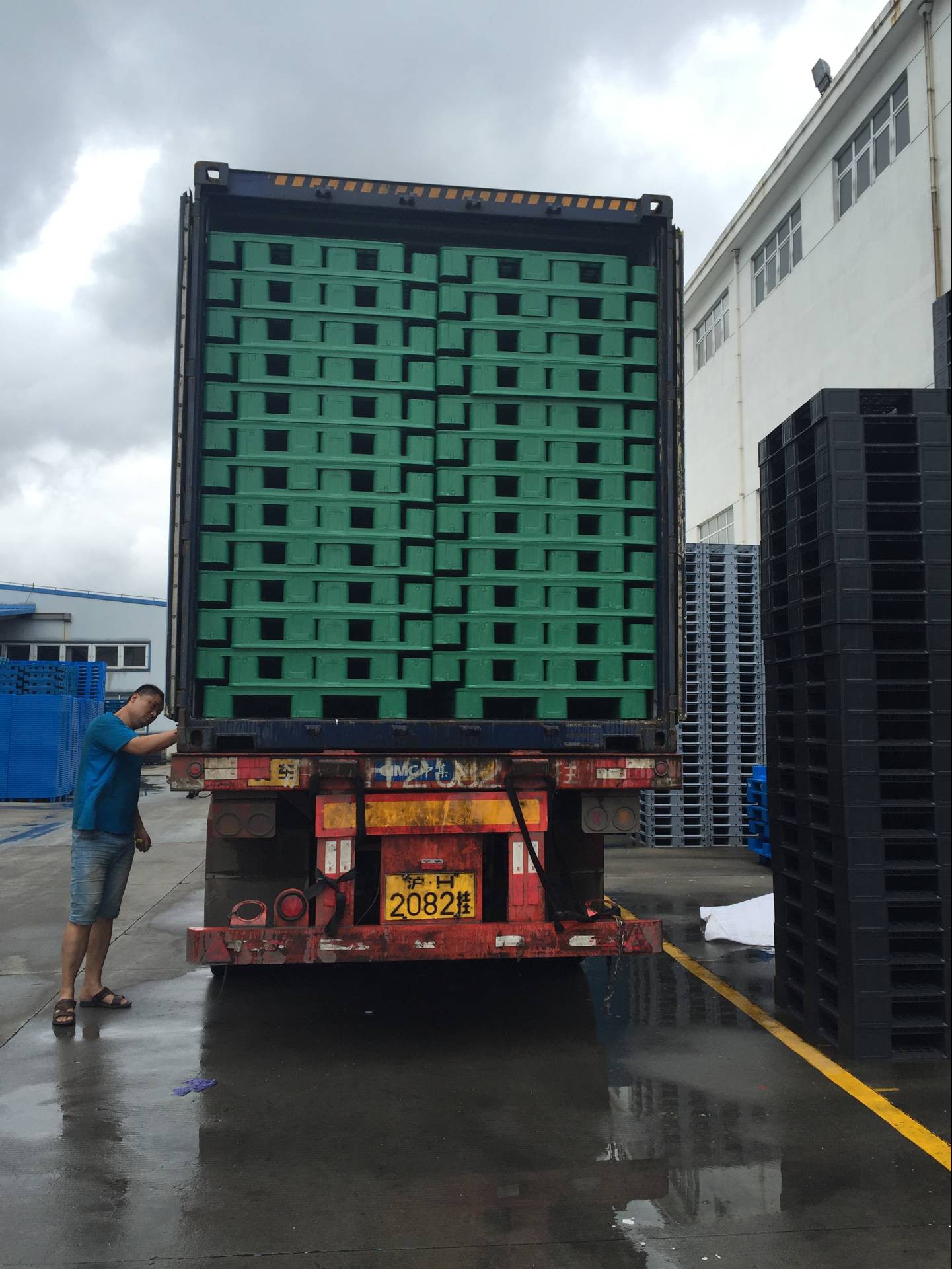
On sizing: the North American GMA standard is 48×40 inches, and 40 x 48 plastic pallets are the dominant format in that market. The European equivalent - Plastic Euro pallets - measures 800×1200mm. 40×40 plastic pallets are used as a compatible format across parts of Asia-Pacific and the Middle East.
If your operation spans multiple regions, confirm accepted formats with your receiving partners and check rack compatibility before ordering - a sizing mismatch discovered after delivery costs significantly more to resolve than a quick check beforehand.
7. When Does Wood Still Make More Sense Than Plastic?
Plastic outperforms wood in most high-frequency warehouse environments - but not in every scenario.
The clearest case for wood is one-way outbound shipping. When a pallet leaves your facility and doesn't come back, spending $30–80 on a plastic pallet makes no financial sense.
At $12–25 per unit with no return logistics, wood's lower upfront cost is a genuine and straightforward advantage. For loads that are unusually heavy or dimensionally irregular - falling outside standard pallet specs - custom wood structures may also be the only practical option.
One common objection worth addressing directly: wood pallets can be repaired, and that's a real advantage. A cracked board costs a few dollars to replace, which makes wood sound cost-efficient over time.
In practice, however, damaged pallets stay in circulation longer than they should. A pallet with a loose nail or a split deck board introduces injury risk and load instability - it's a liability, not a savings measure.
Repairability is only an advantage when pallet condition is actively managed, and in high-throughput operations, that consistency is difficult to sustain.
8. Are Plastic Pallets Actually Better for the Environment?
The environmental case for plastic isn't absolute - it depends on how the pallets are used and what happens at end of life.
At the point of manufacture, plastic pallets made from virgin resin require more energy to produce than wood pallets sourced from sustainably managed forests. That initial carbon cost favors wood.
But a stackable plastic pallet that completes 100+ cycles versus a wood pallet's 15–20 looks very different when you calculate production impact per trip. Lifecycle analyses of closed-loop, high-cycle operations consistently show lower total carbon per use for plastic over a full operating period.
Where plastic has a more consistent environmental advantage is end-of-life recyclability.
HDPE (High-Density Polyethylene) and PP (Polypropylene) pallets are 100% recyclable - ground down and reprocessed into new pallets or other plastic goods through established industrial channels.
Some manufacturers offer take-back programs to close that loop. Recycled plastic pallets made from up to 100% post-consumer content are also available, which supports ESG reporting and can contribute to LEED certification credits depending on the application.
The environmental argument for plastic holds strongest in closed-loop, high-cycle operations with managed end-of-life recycling. In open-loop networks where pallets are frequently lost before recovery, that advantage shrinks - and it's worth being honest about that distinction when building the case internally.
9. Ready to Switch? Confirm These Before You Order
Choosing the right stackable plastic pallet for your operation comes down to a few specific compatibility checks.
Check Racking and Equipment Compatibility
The most common post-delivery problem is a pallet that doesn't fit the racking it was bought for.
Before placing an order, confirm that the pallet's leg or post spacing aligns with your existing rack beam dimensions, and verify forklift entry direction - two-way or four-way - against your floor layout. These details are easy to overlook during procurement and expensive to fix after the pallet arrives.
Closed-Loop or Open-Loop - Which Model Fits Your Network?
How you manage pallets operationally determines which procurement model makes financial sense.
In a closed-loop system where pallets return to your facility, outright purchase combined with asset tracking is the standard approach. In an open-loop distribution network where pallets change hands between multiple parties, pooling arrangements or color-coded systems reduce loss exposure.
Black plastic pallets are commonly used for dedicated internal lanes because visual segregation is immediate and requires no scanning. Pallets with embedded RFID slots recover at higher rates than those tracked with paper labels, which matters more as pallet value increases.
Four Questions to Answer Before You Order
Custom plastic pallets - covering load ratings, certifications, and color specifications - are available from most manufacturers, but you need to ask before the order is placed.
- What static and dynamic load capacity does your operation require?
- Which forklift entry configuration do your handling systems use?
- Does your industry require specific material certification - FDA food-grade, fire-retardant, or pharmaceutical-grade?
- Do you need color coding or custom specifications for product segregation or inventory zone management?
Final Thoughts
The total cost of running a warehouse on wood pallets - replacement cycles, repair bills, downtime, compliance overhead, and injury liability - adds up to more than most procurement teams calculate before making a decision.
If you're running a closed-loop or high-frequency operation and want to know whether stackable plastic pallets make sense for your specific setup, contact our team for load ratings, material specs, and custom configuration options.
Frequently Asked Questions
What is the difference between stackable and non-stackable pallets?
Stackable pallets use a post or leg structure to transfer load vertically, so each tier in a stack is independent. Non-stackable pallets carry load laterally across deck boards and can't bear weight from above. For high-density warehouse storage, stackable is the standard choice.
How much weight can a plastic pallet hold?
Most standard stackable plastic pallets support a static load of 5,000–30,000 lbs and a dynamic load of 2,000–6,000 lbs depending on design and material grade. Always confirm both ratings for your specific application - racking, floor storage, and in-motion handling each place different demands on the structure.
What is ISPM-15, and does it apply to plastic pallets?
ISPM-15 requires wood pallets in international trade to be heat-treated and certified at every customs crossing. Plastic pallets are fully exempt - no treatment, no stamp, no additional paperwork.
Are plastic pallets recyclable?
Yes. HDPE and PP pallets are 100% recyclable. Pallets made from post-consumer recycled content are also available for operations with ESG or LEED reporting requirements.
Do plastic pallets come in custom sizes and colors?
Yes - load ratings, dimensions, certifications, and color coding can all be specified. FDA food-grade, fire-retardant, and pharmaceutical-grade options are available; confirm requirements before ordering.