


5 Key Specifications to Compare When Sourcing Spill Pallets
Spill pallets play an important role in chemical storage, oil drum handling, and industrial liquid management. However, choosing the right model can be difficult. Different suppliers may offer products with similar appearances but different sump capacities, dimensions, load ratings, and material properties. If you compare prices without checking these details, the selected pallet may not fit your storage conditions or handling requirements.
Before placing an order, you should compare five key specifications. This guide explains what to check, why each detail matters, and how to select a suitable plastic spill pallet for your facility.
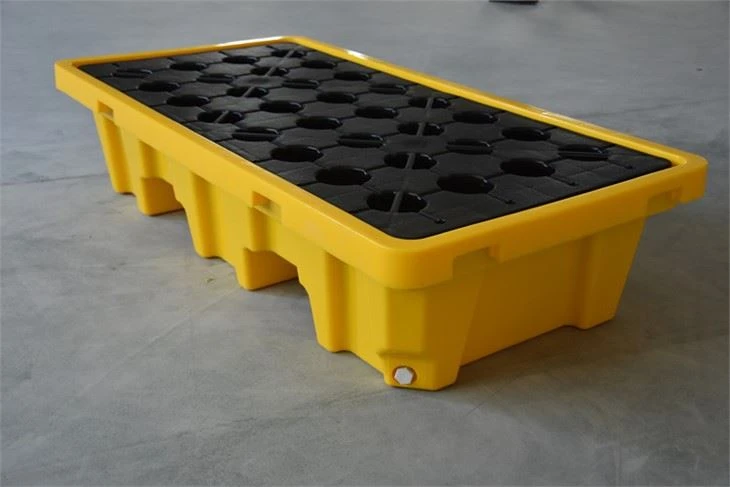
1. Spill Containment Capacity
Sump capacity is one of the first specifications to check when sourcing spill pallets. It determines how much leaked liquid the bottom basin can collect. A suitable capacity helps contain accidental spills and keeps liquid away from the warehouse floor.
What Is Sump Capacity?
Sump capacity refers to the maximum volume of liquid that the collection basin can hold. It is usually measured in liters or gallons.
Keep in mind that sump capacity differs from drum capacity. A pallet designed for two 200L drums does not need to have a 400L collection basin. The two figures describe different functions.
For example, a 2-drum plastic spill pallet is available with an 80L or 120L sump, depending on its height and model. The 120L version measures 1300 × 680 × 300 mm and weighs 22 kg.
How Much Containment Capacity Do You Need?
Your required capacity depends on the number and size of stored containers, local regulations, and workplace safety requirements. In the United States, EPA 40 CFR 264.175 and SPCC rules are relevant to certain storage operations. Always check which requirements apply to your facility and product application.
When comparing models, check the actual sump volume and ask for supporting product specifications. You can also explore different plastic spill containment pallets to compare available capacities and configurations.
2. Dimensions and Drum Storage Configuration
The number of drums a pallet holds is only one part of the selection process. Its overall dimensions and drum layout also affect warehouse space, forklift access, and daily operations. A larger model may reduce the number of pallets required, but it also needs more floor space.
How Many Drums Can the Spill Pallet Hold?
Common configurations include single-drum, 2-drum, 3-drum, and 4-drum models. The right choice depends on your storage volume and the space available.
For example, a 2-drum model measures 1300 × 680 mm at its base, while a 4-drum high-profile model measures 1320 × 1320 mm. The latter has a wider layout for four standard drums.
You can compare the 2-drum oil spill pallet with the 4-drum high-profile model to see how different configurations fit your storage plan.
Why Do Overall Dimensions Matter?
Check the length, width, and height before ordering. You should also measure the drum diameter, forklift aisle, and space around the storage area.
Forklift entry direction deserves attention, too. Four-way entry can give operators more flexibility when moving pallets in a busy warehouse. Leave enough room for safe loading and inspection.
3. Load Capacity
A spill pallet must support the combined weight of the drums and their contents. This is especially relevant when you store full chemical or oil drums for long periods or move loaded pallets with a forklift.
Static Load Capacity vs. Dynamic Load Capacity
Static load capacity refers to the load a pallet supports while stationary under specified test conditions. Dynamic load capacity refers to its rated load during movement under specified handling conditions.
These values are different. A high static rating does not mean the pallet can carry the same weight during forklift handling.
For example, the listed specifications of the 2-drum 120L model include a 1,300 kg static load and a 600 kg dynamic load. The 4-drum high-profile model has a 3-ton static load and a 1.5-ton dynamic load.
How to Calculate the Required Load Capacity?
Start with the total weight of the empty drums and their contents. Liquid density also matters. Two drums with the same volume may have different full weights if they contain different liquids.
You should also check whether the supplier's load rating applies to evenly distributed weight. If the pallet will be moved while loaded, confirm its dynamic rating and forklift handling conditions.
4. Material and Chemical Compatibility
The material affects how a spill pallet performs during long-term storage. Plastic models are widely used in industrial environments because they do not rust and are easy to clean. Still, material selection must match the stored liquid.
Why Is HDPE Commonly Used for Plastic Spill Pallets?
HDPE offers good moisture resistance, impact performance, and resistance to many common chemicals. It also avoids the rust problems associated with metal products.
The material and quality control information describes the use of virgin high-density polyethylene, with a stated temperature range of -40°C to +60°C and brief exposure up to +90°C. These figures relate to the specified material information and should be checked against the selected product model.
How to Check Chemical Compatibility?
Chemical resistance varies with the chemical type, concentration, temperature, and contact time. Before ordering, provide the supplier with the chemical name and relevant Safety Data Sheet (SDS).
Also check UV resistance if the pallet will be used outdoors. A material suitable for indoor oil storage may require further checks for outdoor chemical storage.
5. Design Features and Handling Options
Product structure affects cleaning, loading, and routine maintenance. When comparing spill pallets, look beyond the basic dimensions and sump capacity. Check which features come as standard and which are available as options.
Removable Grates and Cleaning Access
Removable grates support drums above the collection basin. They can be lifted out when the sump needs inspection or cleaning. A practical grate design also gives workers better access to collected liquid.
Forklift Pockets, Drain Outlets, and Covers
Forklift pockets support handling within the rated load. A drain outlet makes it easier to remove collected liquid when the product design allows it. Covers can help keep dust and debris away from the storage area.
For example, the 4-drum high-profile model features removable grates and four-way forklift entry. It also supports customized colors, logo printing, and height adjustments. These options are useful when a standard configuration does not match your facility layout.
Indoor vs. Outdoor Storage Requirements
Indoor storage usually focuses on floor space, access, and cleaning. Outdoor applications need more attention to UV exposure, weather conditions, and cover design.
If you plan to place spill pallets outside, ask about the material's UV protection and the manufacturer's recommended conditions. A cover may help keep debris away, but it does not replace suitable weather-resistant materials.
How to Compare Spill Pallet Specifications Before Ordering?
Once you have reviewed the five specifications, prepare a clear purchasing list before requesting quotations. This helps suppliers recommend suitable models and makes it easier to compare different offers.
Use the following checklist:
- Drum quantity and individual drum capacity.
- Required sump capacity.
- Overall dimensions and available floor space.
- Static and dynamic load requirements.
- Stored chemical type and material compatibility.
- Indoor or outdoor storage conditions.
- Forklift access and optional accessories.
- Custom color, logo, or height requirements.
You should also check the supplier's manufacturing experience and quality control process. Product specifications are useful, but production capability and inspection records matter when you plan to purchase in bulk.
Why Source Plastic Spill Containment Pallets from Enlightening Pallet Industry Co., Ltd.?
Choosing a suitable product is only part of the purchasing process. You also need a supplier that can provide consistent production, clear specifications, and support for different order requirements.
Enlightening Pallet Industry Co., Ltd. was established in 2000 and has more than 25 years of manufacturing experience. Its factory covers 90,000 m² and operates 60 injection molding machines, with equipment up to 4,000 tons and more than 700 molds.
The manufacturing facilities support injection molding, rotational molding, and blow molding. This production experience covers a wide range of plastic products, including pallets, pallet boxes, and industrial containers.
For spill pallet buyers, the available product range includes single-drum, 2-drum, 4-drum, and other industrial containment configurations. Standard options include different sump capacities, removable grates, and forklift entry designs. Custom colors, logo printing, and selected structural changes are also available.
Quality control is another part of the purchasing process. The factory has a testing center for raw materials and finished products. Product testing can be arranged according to customer requirements. The company also holds ISO 9001 and ISO 14001 certifications, along with other relevant inspection and testing credentials.
Conclusion
Selecting a spill pallet requires more than comparing prices. Sump capacity, dimensions, load ratings, material compatibility, and design features all affect its suitability for your storage operation.
Before placing an order, check the actual product specifications and discuss your storage conditions with the supplier. For plastic spill pallets in different configurations, contact the sales team to request product details, customization options, and a quotation.
FAQ
Q: What Is the Difference Between Sump Capacity and Drum Capacity?
A: Sump capacity refers to the volume of liquid the bottom basin can collect. Drum capacity refers to the number and size of drums the pallet can hold. Both specifications should be checked separately.
Q: How Much Sump Capacity Do I Need for a Spill Pallet?
A: This depends on the stored liquid volume, container sizes, local regulations, and site safety requirements. Check the applicable containment rules before selecting a model.
Q: Are HDPE Spill Pallets Suitable for Chemical Storage?
A: HDPE is suitable for many chemical storage applications. However, compatibility depends on the chemical type, concentration, and storage temperature. Always confirm the material suitability before ordering.
Q: Can Spill Pallets Be Moved With a Forklift?
A: Many plastic spill pallets have built-in forklift entry points. Check the dynamic load rating and handling instructions before moving a loaded pallet.
Q: Can I Order Spill Pallets With Custom Features?
A: Yes. Depending on the model, customization may include color, logo printing, pallet height, and selected structural features. Contact the supplier to confirm available options and minimum order quantities.
