


Which Chinese Plastic Pallet Manufacturers Offer Customization Services?
Many Chinese factories manufacture plastic pallets, but their customization capabilities can vary significantly. After more than 20 years in the plastic pallet manufacturing industry, I have spoken with buyers from different countries and industries. One thing I have learned is that finding a factory that can produce standard pallets is relatively easy. Finding one that can develop products around specific requirements is more challenging.
Most buyers I work with have similar questions. Can the manufacturer change the pallet size, color, or logo? Can it develop a new mold? Does it have the production equipment to handle large orders? And, just as importantly, can it deliver products according to the agreed schedule?
In this article, I will introduce five Chinese plastic pallet manufacturers that buyers can consider when looking for customization services.
Why Do Buyers Need Custom Plastic Pallets?
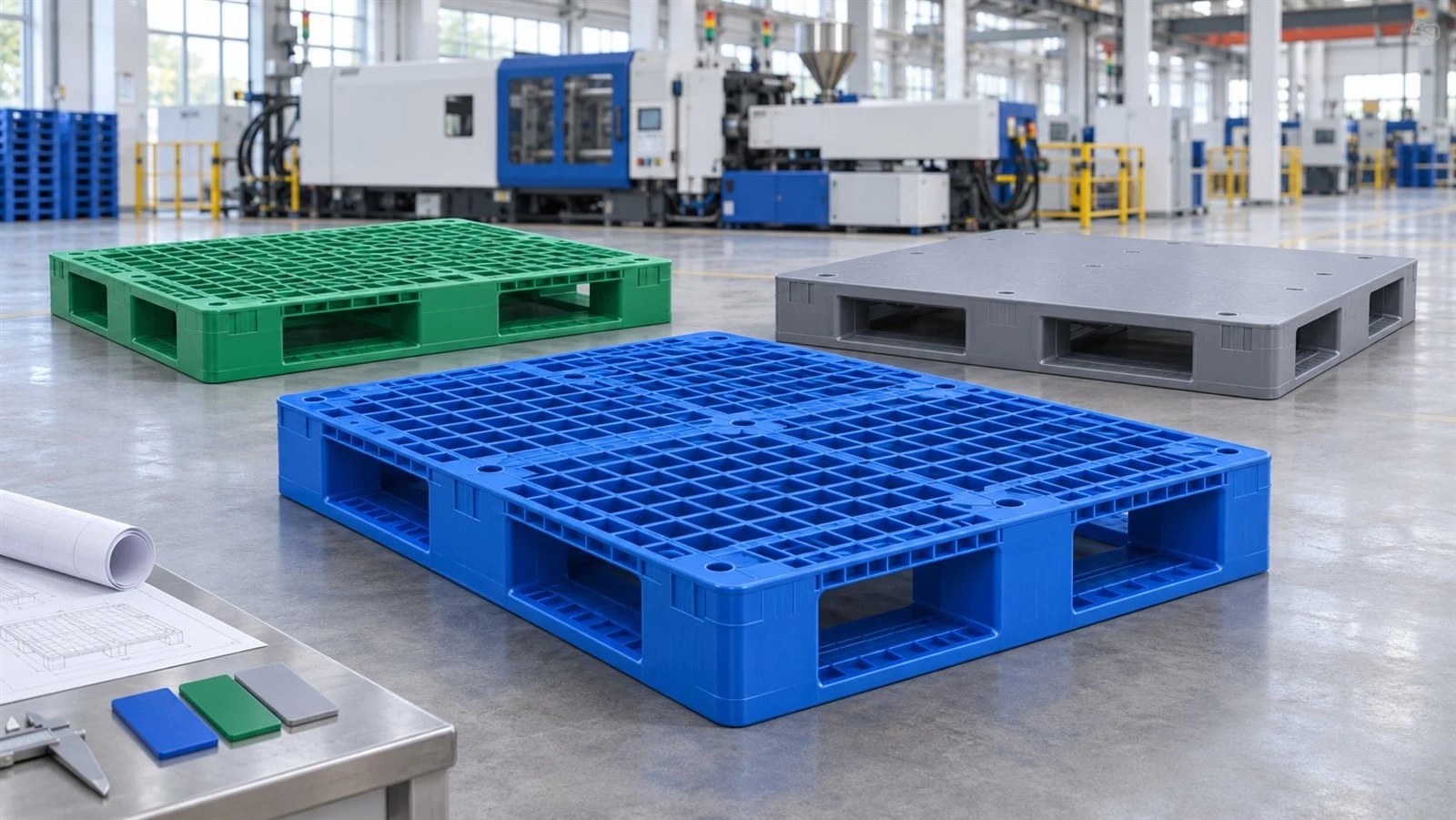
Standard plastic pallets work well for many general storage and transportation applications. However, they may not fit every warehouse layout, handling system, or product requirement.
I have worked with buyers who initially planned to purchase standard pallets but later discovered that the dimensions or load performance did not match their actual operating conditions.
For example, a pallet that is slightly too wide may not fit a warehouse rack properly. A pallet with insufficient racking strength may bend under a concentrated load. These problems can affect daily operations and increase handling costs.
There are several common reasons why businesses choose customized plastic pallets.
1. Compatibility with Warehouse Equipment
Warehouses often use fixed rack dimensions, automated storage and retrieval systems (ASRS), conveyors, and forklifts. A pallet that does not match these systems can cause handling problems, reduce storage efficiency, or interrupt automated operations.
Custom dimensions and structural designs help pallets fit existing equipment more accurately.
2. Different Load Requirements
Different products require different pallet structures. Heavy industrial components, packaged food, pharmaceutical products, and lightweight cartons do not have the same load requirements.
A manufacturer can adjust the deck structure, supporting ribs, base design, and internal reinforcement according to the intended application.
3. Brand Identification and Inventory Management
Custom colors and logos help companies identify products, organize warehouse operations, and maintain consistent brand presentation across multiple locations.
For businesses managing different product categories, color-coded pallets can also make sorting and inventory identification easier.
4. Industry-Specific Requirements
Food processing, pharmaceutical distribution, chemical storage, and cold-chain logistics may require different materials, surface designs, and documentation.
A customized pallet can be developed around these requirements rather than relying on a general-purpose model.
From my experience, a custom pallet may cost more initially, especially when new molds are involved. However, the right design can reduce handling problems, improve space utilization, and lower long-term operating expenses. I always recommend evaluating the total operating cost rather than comparing unit prices alone.
What Customization Services Should You Look For?
Not every plastic pallet factory offers the same level of customization. When I discuss a new project with buyers, I usually start by understanding which parts of the product need to change and whether the factory has the production capabilities to support those changes.
Custom Sizes and Dimensions
Size is one of the first things most buyers want to customize.
A plastic pallet may need to fit specific warehouse racks, shipping containers, forklifts, pallet jacks, or conveyor systems. Even a small dimensional difference can affect handling and storage efficiency.
Custom Colors and Logos
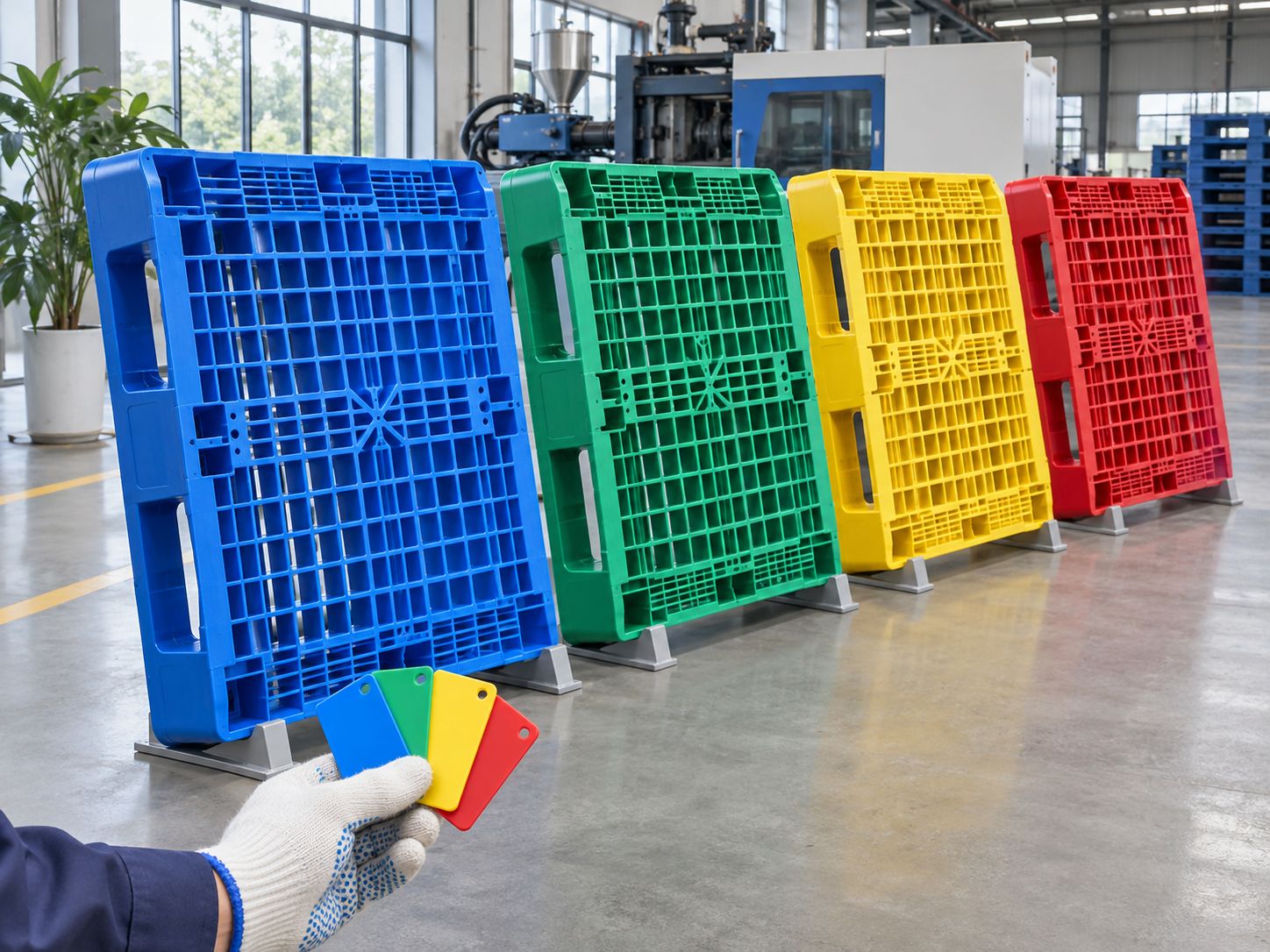
Color and logo customization may seem like small details, but they can make a real difference in warehouse management and brand identification.
Many of the buyers I work with use different pallet colors to identify product categories, warehouse locations, or business departments. This makes sorting easier and helps workers recognize products more quickly.
A manufacturer may offer several customization methods.
Custom Colors: Buyers can provide a Pantone reference, color code, or physical sample. The factory can prepare a color sample for approval before mass production.
Molded-in Logos: The logo is incorporated into the mold, creating a permanent raised or recessed design on the pallet surface.
Printed Logos: Printing or other marking methods can be used when buyers need branding without developing a new mold.
I usually recommend choosing the logo method according to order quantity, logo complexity, budget, and expected product life.
For large orders, molded-in logos may be worth considering. For smaller orders or temporary branding requirements, printing may be more economical.
Load Capacity and Structural Design
Load capacity is one of the most important factors when selecting a plastic pallet. I pay particular attention to this part because an unsuitable pallet can bend, break, or damage the goods it carries.
Buyers should distinguish between three types of load ratings:
Dynamic Load: The weight a pallet can carry while being moved by a forklift or pallet jack.
Static Load: The weight a pallet can support when placed on a flat, stable floor.
Racking Load: The weight a pallet can support when positioned on a warehouse rack.
These ratings are not interchangeable. Racking applications usually require particular attention to structural strength and deflection.
The pallet design may need several adjustments to meet different load requirements:
Deck thickness and rib structure
Bottom support configuration
Reinforced corners and edges
Steel reinforcement where appropriate
Open-deck or closed-deck construction
Forklift entry design
When discussing a project, I always ask about the actual product weight, load distribution, handling method, and stacking conditions before recommending a pallet. I also suggest asking suppliers for load test reports and clarifying the testing conditions.
Material and Mold Customization
Material selection affects pallet stiffness, impact resistance, temperature performance, and service life.
HDPE and PP are two commonly used materials for plastic pallets.
HDPE (High-Density Polyethylene) is commonly selected for applications requiring impact resistance and performance in low-temperature environments.
PP (Polypropylene) generally offers higher stiffness and can be suitable for applications where dimensional rigidity is important.
Recycled and virgin materials may also be available. Their suitability depends on the material grade, product design, application, and relevant industry requirements.
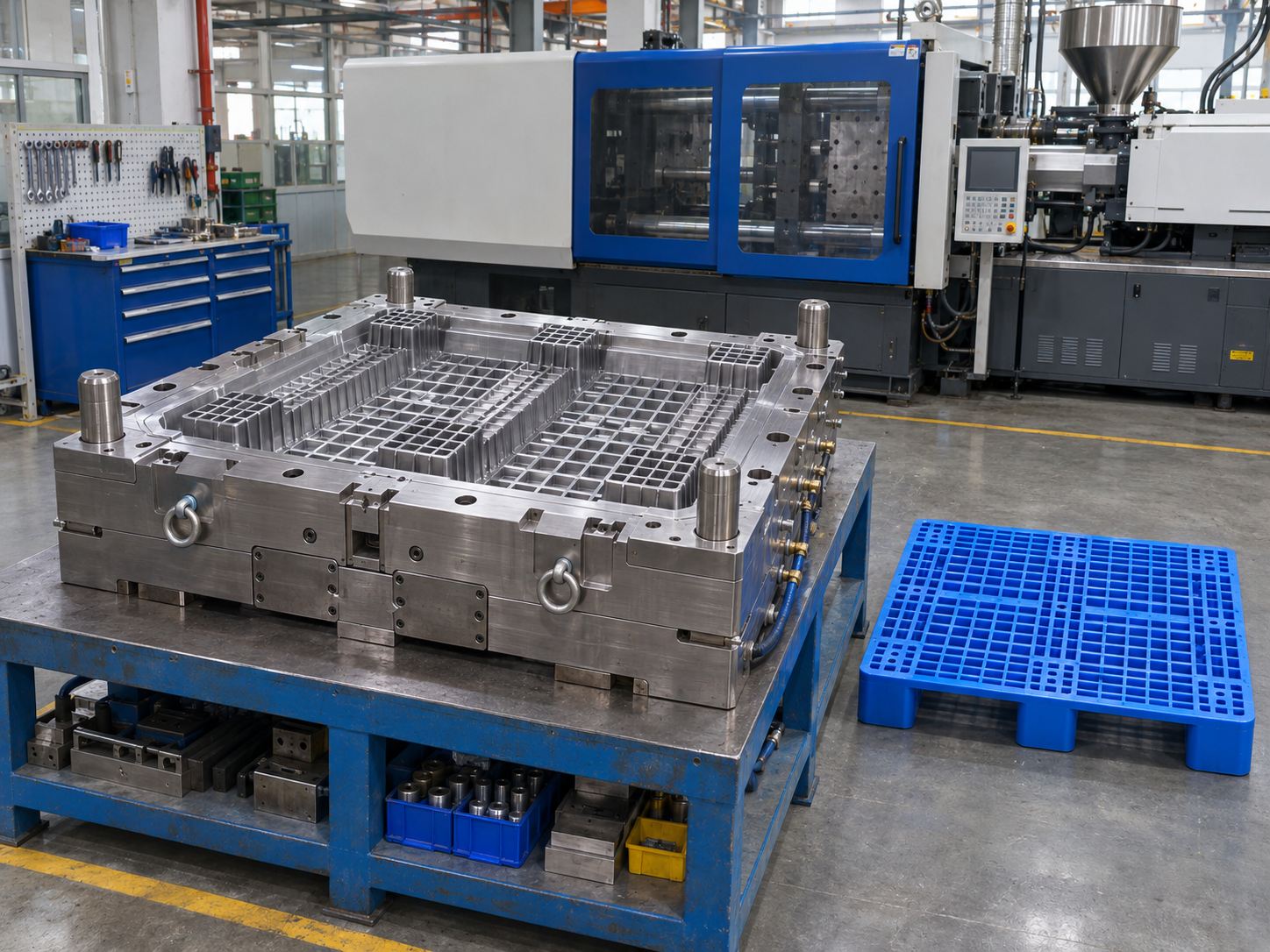
Mold customization is another important part of the process. When an existing pallet design cannot meet the buyer's requirements, the manufacturer may need to modify an existing mold or develop a new one.
From my experience, mold ownership is one of the details buyers should never overlook.
Before starting mold development, I recommend clarifying:
Who owns the mold?
Who pays for mold development and maintenance?
Can the mold be used exclusively for your orders?
How long will development and sampling take?
What happens if the mold needs repair or modification?
A manufacturer with in-house injection molding equipment and mold development support can generally coordinate design adjustments and production testing more directly.
Five Chinese Plastic Pallet Manufacturers Offering Customization Services
When researching Chinese plastic pallet manufacturers, I recommend looking beyond product catalogs. Production equipment, customization capabilities, quality management, and export experience all deserve attention.
The following five companies are worth considering when building a supplier shortlist. Their specific production capabilities, customization options, and commercial terms should be confirmed directly before placing an order.
Enlightening Pallet Industry Co., Ltd.
Website: https://www.cnplasticpallet.com/
Enlightening Pallet Industry Co., Ltd. has more than 20 years of experience manufacturing plastic pallets, pallet boxes, and related material handling products. Its production facilities cover more than 90,000 square meters and include over 60 injection molding machines, with equipment supporting large-format plastic products.
Customization is an important part of Enlightening Pallet Industry's daily production work. The company helps customers adjust pallet dimensions, colors, logos, and structural designs according to warehouse layouts, load requirements, and handling equipment.
From my experience, the most important step in a custom pallet project is understanding how the product will actually be used.
For example, a pallet designed for warehouse racking has different structural requirements from one used for floor storage or general transportation. Before recommending a design, Enlightening Pallet Industry's team discusses the load, handling method, storage environment, and stacking conditions with the buyer.
Enlightening Pallet Industry's customization services include:
Custom Dimensions: Pallet dimensions and structural designs can be adjusted according to warehouse equipment, transportation requirements, and load conditions.
Custom Colors: Different colors can be produced according to customer requirements.
Logo Customization: Branding can be incorporated into product designs or applied through suitable printing methods.
Mold Development: Existing designs can be modified, or new molds can be developed for specific projects.
Structural Adjustments: Pallet designs can be adapted for different handling systems, storage environments, and load requirements.
Enlightening Pallet Industry's products are used in warehousing, manufacturing, food and beverage logistics, pharmaceutical distribution, and industrial transportation.
Quality control is also an important part of the company's production process. Enlightening Pallet Industry carries out raw material checks, production monitoring, visual inspections, and product testing. Relevant certification documents and third-party inspection reports can be provided according to the product and project requirements.
For buyers developing a new pallet or modifying an existing model, Enlightening Pallet Industry's team can review technical drawings, product dimensions, and application details to discuss suitable production options.
Qingdao Cnplast Co., Ltd.
Website: https://www.icnplast.com/
Qingdao Cnplast Co., Ltd. is another Chinese manufacturer to consider, particularly for buyers looking for plastic pallets, pallet boxes, and reusable industrial packaging solutions.
The company has been involved in plastic product manufacturing since 2000 and supplies material handling products to international markets. Its product range covers plastic pallets, plastic crates, pallet boxes, and other reusable logistics containers.
From my perspective, automotive parts logistics is an application where customized container design can make a real difference. Different components have different shapes, weights, and protection requirements. A standard pallet box may not always provide the best solution.
For this type of project, I would recommend discussing several details with the manufacturer:
Custom Dimensions: The internal and external dimensions should match the size and quantity of the automotive components.
Container Structure: Buyers should consider whether a fixed or collapsible pallet box is more suitable for their storage and return transportation arrangements.
Load Requirements: The container should be designed around the actual component weight, stacking height, and handling conditions.
Internal Protection: Depending on the parts being transported, buyers may need dividers, separators, or other protective inserts to prevent movement and contact damage.
Branding and Identification: Custom colors, logos, and identification labels can help organize reusable containers across automotive supply chains.
Qingdao Cnplast also has substantial manufacturing resources, including injection molding equipment, a large mold inventory, and production facilities supporting different plastic product requirements.
For automotive suppliers, manufacturers, and logistics companies, I recommend providing component dimensions, loading quantities, transportation routes, and stacking requirements when requesting a quotation. This gives the factory a clearer understanding of the project and helps determine whether an existing pallet box can be modified or a new design is needed.
Preface Plast
Preface Plast is another company buyers may consider when researching Chinese plastic pallet manufacturers.
When I evaluate a potential supplier, I usually start with its actual customization capabilities rather than its product catalog. A factory may display many standard pallet models, but that does not automatically mean it can develop a new product according to a buyer's specifications.
For this reason, I would recommend asking Preface Plast several questions before starting a project.
First, can the company manufacture pallets according to customer drawings or samples? If you need a non-standard size, ask whether it can modify an existing mold or develop a new one.
Second, what logo and color options are available? Confirm whether the factory supports molded-in logos, printing, and custom color matching.
Finally, ask about sample production, minimum order quantities, and mold ownership. These details can have a significant impact on your project budget and production schedule.
I always recommend requesting a sample and relevant production information before committing to a large order.
Shandong Huike
Shandong Huike is another potential supplier to include when researching Chinese plastic pallet manufacturers.
For buyers looking for customized pallets, I believe structural design and load performance should be key evaluation points.
Load Requirements
Provide the actual load weight and explain whether the pallet will be used for floor storage, forklift transportation, or warehouse racking. Ask for the corresponding dynamic, static, and racking load ratings.
Structural Options
Discuss whether the supplier offers different deck designs, reinforced structures, and forklift entry configurations. These features can affect both pallet performance and production costs.
Mold Ownership
For projects involving new molds, clarify ownership, maintenance responsibilities, development costs, and future modification arrangements.
I also recommend requesting product samples and relevant test reports. Testing the pallet under actual operating conditions is an important step before approving large-volume orders.
Guangdong Wedong
Guangdong Wedong is another manufacturer buyers can investigate when comparing plastic pallet customization options.
When evaluating a supplier, I pay particular attention to material selection, color consistency, and industry-specific requirements.
Material Selection
Ask whether the pallet is manufactured using HDPE, PP, or recycled material. Request the material grade and relevant technical information.
The appropriate material depends on the intended application, operating temperature, impact requirements, and expected load.
Industry Documentation
For products intended for food-related or regulated applications, clarify which certificates and test reports are available for the specific product and material.
I would not assume that a general company certificate automatically applies to every pallet model.
Color Consistency
If your business requires multiple batches of pallets in the same color, ask about color matching, sample approval, and production batch control.
Finally, compare minimum order quantities, mold charges, and delivery arrangements before making a decision.
How to Choose a Reliable Plastic Pallet Manufacturer in China?
I have seen how a poor supplier choice can create problems for buyers, from inconsistent product dimensions to delayed deliveries and unexpected mold costs.
Over the years, I have developed a simple process for evaluating potential manufacturing partners. These are the five steps I recommend following before placing an order.
Confirm the Manufacturing Capabilities
First, find out whether the supplier operates its own production facilities.
Ask for information about injection molding machines, mold development equipment, production capacity, and factory operations.
A live video call or factory visit can help you understand whether the company has the equipment needed for your project.
I also recommend checking whether the factory can handle the entire process or relies on external partners for important production steps.
Check Product Quality and Certifications
Request the company's business information and relevant quality management documents.
For customized pallets, ask for test reports related to the exact product model.
Depending on the application, you may also need material information, REACH or RoHS documentation, or other market-specific compliance documents.
Make sure the document scope matches the product you intend to purchase. A certificate for one material or product should not automatically be treated as proof for every product from the same supplier.
Request Samples Before Mass Production
A sample allows you to check details that product photographs cannot show.
I recommend paying attention to:
Actual length, width, and height
Product weight and surface finish
Forklift entry and handling performance
Color and logo quality
Structural strength under the intended conditions
For racking applications, conduct appropriate tests using the actual rack configuration and load conditions.
Clarify Mold Ownership and Development Costs
Mold development can represent a significant investment.
Before making payment, confirm who owns the mold, whether it is exclusive, how it will be stored, and who is responsible for maintenance.
I always suggest putting these terms in the contract. A clear agreement can prevent misunderstandings if you decide to change suppliers or modify the product later.
Compare Total Purchasing Costs
The lowest unit price does not always represent the lowest purchasing cost.
When I compare different quotations, I recommend looking at:
Product unit price
Mold development costs
Sample and testing expenses
Packaging and container loading efficiency
Shipping costs
Production lead time
After-sales support
Comparing suppliers using the same specifications makes it easier to identify the most suitable option.
What Information Should You Prepare Before Requesting a Quote?
A detailed inquiry helps manufacturers understand your project and provide more accurate quotations. Before contacting a supplier, I suggest preparing the following information.
Product Dimensions
Provide the required length, width, and height. Include fork entry dimensions, deck design, and a technical drawing if available.
If you already have a pallet that you want to replace, photos and measurements can also help the manufacturer understand your requirements.
Load Requirements
Specify the product weight, dynamic load, static load, and racking load requirements. Explain how the pallet will be handled and stored.
Application Environment
Describe where the pallet will be used. For example, is it intended for a warehouse, cold storage facility, food processing plant, pharmaceutical distribution center, or automated warehouse?
Also mention any special requirements involving cleaning, temperature, moisture, or chemical exposure.
Material Requirements
Indicate whether you prefer HDPE, PP, virgin material, or recycled material. If you have specific material or compliance requirements, include them in the inquiry.
Color and Logo
Provide your preferred color code and logo artwork. If you need molded-in branding, mention this before mold development.
Order Quantity and Delivery Information
Include the estimated order quantity, destination country or port, expected delivery date, and any packaging requirements.
Custom Plastic Pallets: OEM vs ODM
Many buyers use OEM and ODM interchangeably, but they represent different manufacturing arrangements.
I explain the difference to customers in a simple way: OEM means you bring the design, while ODM means you choose a design provided by the manufacturer.
What Is OEM Plastic Pallet Manufacturing?
OEM (Original Equipment Manufacturing) means the buyer provides the product design, technical drawings, or physical sample, and the manufacturer produces the pallet according to the agreed specifications.
OEM is suitable for companies that already have an established product design or need a specific pallet for their own warehouse and distribution systems.
Typical OEM customization includes:
Custom dimensions and structural designs
Specific material requirements
Custom load-bearing structures
Molded-in company logos
Exclusive product designs
For example, some of our customers provide detailed technical drawings because their pallets must fit existing warehouse racks or automated handling equipment.
For OEM projects, mold ownership, design rights, and production responsibilities should be clearly defined in the contract.
What Is ODM Plastic Pallet Manufacturing?
ODM (Original Design Manufacturing) means the manufacturer provides an existing product design that buyers can select.
Depending on the factory's capabilities, buyers may be able to change colors, logos, materials, or certain structural details without developing a completely new product.
I often recommend this approach to distributors and wholesalers who want to launch a plastic pallet product without investing in a completely new mold.
ODM can reduce development time and initial investment, although the degree of customization depends on the existing design.
Which Option Is Better for Your Business?
|
Comparison |
OEM |
ODM |
|
Product design |
Provided by buyer |
Provided by manufacturer |
|
Customization |
Extensive |
Based on existing models |
|
Mold development |
May require a new mold |
Usually uses existing molds |
|
Development cost |
Can be higher |
Often lower |
|
Development time |
Usually longer |
Usually shorter |
|
Design ownership |
Agreed with buyer |
Usually retained by manufacturer |
From my experience, neither option is automatically better. The right choice depends on your technical requirements, budget, order quantity, and product development plans.
If you already have a specific design, OEM may be more suitable. If you need a standard pallet with some branding or minor adjustments, ODM may be a more practical starting point.
Frequently Asked Questions
Q: What Is the Minimum Order Quantity for Custom Plastic Pallets?
A: The MOQ depends on the customization method and product design. Changing the color or adding a printed logo may require a different minimum quantity from developing a new mold. When we discuss a new project, I usually evaluate the product design, production process, and expected order quantity before confirming the MOQ. Ask every manufacturer to separate the product MOQ from any mold development charges when preparing a quotation.
Q: How Long Does It Take To Develop A Custom Plastic Pallet Mold?
A: Mold development usually takes several weeks, depending on product dimensions, structural complexity, and mold requirements. Sampling and design adjustments may require additional time. I recommend requesting a development schedule before confirming the project. It is better to allow enough time for drawing approval, mold production, sampling, and testing rather than rushing into mass production.
Q: Who Owns The Custom Plastic Pallet Mold?
A: Mold ownership depends on the agreement between the buyer and manufacturer. For OEM projects, buyers may arrange to own the mold after paying the agreed development costs. For ODM projects, the manufacturer usually retains ownership of its existing molds. I always recommend clarifying ownership, usage rights, maintenance costs, and storage arrangements in writing before paying for mold development.
Q: Can I Add My Logo And Custom Color To Plastic Pallets?
A: Yes. Many Chinese plastic pallet manufacturers offer custom color matching and logo services. Depending on the product design and order quantity, logos can be incorporated into the mold or applied through printing. Buyers should approve a sample before mass production to confirm the final appearance.
Q: How Can I Verify Whether A Chinese Plastic Pallet Supplier Is A Real Factory?
A: Request a factory video tour, business license, production equipment information, and product test reports. You can also arrange a factory audit or third-party inspection. I also recommend asking to see the actual production process rather than relying only on factory photographs or website descriptions.
Conclusion
Choosing a Chinese plastic pallet manufacturer involves more than finding a factory that offers custom colors or logos. From my experience, buyers should evaluate product development capabilities, mold management, material selection, load performance, quality control, and export experience before making a decision.
Enlightening Pallet Industry Co., Ltd. provides plastic pallet manufacturing and customization services for international buyers. Customization options include pallet dimensions, colors, logos, structural modifications, and mold development. With more than 20 years of manufacturing experience and over 60 injection molding machines, the company supports a wide range of plastic pallet requirements for warehousing, transportation, and industrial applications.
Whether you need an existing pallet model with customized branding or a new design based on your warehouse requirements, clear technical information helps define the right solution.
Send your pallet drawings, load requirements, intended application, and estimated order quantity to Enlightening Pallet Industry Co., Ltd. The team will review your specifications and discuss suitable design and production options for your project. Contact Enlightening Pallet Industry Co., Ltd. to discuss your custom plastic pallet project.
