


How To Choose Plastic Waste Bins
Waste bins show up everywhere. Cities, neighborhoods, hospitals, factories, and shopping malls all use them. A waste bin is not just a container. The right one keeps a space clean and safe. The wrong one causes real problems.
Price should not be the only factor. A cheap bin often uses thin plastic that cracks or bends within months. Buyers need to think about where the bin will be used, how big it should be, what it's made of, and how the lid and wheels work. Pick the wrong bin and you end up with bad smells, hard pickups, and mixed-up waste sorting.
Start With the Place of Use
Before looking at price or capacity, figure out where the bin will sit. Each location comes with its own set of requirements.
Outdoor bins go on streets, in parks, and around housing communities. HDPE is the material to look for. It holds up under sun exposure and takes a beating without cracking.
Smaller collection points work well with 120L or 240L bins. That size is easy to move and still holds enough trash between pickups. Larger transfer stations need 660L or 1100L bins. These bigger sizes usually come with wheels built for garbage trucks to lift and empty.
Hospitals and Medical Facilities
Medical waste bins need a tight seal. A loose seal lets liquid leak out and spreads bacteria. A foot-pedal lid works best here, since staff can open the bin without touching it with their hands.
Color matters too. Different colors mark different waste types, so hospital staff can tell at a glance what goes where. Capacity also shifts by department. An operating room produces far more medical waste than a regular patient ward. And medical waste should never mix with regular trash. That's a basic hygiene rule, not an option.
Sharps containers hold needles, blades, and broken glass. These containers need puncture-resistant walls, or a needle can poke straight through. They also need to stop leaks and block accidental opening.
Small sharps boxes work fine in exam rooms and labs, where the volume of sharp waste stays low. Larger sharps containers fit collection points where waste from several departments gets gathered before disposal.
Indoor bins show up in offices, restaurants, and malls. These spaces see heavy foot traffic, so look and odor control both matter. A foot-pedal or swing-top lid works well in high-use areas, since both let people toss trash without touching a dirty handle.
Offices and restrooms usually need 30L to 70L bins. That size stays out of the way and empties quickly. Kitchens and dining areas need more room, usually 60L to 100L, since food waste piles up faster.
Industrial and High-Impact Areas
Factory floors and construction sites take rougher use. Metal scraps and heavy debris can dent or crush a plastic bin fast. A steel bin handles this kind of load much better.
Steel also resists fire better than plastic. For large-scale, high-impact collection, steel is the safer pick.
Choose the Right Waste Bin Capacity
Once the location is set, capacity comes next. Get this step wrong, and every other choice gets harder to fix later.
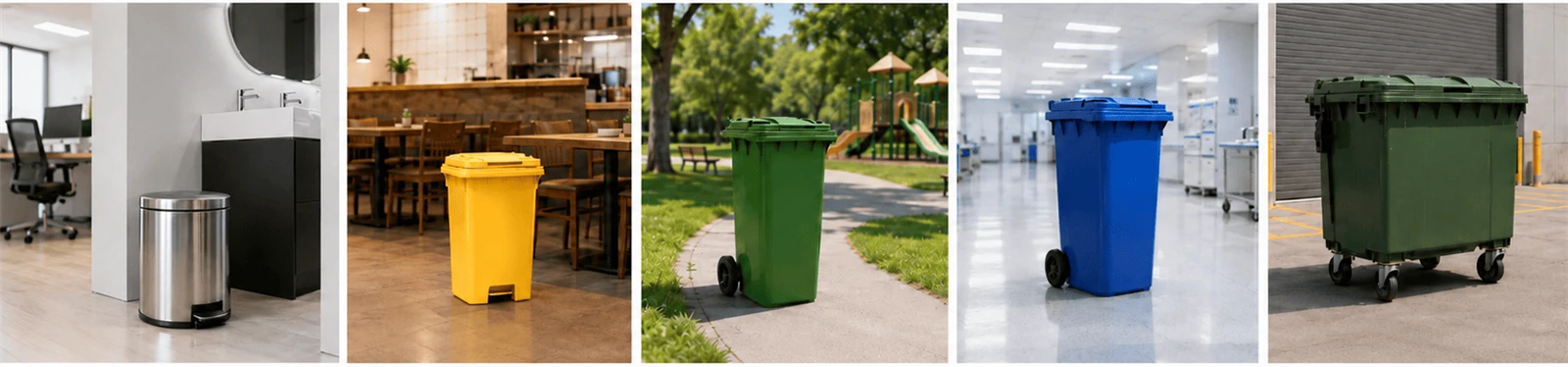
Capacity should match foot traffic and waste volume. More people in a space means more trash produced each day. The table below shows common matches.
|
Setting |
Recommended Capacity |
|
Offices, restrooms |
30L–70L |
|
Restaurants, schools, malls |
60L–120L |
|
Communities, streets, parks |
120L–240L |
|
Factories, warehouses, hospitals |
240L–360L |
|
Commercial centers, public collection points |
660L |
|
Municipal, industrial park, bulk transfer |
1100L |
Bigger is not always better. A small bin needs emptying more often, but it's easy on the wheels and handle. A large bin cuts down pickup trips, but once full, it puts more strain on the wheels, axle, and handle. The heavier a full bin gets, the harder it is to push.
Check the Material Before Buying
With capacity settled, material comes next. This choice decides how long the bin lasts and whether it can handle local weather and daily wear.
Why HDPE Is Commonly Used
HDPE resists impact and moisture well. The surface stays smooth, cleans easily, and won't rust. These traits make it a solid choice for long-term outdoor use.
HDPE fits cities, neighborhoods, schools, and factories, places that need bins to last for years without constant replacement. That's why most plastic waste bins on the market use this material.
When to ChooseSteel Bins
Steel bins fit places with strict fire safety rules. They also handle heavy impact and large loads better than plastic. Factories and industrial parks often go with steel for this reason.
Plastic and steel aren't competing for the same title. Each fits different job conditions. The real question is what the site needs, not which material sounds tougher on paper.
Look at Lid, Wheels, and Handle Design
Material is settled, but a few details still deserve attention. These get skipped often, yet they shape the day-to-day experience of using the bin.
Lid Design
A regular flip-top lid works fine outdoors and in public areas. It needs little upkeep. A foot-pedal lid fits hospitals and kitchens, where hands-free use matters most. A sealed lid suits waste that smells, like food scraps or medical trash.
Bins at 660L and 1100L usually come with a wide lid opening. That makes it easier to dump trash in and easier for a truck to empty during pickup.
Wheel Design
Two-wheel bins suit sizes from 120L to 240L, light enough to push around daily. Four-wheel bins suit the bigger 660L to 1100L range, where the extra wheels spread out the weight of a full load.
Wheel size and axle strength decide how stable the bin feels when pushed. Small wheels take more effort to move. A weak axle loosens up fast under regular use. Factories and hospitals should check wheel quality closely, since these bins get pushed around all day, every day.
Handle and Bottom Strength
A good handle should be easy to grip. A poor grip means the bin slips during transport. The base needs enough thickness to resist bending under a full load. A bin that warps when full becomes harder to empty and harder to move.
The bottom should drain water easily during cleaning, or standing water starts to smell. It should also resist wearing down from being dragged across pavement. These small details don't stand out in a photo, but they decide how long a bin actually lasts on the job.

Match Color and Logo With Sorting Needs
The sections above cover how a bin functions. This one covers how a bin supports waste sorting and site branding.
Color helps separate waste types. Blue often marks recyclables, and yellow often marks medical waste. Clear color coding cuts down on sorting mistakes, since people can tell what goes where without reading a label.
Bulk buyers can customize color, size, and logo. Property managers, schools, and hospitals often use this option to keep their site consistent. Custom labels also reduce wrong disposal, especially in busy public areas where people move fast and don't stop to read fine print.

Confirm Certifications and Standards
Color and design solve daily use problems, but bulk buyers also need to check a supplier's credentials. This step matters more than most people expect.
For bulk orders, certification counts more than looks. It shows a supplier's production capability and quality control. ENLIGHTENING PALLET holds ISO9001 for quality management, ISO14001 for environmental management, and EN840 certification.
Buyers should ask for certificate numbers before placing an order. Checking a certificate on the issuing body's website takes only a few minutes, and it keeps buyers away from suppliers who fake this paperwork. Some small factories use generic stock images to pass off as proof of certification, so this quick check is worth the time.
Export buyers need to watch customs requirements too. EN840 certification is often required for customs clearance and bidding in many countries. Confirming these documents with a supplier ahead of time avoids delays at shipping and customs.
Plan for Bulk Purchase and MOQ
Certifications are confirmed, but buying conditions still need attention. Wholesale buying works differently than a single retail purchase.
Wholesale buyers shouldn't judge a deal by price alone. A low price sometimes comes with a longer lead time or weak packaging. Confirm MOQ, delivery time, and packaging method before committing. ENLIGHTENING PALLET sets its MOQ at 300 pieces, a good fit for distributors, cleaning service providers, and property management projects.
When comparing quotes, calculate total cost, not just the factory price. Total cost includes shipping and the cost of replacing damaged units. Mismatched colors or sizes across an order also add hidden management costs on-site, expenses that often get overlooked until the bins arrive.
Choose the Right Supplier for Long-Term Use
Everything above deals with the product itself. In the end, the choice comes down to the supplier. Even a great product needs a reliable supplier behind it to keep supply steady over time.
Check whether a supplier's product range covers what you need. A supplier should ideally offer outdoor, medical, indoor, and steel bins under one roof. ENLIGHTENING PALLET's product line covers all four categories, so buyers can source everything from one place instead of juggling multiple vendors.
A supplier also needs steady delivery. Ask for samples and spec sheets before ordering, and check the material and build quality yourself. This cuts down on back-and-forth communication later and helps avoid receiving bins that don't match what was promised.
Conclusion
Start with the location, then move to capacity and material. The location sets the basic bin type, while capacity and material decide how long the bin will hold up. After that, check the lid, wheels, color, and certification. These details shape both the daily experience and the safety of the purchase.
Following this order saves time and cuts down on back-and-forth comparison. Whether the need is an outdoor bin, a medical waste bin, a sharps container, or a steel bin, capacity and MOQ requirements can guide a custom order. Color, size, and logo customization are available, along with samples and spec sheets for buyers who want to check quality first.
FAQ
Q1: What material works best for outdoor plastic waste bins?
HDPE is the most common choice. It resists sun damage and impact, making it a good fit for long-term outdoor use.
Q2: What size waste bin should I choose?
It depends on the setting. Offices work well with 30L to 70L, outdoor public areas need 120L to 240L, and large collection points need 660L or 1100L.
Q3: Can plastic waste bins be customized?
Yes. Bulk buyers can customize color, size, and logo, which works well for property managers, schools, and companies that want consistent branding.
Q4: What is the MOQ for wholesale waste bins?
The MOQ is 300 pieces, suitable for distributors, cleaning service providers, and property management purchases.
Q5: How are medical waste bins different from regular ones?
Medical waste bins need a tighter seal and usually come with a foot-pedal lid. Color coding also helps separate waste types. These features protect hygiene and safety.
Q6: When should I choose a steel waste bin?
Steel works best where fire resistance or heavy impact resistance matters, such as factories and construction sites. It also suits large-scale collection projects.
