


How to Test Plastic Pallet Samples Before a Bulk Order
Buying plastic pallets in bulk without testing samples can lead to damaged goods, warehouse delays, and extra replacement costs. I have seen buyers focus on price and advertised load capacity, only to find that the pallets do not fit their actual storage systems.
I recommend testing plastic pallet samples before approving a bulk order. Start by checking load performance, long-term deformation, impact resistance, and dimensional accuracy. Then compare the results with your warehouse requirements, verify production consistency, and run a practical trial before confirming the order.
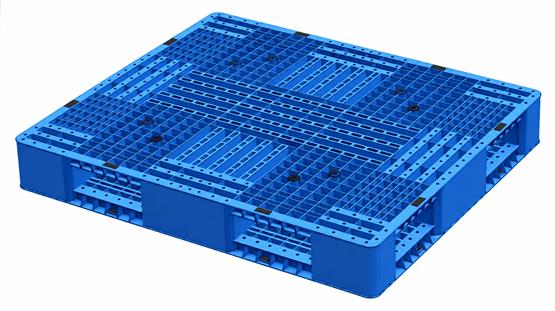
I have worked with plastic pallets and industrial buyers for many years, and I know that a product specification sheet cannot show every detail of actual performance. A pallet may look strong and carry a heavy load on the floor, but it may behave differently on warehouse racks or conveyor lines. I recommend using a clear testing plan to identify these risks before production begins. This helps buyers compare suppliers, set realistic acceptance criteria, and make better purchasing decisions.
How Should I Prepare Plastic Pallet Samples for Testing?
I never recommend testing a pallet without first understanding its intended use. A test that ignores the actual cargo, rack structure, or handling equipment may produce results that do not reflect warehouse conditions. Buyers can avoid unnecessary testing costs by defining the requirements before requesting samples.
I recommend preparing a test plan that covers cargo weight, pallet dimensions, support conditions, operating temperature, and handling equipment. Buyers should also decide how long the pallet will remain loaded and what results they expect from each test. These details help the supplier provide a suitable sample and make the final evaluation more meaningful.
Define the Load and Working Conditions
I first ask buyers to describe the goods that each pallet will carry. Total weight matters, but load distribution matters just as much. A pallet carrying evenly distributed cartons faces different stresses from one carrying machinery parts, liquid containers, or products with small support feet.
I also check whether the pallet will stay on the floor, move between production lines, or remain on warehouse racks for several days or weeks. If the buyer operates a cold room or an outdoor storage area, I include the expected temperature range in the test plan. These details help us choose relevant tests instead of relying on general load figures.
Confirm Rack Dimensions and Handling Equipment
For rack storage, I ask for the beam spacing, beam profile, and pallet support positions. I also check forklift entry requirements, conveyor dimensions, and any restrictions in an automated storage system. A pallet may fit inside the rack opening but still have unsuitable runner positions or excessive clearance.
I recommend recording these requirements in a technical specification before testing begins. This gives the buyer and supplier a shared reference for sample approval and later production checks.
Set Clear Acceptance Criteria
I establish the acceptance criteria before testing, rather than deciding what counts as a pass after seeing the results. These criteria can cover load performance, acceptable deformation, visible damage, key dimensions, and equipment compatibility. I also ask the supplier to document the test method and conditions.
When the buyer and supplier agree on these requirements in advance, both sides can evaluate the sample against the same standard. This reduces confusion during approval and gives the buyer a clearer basis for accepting the bulk order.
Which Tests Should I Run on Plastic Pallet Samples?
I do not rely on a single load test to judge a plastic pallet. Each test checks a different part of its performance, and passing one test does not prove that the pallet will work in every application. I recommend matching the test plan to the actual storage and handling requirements.
I normally prioritize static, dynamic, and racking load tests, followed by checks for long-term deformation, impact resistance, and dimensional accuracy. The test results should show how the pallet performs under defined conditions, rather than simply provide a maximum weight figure. Buyers should also request relevant test records before approving production.
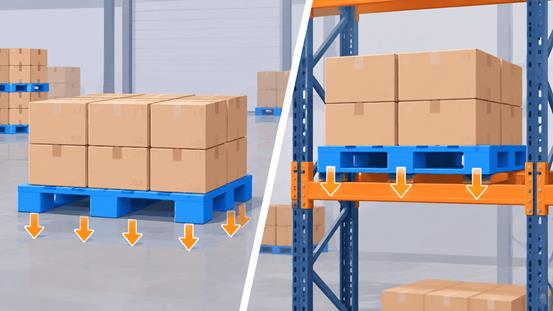
Static, Dynamic, and Racking Load Tests
I always explain the difference between these three load ratings because buyers sometimes compare them as if they mean the same thing. Static load relates to a pallet resting on a stable floor, dynamic load relates to a pallet being moved under load, and racking load relates to a pallet supported across warehouse rack beams. Each condition places different demands on the pallet structure.
For example, a pallet may support a heavy load on the floor but bend too much when its center spans the gap between rack beams. I therefore recommend checking the load rating that matches the intended application. For elevated storage, I give particular attention to the actual beam spacing, load distribution, and deformation under the specified conditions.
Buyers who need a broader explanation of load ratings and pallet selection can refer to our plastic pallet product category and selection guide. I use these requirements as a starting point before deciding which tests are necessary for a specific project.
Creep Resistance and Temperature Testing
I also check how the pallet behaves under a sustained load. Plastic can gradually deform under continuous pressure, even when it shows no immediate signs of damage. This behavior is known as creep, and it matters when a pallet remains loaded on warehouse racks for long periods.
I recommend asking the supplier to explain the sustained-load test conditions and provide deformation measurements over the agreed period. Temperature also matters because plastic stiffness and impact behavior can change with the operating environment. A pallet used in a cold room may need different validation from one used in a warm warehouse.
I do not assume that a short test can prove long-term performance. I review the duration, support arrangement, load distribution, and temperature before deciding whether the results apply to the intended operation.
Impact, Fatigue, and Dimensional Tests
I check for cracks, damaged runners, and other visible defects after representative handling tests. Forklift entry, turning, lowering, and repeated transfers can place stress on areas that a simple static test does not cover. For reusable pallets, I also consider repeated handling because the product may complete many warehouse cycles before replacement.
I measure length, width, height, runner position, and flatness against the agreed technical drawing. These dimensions are especially important for conveyor systems and automated warehouses, where small variations can cause handling errors or interruptions.
I recommend recording the results in a single inspection report. This makes it easier to compare samples from different suppliers and identify which issues need further testing before bulk production.
How Do I Evaluate Test Results Before a Bulk Order?
I do not approve a bulk order simply because a sample survives a load test. I review the test conditions, recorded results, and whether the sample matches the buyer's actual operating requirements. A load rating without clear test conditions gives buyers too little information to make a sound decision.
I recommend comparing each result with the agreed acceptance criteria. Buyers should review load performance, deformation measurements, dimensions, material specifications, and inspection records. For projects involving elevated racks or automated handling equipment, I also recommend a controlled warehouse trial before the final purchase decision.
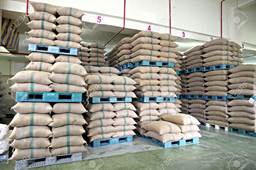
Compare Load Ratings Under Matching Conditions
I first check whether the supplier tested the pallet under conditions that reflect the intended application. A result from a flat-floor test cannot replace a rack test using the required beam spacing and load distribution. I also review the loading duration, deformation measurements, and pallet condition after unloading.
When I compare different pallet models, I use the same test conditions wherever possible. A heavier pallet does not automatically perform better, and two pallets with similar dimensions may have different structural designs. I focus on verified performance rather than appearance or advertised capacity alone.
If a supplier provides only a maximum weight without explaining the test method, I ask for more information before making a recommendation. This helps buyers avoid comparing figures that describe different operating conditions.
Check Material Consistency and Production Quality
I consider sample approval only the beginning of quality control. The bulk order should match the approved sample in material, weight, dimensions, runner structure, and reinforcement. Changes to these details can affect performance, so I recommend recording the key requirements in the purchase specification.
I also ask how the manufacturer checks incoming materials, controls molding conditions, measures finished pallets, and records production batches. These checks help buyers understand how the factory maintains consistency across a large order. If the supplier needs to change the material grade, mold design, or reinforcement configuration, I recommend reviewing the change before accepting it.
For example, buyers considering a heavy-duty model can review our industrial heavy-duty plastic pallet to examine a product's specifications and construction. The listed ratings are a starting point for discussion, not a replacement for testing under the buyer's own rack and load conditions.
Conduct a Warehouse Pilot Test
I recommend testing the approved sample in the actual warehouse before releasing a large order. The trial should use representative cargo and the intended forklift, rack beams, or conveyor system. This helps reveal practical issues that may not appear in a laboratory report.
I ask warehouse operators to check whether the pallet enters the rack smoothly, remains stable during lifting, and moves through the handling system without obstruction. I also inspect the loaded pallet after repeated handling and look for visible damage or unexpected deformation.
I use the trial results to confirm whether the pallet fits the complete handling process. If the pallet needs structural or dimensional changes, I recommend testing the revised version before approving mass production. This step can help prevent delays, product damage, and costly changes after delivery.
What Do I Recommend Before Bulk Ordering Rackable Plastic Pallets?
From my experience, I pay particular attention to four issues before approving rackable plastic pallets for bulk orders. Buyers should not judge rack performance by static load alone, overlook long-term deformation, assume that every production batch will match the approved sample, or rely only on laboratory results.
I recommend treating sample testing as part of the purchasing process rather than a simple product inspection. A clear test plan helps buyers understand whether a pallet suits the intended load, storage system, and handling equipment. It also gives the buyer and supplier a shared standard for product quality.
1. Do Not Judge Rack Performance by Static Load Alone
I always pay close attention to racking capacity when a buyer plans to store goods on elevated warehouse racks. The floor supports the pallet across a broad area, while rack beams support it at specific points. This changes how the pallet carries the load.
I recommend confirming the actual beam spacing, load distribution, and rated racking capacity before selecting a pallet. Buyers should also review deformation under the intended conditions. A pallet that supports a heavy load on the floor may bend too much when part of its base is unsupported.
If the application requires additional support, I discuss reinforced runner designs and steel reinforcement with the buyer and supplier. I make the final recommendation based on verified requirements rather than appearance or static load figures.
2. Pay Attention to Long-Term Deflection
I do not judge a pallet only by what happens during a short test. Plastic may gradually bend under a sustained load, especially when the rack span is wide or the operating temperature is high. A pallet that looks stable after a few minutes may behave differently after days or weeks.
I recommend asking the supplier for sustained-load test information and deformation measurements. Buyers should explain how long the pallet will remain loaded and what temperature conditions it will face. These details help determine whether the test reflects actual storage conditions.
I also check whether the pallet returns to an acceptable shape after unloading. Excessive or permanent deformation may affect stability and future handling. I review these results alongside the load rating when evaluating a pallet for long-term warehouse use.
3. Check Whether the Approved Sample Matches Mass Production
I consider sample approval only the beginning of quality control. The bulk order must match the approved sample in material, dimensions, weight, runner structure, and reinforcement. Changes to any of these details can affect product performance.
I recommend putting the key requirements in the purchase specification before production begins. I also ask the supplier how it checks incoming materials, controls molding conditions, measures finished pallets, and records production batches. These steps help buyers understand how the factory maintains consistency across a large order.
If the manufacturer needs to change a material grade, mold design, or reinforcement configuration, I recommend reviewing the change before accepting it. A lower unit price does not help if the delivered pallets fail to meet the approved requirements. I prefer clear specifications and documented quality checks because they make repeat orders easier to manage.
4. Test the Pallet in Your Actual Warehouse
I believe an actual warehouse trial is especially useful for buyers who use automated storage, conveyor lines, or high-bay racks. Laboratory tests can check defined conditions, but they cannot reproduce every detail of a working warehouse.
I recommend loading the sample with representative cargo and running it through the intended handling process. I check forklift access, rack fit, conveyor transfers, load stability, and any signs of damage. I also ask warehouse operators to report practical problems, such as difficult fork entry or interference with equipment.
I use the trial results to confirm whether the tested pallet fits the full handling process. If the pallet needs changes, I recommend testing the revised version before approving mass production. This extra step can help prevent delays, product damage, and costly changes after delivery.
Conclusion
I recommend testing load capacity, long-term deformation, dimensions, and warehouse compatibility before bulk ordering plastic pallets. Clear acceptance criteria and production checks help reduce purchasing risks.
About Enlightening Pallet
At Enlightening Pallet, we have more than 20 years of plastic pallet manufacturing experience in China. We provide plastic pallet solutions for brand owners, wholesalers, and distributors. Our production facilities have more than 60 injection molding and rotational molding machines, and our quality control teams support consistent production.
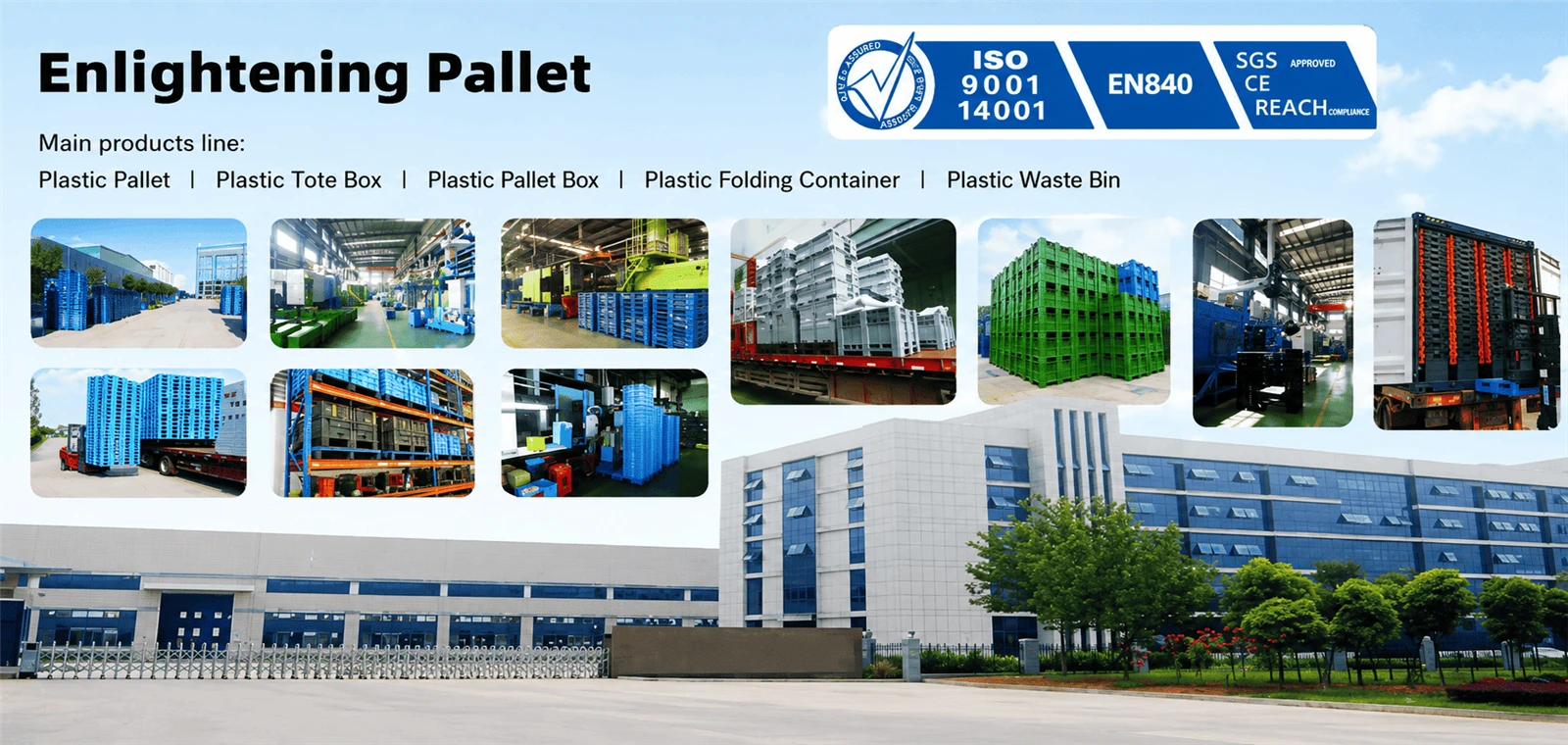
We support custom colors, logo printing, and mold development based on project requirements. Our team can discuss sample evaluation, technical specifications, and production arrangements before a bulk order is confirmed. We aim to help buyers select plastic pallets that match their handling requirements and supply plans.
