


How Much Does A Plastic Pallet Weigh?
Shipping costs keep climbing, and pallet weight has become a hidden cost driver in your supply chain. Procurement managers often struggle with supplier quotes that vary widely, uncertain weight standards, and the fear of making a purchasing decision that quietly drains budget for years. You're not alone in asking: "What's the real weight I should expect?"
Standard 48x40-inch plastic pallets weigh between 30 and 50 pounds, depending on material type, structural design, and manufacturing quality. HDPE pallets typically weigh 35-50 lbs, while PP pallets range from 30-45 lbs. Unlike wood pallets that fluctuate between 35-70 lbs with ±15% batch variance, plastic pallets maintain consistency within ±2%. This stability matters-it affects your freight calculations, warehouse automation reliability, and long-term operational costs.
This guide breaks down what determines plastic pallet weight, compares the real cost differences between plastic and wood, shows you how to verify supplier claims, and helps you choose the right weight for your specific supply chain needs. Whether you're evaluating a switch from wood pallets or comparing plastic pallet suppliers, you'll find the data and practical insights to make confident decisions.
What Determines Plastic Pallet Weight?
Three core factors control plastic pallet weight: material density, structural design, and wall thickness-understanding these helps you decode supplier quotes.
When procurement managers ask "how much does a standard plastic pallet weigh," they're often surprised by the 15-20 lb variation between suppliers for the same size. This isn't arbitrary. The weight difference stems from three engineering choices that balance cost, durability, and performance.
Start with material density. HDPE (High-Density Polyethylene) has a density of 0.94-0.97 g/cm³, while PP (Polypropylene) sits at 0.90-0.91 g/cm³. This means an identical 48x40-inch pallet design in HDPE weighs about 5-8 lbs more than the PP version. But density isn't everything-HDPE offers better impact resistance and works well in heavy-duty applications, while PP stays flexible in cold environments without cracking.
The table below shows typical weight ranges you should expect when comparing suppliers:
| Pallet Size | Structure Type | Material | Weight Range (lbs) | Common Use |
|---|---|---|---|---|
| 48x40" | Rackable | HDPE | 40-50 | Food & beverage, heavy manufacturing |
| 48x40" | Rackable | PP | 35-45 | Pharmaceutical, e-commerce |
| 48x40" | Nestable | HDPE | 30-38 | Export logistics, light cargo |
| 48x40" | Nestable | PP | 28-35 | Cold chain, single-use |
| 43x43" (1100x1100mm) | Rackable | HDPE | 38-48 | Asian markets, square footprint needs |
For reference, the tare weight of 1100x1100 plastic pallet in rackable HDPE configuration typically falls between 38-48 pounds, depending on reinforcement design. If a supplier quotes significantly outside these ranges-say 32 lbs or 55 lbs for a standard rackable HDPE pallet-ask for detailed material specifications and wall thickness documentation.
Does HDPE Weigh More Than PP?
Yes, but the 5-8 lb difference matters less than choosing the right material for your environment.
The average weight of HDPE plastic pallet runs about 10-15% heavier than comparable PP designs. A 48x40" rackable HDPE pallet weighs around 42-45 lbs, while the same structure in PP weighs 35-40 lbs. This stems from HDPE's higher molecular density, not inferior design.
The real question isn't which weighs less, but which performs better for your application. HDPE handles heavy impacts without cracking and resists most chemicals, making it ideal for industrial environments where pallets take abuse. PP pallets weigh less and maintain flexibility at temperatures down to -20°C, which matters in cold storage where HDPE can become brittle.
Virgin plastic (newly manufactured resin) delivers tighter weight consistency than recycled plastic. Quality virgin material keeps density variance within ±1%, while lower-grade recycled content can drift ±5%. This doesn't mean all recycled plastic performs poorly-high-quality PCR (Post-Consumer Recycled) material from reputable manufacturers maintains ±3% consistency, just slightly looser than virgin resin.
Material certifications add slight weight but bring critical compliance. FDA food-grade virgin HDPE pallets weigh 3-5 lbs more than industrial recycled versions because food safety requires higher purity resins. If your operation requires FDA compliance or REACH certification for European markets, expect this weight premium.
How Does Structure Affect Weight?
Structural design determines where material goes, and smart engineering can cut weight without sacrificing strength.
Rackable pallets need thicker support columns to handle vertical loads when stacked on warehouse racks. This design typically adds 10-15 lbs compared to nestable pallets that only need to support stacked loads. A rackable 48x40" pallet weighs 40-50 lbs, while a nestable version of the same footprint drops to 28-38 lbs.
Wall thickness makes the biggest single difference. Industrial-grade pallets with 6-8mm walls can support 4000-5000 lbs of dynamic load (the weight a forklift carries), but each pallet weighs 45-50 lbs. Lightweight designs with 3-4mm walls reduce pallet weight to 30-35 lbs but cut load capacity roughly in half.
Nine-leg designs use 15-20% more plastic than three-runner designs because they need additional support points. But this extra material improves weight distribution across the pallet surface, which matters for uneven or concentrated loads. Some manufacturers now use ribbed reinforcement-strategically placed strengthening ribs that add minimal weight while boosting structural integrity. A well-engineered 35 lb pallet with optimized ribs can match the strength of a 45 lb pallet that simply uses thicker walls throughout.
If a supplier's quote seems too light for the claimed load capacity, ask to see their load deflection curves and testing documentation. Quality manufacturers provide this data readily.
Plastic vs Wood Pallet Weight: What's the Real Cost Difference?
The weight advantage of plastic pallets shows up most clearly in fuel bills and equipment lifespan, not just the scale.
When logistics managers evaluate plastic vs wood pallet weight comparison, the initial numbers seem modest-plastic pallets average 15-25 lbs lighter than wood equivalents. A standard wood pallet weighs 35-70 lbs depending on moisture content and wood grade, while plastic versions cluster around 30-50 lbs. But this understates the real operational impact.
Wood pallet weight varies unpredictably. The same wood pallet can weigh 40 lbs when dry, 48 lbs after sitting in humid storage, and 52 lbs after rain exposure. Plastic pallets hold steady weight regardless of weather because HDPE and PP absorb less than 0.01% moisture, compared to wood's 15-20% absorption capacity. For procurement teams managing thousands of pallets, this consistency eliminates a variable that throws off freight calculations and warehouse automation.
Here's what the weight difference actually costs you. Assume your operation ships 30,000 loads annually, each using 20 pallets, averaging 800 km per trip. Your trucks consume 25 liters per 100 km, and diesel costs $1.20 per liter.
Calculation:
Wood pallets: 30,000 trips × 20 pallets × 45 lbs = 27,000,000 lbs total (12,250 tons)
Plastic pallets: 30,000 trips × 20 pallets × 35 lbs = 21,000,000 lbs total (9,525 tons)
Weight saved: 2,725 tons annually
Industry data shows every 1,000 lbs weight reduction in truck cargo saves roughly 0.15-0.2% fuel. Your 2,725-ton annual reduction translates to approximately 0.3% lower fuel consumption across your fleet-saving about 18,000 liters of diesel yearly, or $21,600 in direct fuel costs.
Add the hidden savings: container utilization improves by 2-3% when lighter pallets leave room for more product. Forklift and rack maintenance costs drop $5,000-8,000 annually as equipment handles lighter loads with less stress. AGV systems in automated warehouses charge less frequently and experience fewer calibration errors when pallet weight stays consistent within ±2% instead of ±15%.
Over five years, these factors compound. The same operation saves over $130,000 in total costs, with most savings coming from reduced fuel consumption and extended equipment life. That's before considering the time saved from fewer pallet failures and replacements.
The weight consistency matters especially for automated systems. AGV robots and ASRS (Automated Storage and Retrieval System) equipment rely on precise weight calculations for safe operation. A ±2% weight variance in plastic pallets means your system can trust its load sensors and motor controls. The ±15% variance in wood pallets-caused by moisture, wood density differences, and aging-creates calibration headaches and occasional system faults.
One automated warehouse operator reported that switching from wood to plastic pallets reduced AGV charging frequency from every 4 hours to every 6 hours. The lighter, consistent loads meant motors drew less power per cycle. Maintenance calls dropped 40% in the first year, mostly from eliminating pallet-weight-related sensor errors.
How Does Weight Impact Different Industries?
Your industry's specific requirements determine whether a 30 lb or 50 lb pallet makes more sense-there's no universal "best weight."
Different sectors care about pallet weight for different reasons. Food and beverage operations balance weight against sanitation needs. Pharmaceutical cold chains optimize for energy efficiency. Export logistics counts every pound against air freight rates. Understanding your industry's priorities helps you specify the right weight range.
Why Food & Beverage Needs Mid-Weight Pallets
Food operations need pallets heavy enough to stay stable under liquid loads but light enough to clean efficiently.
Food pallet applications typically call for 35-40 lb virgin HDPE pallets. This weight range provides enough mass to keep high-center-of-gravity loads (think stacked beverage cases) stable on warehouse racks, while staying light enough for workers to handle during sanitation cycles.
FDA compliance requires non-porous materials that won't harbor bacteria. Virgin HDPE pallets meet this standard, but the material purity adds 3-5 lbs compared to industrial recycled plastic. Food processors accept this weight premium because contamination risks outweigh the marginal freight cost.
One beverage distributor tracked cleaning costs before and after switching from 45 lb wood pallets to 38 lb HDPE pallets. Water consumption per pallet dropped 60%, and cleaning time fell from 15 to 5 minutes. The lighter weight made it easier for sanitation crews to maneuver pallets through wash stations, and the smooth HDPE surface released dirt without the scrubbing wood required.
The weight also affects handling safety. Forklift operators moving pallets loaded with 2,500 lbs of bottled beverages reported that slightly heavier pallets (38-40 lbs) felt more stable than ultra-lightweight designs (28-32 lbs) that could shift under uneven loads. But anything over 45 lbs increased strain when workers manually positioned empty pallets.
What Makes Lightweight Pallets Essential for Cold Chain?
Every pound of pallet weight in a freezer costs energy 24/7-cold chain operations optimize for minimum weight that still handles the load.
Pharmaceutical cold storage runs the math differently. A freezer holding 10,000 pallets at -20°C must cool the pallet mass along with the product.
Switching from 45 lb wood pallets to 32 lb PP pallets reduces the cold mass by 130,000 lbs (59 tons). This cuts refrigeration load by roughly 0.5%, saving thousands of kilowatt-hours annually in large facilities.
PP material maintains flexibility at -25°C where HDPE becomes brittle. A vaccine manufacturer tested identical pallet designs in both materials over three years of freezer service. The 32 lb PP pallets showed no cracks, while HDPE versions developed stress fractures after 18 months. The material choice mattered more than the modest 3-4 lb weight difference between materials.
Lightweight export plastic pallet weight becomes critical for air freight where carriers charge by actual or volumetric weight, whichever is greater. A pallet weighing 38 lbs instead of 48 lbs saves $15-30 per unit in air freight costs on long-haul routes, depending on current fuel surcharges. For companies shipping hundreds of pallets monthly by air, this adds up to $20,000-40,000 in annual savings.
How Weight Affects Export Logistics
Export pallets carry a double burden-their own weight eats into container limits, and heavier pallets cost more to ship empty when returning.
Export operations face container weight limits around 28-30 tons gross for 40-foot containers. When you load 600 pallets for a shipment, pallet weight directly reduces payload capacity.
Calculate the impact: 600 pallets at 45 lbs (wood) = 27,000 lbs (12.2 tons) of pallet weight, leaving 15.8 tons for cargo. Switch to 35 lb plastic pallets: 600 × 35 lbs = 21,000 lbs (9.5 tons), leaving 18.5 tons for cargo. You just gained 2.7 tons (nearly 6,000 lbs) of product capacity-roughly 10% more revenue per container.
Plastic pallets also skip ISPM-15 fumigation requirements that wood pallets need for international shipping. This saves $8-15 per pallet in treatment costs and 3-5 days in processing time. The lighter weight and faster processing combine to improve your container shipping economics.
For air freight, weight becomes even more critical. Premium air routes to Asia or Europe can charge $3-5 per kg for general cargo. A 10 lb (4.5 kg) weight reduction per pallet saves $13.50-22.50 per pallet at these rates. Ship 200 pallets monthly, and that's $2,700-4,500 in monthly savings just from lighter pallets.
How Do You Verify Supplier Weight Claims?
Sample pallets might weigh 38 lbs, but if production batches drift to 45 lbs, you're paying for weight variance your freight didn't budget for.
Procurement managers face a common frustration: sample pallets match specifications perfectly, but bulk shipments arrive heavier than quoted. This happens when suppliers don't maintain tight process controls, or when they optimize samples but can't hold quality across production runs.
Three verification steps protect you. First, require ISO 8611 or ASTM D1185 test reports from third-party labs-not the supplier's internal testing. These standards specify exact measurement conditions: 23±2°C temperature, 50±5% humidity, with pallets stabilized for 24 hours before weighing. Many suppliers provide weight data measured under varying conditions, which can show 3-5% lighter than real-world weights.
Second, check the stated tolerance range. Quality pallet manufacturers commit to ±2% weight variance across batches. Mid-tier suppliers often only guarantee ±5%, and some budget suppliers avoid committing to any specific tolerance. Ask directly: "What weight tolerance will you guarantee in the purchase contract?" If they won't put a number in writing, that's a warning sign.
Third, spot-check bulk deliveries. Pull 10 random pallets from your shipment and weigh them individually. Calculate the standard deviation-if it exceeds 3% of the mean weight, you've got a quality control problem. One procurement manager requires suppliers to contractually commit to "batch standard deviation under 2% or invoice adjustment applies." This clause motivates suppliers to maintain process controls.
When evaluating pallet suppliers near me, ask to see their quality control procedures. Can they show you calibrated scale certifications? Do they track weight data by production batch? Can they provide historical weight variance data from past year's production?
If a supplier quotes a 48x40" rackable HDPE pallet at 42 lbs but another quotes 38 lbs for the "same" specification, dig deeper. The weight difference likely stems from wall thickness (6mm vs 4mm), material grade (virgin vs recycled), or structural design (nine-leg vs three-runner). Ask both suppliers for material density reports and wall thickness specifications. The answers will reveal whether you're comparing equivalent products.
Beware of suppliers whose weights vary by ±10% or more. This indicates poor raw material quality control or inconsistent mold temperatures during manufacturing. Either problem signals broader quality issues that will affect pallet durability and load capacity, not just weight.
What's the Right Balance Between Weight and Load Capacity?
A heavy duty plastic pallet empty weight of 50 lbs doesn't automatically mean it's stronger than a 40 lb pallet-engineering matters more than mass.

The common assumption that heavier pallets are stronger comes from wood pallet experience, where more lumber generally means more strength.
Plastic pallet engineering works differently. Modern designs achieve high strength-to-weight ratios by optimizing rib placement and wall thickness distribution, not by simply adding material everywhere.
A well-engineered plastic pallet can achieve a 100:1 load-to-weight ratio. This means a 40 lb pallet safely handles 4,000 lbs of dynamic load (the weight it carries while being moved by a forklift). Some advanced designs reach even higher ratios-35 lb pallets supporting 4,500 lbs dynamic load through strategic use of honeycomb reinforcement structures.
The key metrics to compare are dynamic load capacity (weight while moving), static load capacity (weight when stored on the ground), and racking capacity (weight when stored on warehouse racks). A heavy duty rackable pallet needs high performance in all three areas, but especially racking capacity since rack storage creates concentrated stress points.
Can Light Pallets Actually Handle Heavy Loads?
Yes, if the engineering is right-load capacity comes from structure, not just material volume.
Heavy duty rackable plastic pallet weight capacity specifications can surprise you. Some manufacturers produce 35 lb pallets rated for 5,000 lbs dynamic load. They achieve this through computer-aided design that identifies exactly where stress concentrates during forklift handling and rack storage, then reinforces those specific areas with ribs and thicker walls.
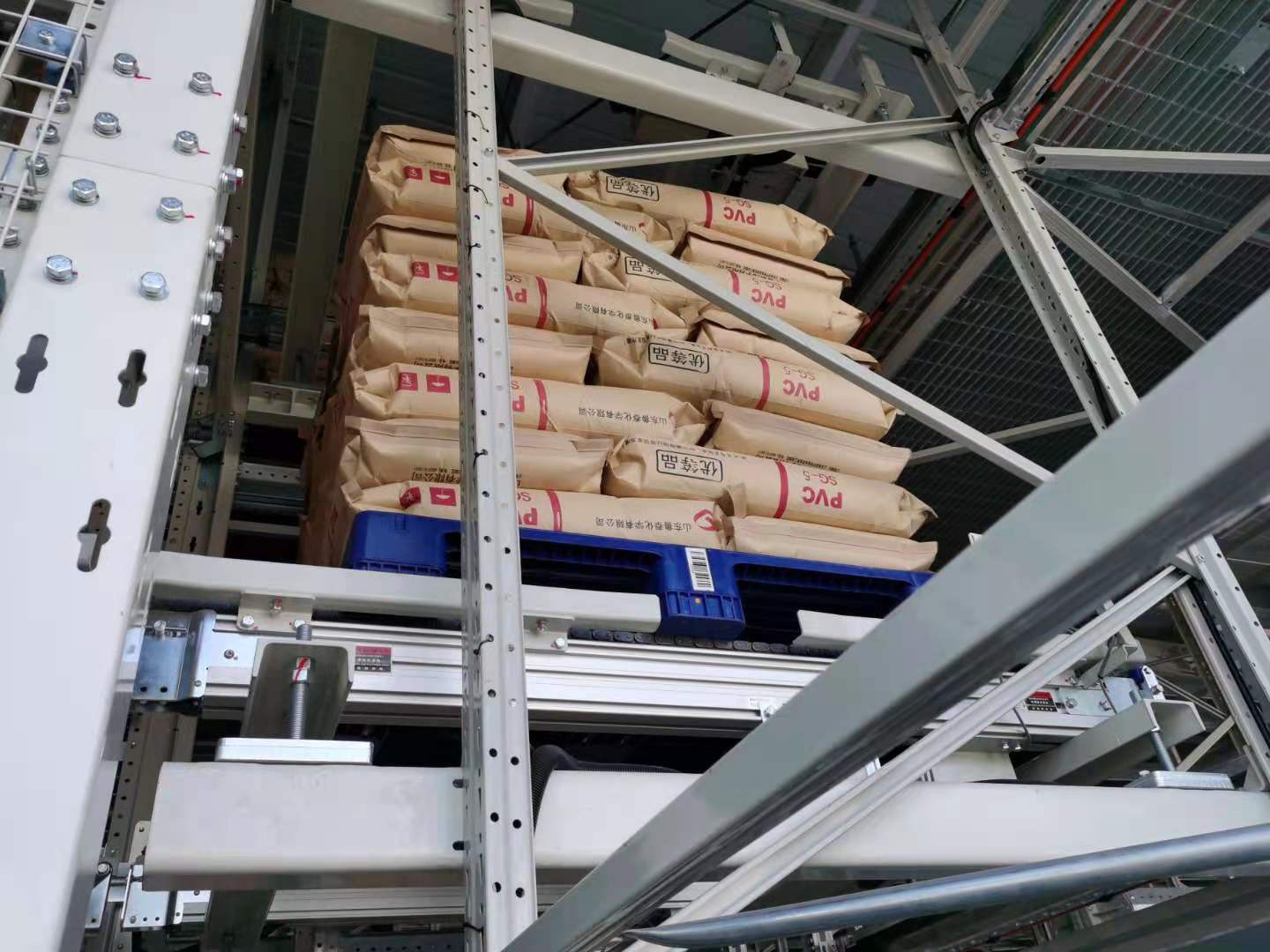
The alternative approach-making all walls thicker across the entire pallet-adds 10-15 lbs without proportional strength gains. It's the difference between precision engineering and brute force design.
Testing standards reveal the truth about pallet strength. ASTM D1185 dynamic load testing drops a loaded pallet from 1 meter height repeatedly, simulating rough forklift handling. Static load testing stacks 5x the rated weight on a pallet for 24 hours to check for deformation. Racking tests apply the rated load while the pallet sits on warehouse rack beams, measuring deflection at the center.
Quality manufacturers provide load deflection curves showing how the pallet bends under increasing weight. A good pallet deflects less than 10mm at rated load and shows linear deformation as weight increases-no sudden failures. If a supplier claims high load capacity for a lightweight pallet, ask to see these test curves. Their absence suggests the rating is theoretical, not validated.
Dynamic load vs static load plastic pallet weight requirements differ because movement creates impact forces. A pallet might safely hold 6,000 lbs sitting still (static load) but only rate for 3,000 lbs dynamic load because forklift impacts and transportation vibration create additional stress. Always specify which load type matters for your operation when comparing supplier quotes.
Deflection limits for heavy duty plastic pallets typically specify maximum bend at center under rated load. Industry standards accept up to 10mm deflection for rackable pallets under full load. Pallets that deflect more risk product damage from uneven load distribution and can slip off rack beams in extreme cases.
How Much Does Pallet Weight Affect Total Cargo Weight?
In a 15-ton capacity truck carrying 600 pallets, pallet weight alone can consume 15-20% of your payload.
Here's the math that logistics managers care about. A truck with 15-ton (33,000 lb) capacity loads 600 pallets of cargo:
With 45 lb wood pallets: 600 × 45 = 27,000 lbs of pallet weight (12.2 tons) With 35 lb plastic pallets: 600 × 35 = 21,000 lbs of pallet weight (9.5 tons)
The 6,000 lb difference equals 2.7 tons-about 18% more cargo capacity just from lighter pallets. For commodity products where profit margins are thin, that 18% capacity increase can be the difference between profitable and unprofitable routes.
The impact scales with pallet count. Ocean container shipments face similar math but with higher stakes. A 40-foot container maxes out around 28 tons gross weight. Using the same 600-pallet load:
Wood pallets: 12.2 tons for pallets, leaving 15.8 tons for product Plastic pallets: 9.5 tons for pallets, leaving 18.5 tons for product.
You've just gained 2.7 tons of product capacity per container. At typical ocean freight rates of $2,000-4,000 per container, this effectively reduces your per-ton shipping cost by 15-17%.
For high-value products like electronics or pharmaceuticals, the percentage matters less than absolute capacity. Being able to fit 19 tons of product instead of 16 tons means fewer containers to reach the same order volume, which compounds into faster delivery times and lower total logistics costs.
How Do You Choose the Right pallet Weight for Your Operation?
The "best" pallet weight balances your current shipping costs, warehouse equipment requirements, and future expansion plans-not everyone needs the same answer.
Choosing pallet weight requires understanding how that weight affects your specific cost structure. A company shipping 50,000 loads annually across 1,000 km average distance calculates different priorities than a regional distributor moving 5,000 loads within 200 km.
Start by quantifying your shipping cost sensitivity. Use your current annual shipment data: total trips, average distance, pallets per trip, and fuel cost per kilometer. Calculate the fuel savings from switching to lighter pallets using the industry rule that every 1,000 lbs reduction saves 0.15-0.2% fuel consumption.
If your operation runs 30,000 trips annually at 800 km average distance with 20 pallets per trip, switching from 45 lb to 35 lb pallets cuts about 12,000 lbs (5.4 tons) per shipment. Across the full year, that's 360,000 trips-tons less weight moved. At typical diesel efficiency, this translates to roughly 18,000 liters saved annually-worth $20,000-25,000 depending on current fuel prices.
Next, evaluate warehouse system compatibility. Manual operations tolerate weight variation-human forklift operators adjust naturally. But automated systems require consistency. If you're running or planning AGV systems, ASRS equipment, or robotic put-walls, specify ±2% maximum weight tolerance. This consistency matters more than absolute weight for system reliability.
Third, match load requirements against pallet weight. If your typical load runs 2,000-2,500 lbs, you don't need pallets rated for 5,000 lbs dynamic capacity. Overspecifying strength adds unnecessary weight and cost. Target a 1.5x safety factor: for 2,500 lb loads, specify 3,500-4,000 lb dynamic capacity. This protects against occasional overloads without paying for excessive over-engineering.
Finally, consider your 3-5 year business plan. Are you expanding into cold chain? Plan to open international markets? Expect to automate warehousing? Choose pallets that work for your future state, not just today's needs. One e-commerce company paid 10% premium for ASRS-compatible pallets three years before installing automation. When the system launched, they avoided replacing 15,000 pallets-a $300,000+ expense.
Quick decision guide based on operation type:
Choose 30-35 lb lightweight pallets if you: Ship over 20,000 loads annually where fuel costs matter, operate or plan automated material handling systems, run cold chain facilities where every BTU counts, or export over 30% of shipments by air freight.
Choose 35-40 lb mid-weight pallets if you: Operate in food and beverage sectors requiring FDA compliance, run mixed manual and automated operations, handle 2,000-3,500 lb typical loads, or want to balance cost against durability for moderate-use cycles.
Choose 45-50 lb heavy-duty pallets if you: Work in automotive, machinery, or other heavy manufacturing, regularly load pallets over 4,000 lbs, stack pallets 4+ high on warehouse racks, or operate primarily in regional routes under 200 km where fuel weight impact is minimal.
These ranges assume quality manufacturing. A cheap 50 lb pallet with poor engineering performs worse than a well-designed 40 lb pallet. Always verify load testing documentation matches your application.

What Misconceptions Exist About Plastic Pallet Weight?
Three common beliefs about pallet weight are either outdated or oversimplified-knowing the facts helps avoid poor purchasing decisions.
Misconceptions about plastic pallet weight stem from early product generations that had quality inconsistencies, and from incorrect assumptions carried over from wood pallet experience. Modern plastic pallet manufacturing has evolved significantly, but old assumptions persist.
Is Recycled Plastic Actually Unstable?
High-quality recycled material performs nearly as consistently as virgin plastic-the difference is in supplier quality control, not the recycling itself.
The belief that recycled plastic pallets suffer from weight inconsistency comes from early PCR (Post-Consumer Recycled) products that used poorly sorted mixed plastics. Modern PCR technology processes specific plastic streams (HDPE from milk jugs, PP from automotive parts) with contamination levels under 2%.
A leading European manufacturer's quality data shows 100% PCR pallets maintaining ±3% weight consistency across 1,000-unit batches. This is marginally looser than virgin material's ±1.5%, but still tighter than wood pallets' ±15% variance. The key difference isn't virgin versus recycled-it's quality-controlled recycled versus cheap mixed-stream recycled.
When evaluating recycled content pallets, ask suppliers for their Material Safety Data Sheet (MSDS) showing PCR source and purity grade. Quality manufacturers also provide spectroscopy test results proving material consistency. If a supplier can't document their recycled material source and quality, that's when weight variance becomes a real risk.
PCR pallets offer environmental benefits that matter to companies tracking carbon footprint. Each ton of PCR plastic used instead of virgin resin avoids roughly 1.5 tons of CO₂ emissions. For large-scale pallet users, this adds up to meaningful sustainability metrics for ESG reporting.
Does Pallet Color Change Weight?
Color masterbatch adds less than 1% to total weight-color choice should be based on practical needs, not weight concerns.
Color masterbatch-the concentrated pigment that gives plastic its color-is added at 0.5-1.5% of total material weight. For a 40 lb pallet, color accounts for 0.2-0.6 lbs at most. The density of most color masterbatch is close to base HDPE or PP resin, so the weight impact is negligible.
The misconception that black pallets weigh more likely stems from the fact that carbon black (used for black color) is one of the few pigments slightly denser than base resin. But at typical addition rates, this adds perhaps 0.3-0.4 lbs to a 40 lb pallet-well within normal manufacturing variance.
Choose pallet color based on operational needs: blue pallets are easy to visually track in mixed inventory, black hides dirt in heavy industrial use, white shows contamination instantly for food-grade applications. Weight shouldn't factor into the color decision.
Do Environmental Conditions Change Pallet Weight?
Temperature swings and UV exposure age plastic pallets over time, but weight changes remain under 1%-moisture is where plastic dominates wood.
Plastic pallet weight stays remarkably stable across temperature ranges from -40°C to +60°C. The material's thermal expansion coefficient is small enough that temperature primarily affects dimensions (length and width can shift ±2-3mm) rather than weight. A pallet weighing 40 lbs at room temperature might measure 40.2 lbs after months at 50°C-a variance lost in normal measurement tolerance.
UV exposure from outdoor storage causes surface degradation over years-colors fade, material becomes more brittle-but weight barely changes. Quality pallets include UV stabilizers (typically 1-2% by weight) that slow this aging. Even after three years of direct sunlight exposure, weight loss from surface erosion stays under 1%.
The critical difference from wood is moisture absorption. Wood's hygroscopic nature means a 40 lb wood pallet can absorb 6-8 lbs of water in humid storage, then lose it again when dried. This creates constant weight variation that complicates freight planning and throws off automated system calibration. Plastic pallets absorb less than 0.01% moisture-even soaking them in water for weeks produces negligible weight change.
For cold storage operations, this moisture resistance delivers another benefit: no ice formation inside the pallet structure. Wood pallets in freezers can gain weight from internal ice accumulation, and that ice can crack wood fibers when expanding. Plastic pallets emerge from -25°C storage at the same weight they entered, every time.
Does Pallet Weight Change With Age?
Normal-use plastic pallets lose less than 2% weight over 5 years-the bigger concern is load capacity degradation from UV exposure or chemical damage.
A logistics company tracked 500 plastic pallets over three years of warehouse use, weighing a random sample every six months. Average weight dropped from 38.2 lbs to 37.9 lbs-less than 1% change. The minor loss came from surface abrasion as pallets slid across concrete floors and bumped into dock plates.
This contrasts sharply with wood pallet aging. Wood weight fluctuates dramatically during use-heavy when wet, light when dry, then increasingly lighter as wood fibers break down. A 40 lb wood pallet might weigh 35 lbs after three years of use, but structural integrity has degraded enough that it's no longer safe for rated loads.
For plastic pallets, watch load capacity rather than weight as the age indicator. UV exposure and chemical contact can reduce material strength even when weight stays constant. Quality manufacturers recommend load testing every 2-3 years for outdoor-stored pallets or those exposed to harsh chemicals. The test checks whether the pallet still meets its original dynamic and static load ratings.
Heavy industrial use in environments with frequent impacts can accelerate weight loss through material deformation. Pallets repeatedly overloaded or dropped from excessive heights develop microcracks that eventually flake off small amounts of plastic. This signals abuse rather than normal aging-properly handled pallets maintain weight for 7-10 years of service.

How Do Global Pallet Standards Compare?
International shipping and multinational operations require understanding how regional pallet standards differ in size and weight-choosing the wrong standard costs you in container utilization.
Global supply chains often face the challenge of incompatible pallet standards between regions. North America primarily uses 48x40" GMA pallets, Europe standardizes on 800x1200mm EUR pallets, and Asia uses various sizes including 1100x1100mm square pallets. These size differences create weight variations even when using the same material and structure type.
| Standard | Dimensions | Wood Weight | Plastic Weight | Region | ISO |
|---|---|---|---|---|---|
| GMA | 48x40" (122x102cm) | 35-70 lbs | 35-45 lbs | North America | - |
| EUR1 | 800x1200mm (31.5x47.2") | 44-55 lbs | 28-38 lbs | Europe | ISO1 |
| EUR2 | 1200x1000mm (47.2x39.4") | 50-65 lbs | 32-42 lbs | Europe | ISO2 |
| Australian | 46x46" (1165x1165mm) | 55-75 lbs | 38-48 lbs | Australia | - |
| Asia | 43x43" (1100x1100mm) | 48-68 lbs | 35-45 lbs | Asia markets | ISO6 |
Standard pallet size affects weight simply through surface area and material volume. EUR1 pallets (800x1200mm) are about 20% smaller than GMA pallets (48x40"), so equivalent-quality plastic pallets weigh proportionally less-typically 28-38 lbs versus 35-45 lbs. But the EUR1 design fits European trucks and containers more efficiently, often negating the size disadvantage through better space utilization.
The standard pallet length of 48 inches in North American GMA pallets allows two pallets to sit side-by-side in a standard 102-inch wide trailer with minimal wasted space. European EUR pallets at 1200mm length fit metric-based truck dimensions with similar efficiency. Mixing standards creates gaps and wasted container space.
Which Standard Works Best for International Operations?
ISO-standard pallets offer the most flexibility across regions, though they may not be locally optimal in any single market.
Companies operating across multiple continents face a choice: adopt one global standard and accept some regional inefficiency, or maintain regional pallet pools that don't cross borders. The global standard approach wins when pallets regularly move between regions. The regional approach works when each market's supply chain stays contained.
ISO2 pallets (1200x1000mm) work in both European and North American contexts, though not optimally in either. They fit European containers well and can be used (with some space loss) in North American trucks. A multinational logistics provider switched to ISO2 plastic pallets globally and reported 95% pallet compatibility across warehouses, up from 60% when using mixed regional standards.
For export-focused operations, match your pallet to the destination market. If 80% of your shipments go to Europe, use EUR1 pallets even if your factory is in Asia. The container utilization improvement outweighs the local handling inefficiency. Plastic pallets make this easier since they're exempt from ISPM-15 fumigation requirements that wood pallets face in international shipping.
Regional pallet suppliers often stock only the local standard, but wholesale pallets distributors serving international markets typically offer multiple standard sizes. When sourcing, verify the supplier can maintain consistent weight specifications across different pallet sizes-some manufacturers excel at one size but struggle with quality control when producing less common sizes.
For operations needing custom pallets to fit unique container or rack configurations, plastic manufacturing offers more design flexibility than wood. Custom sizes don't add the tooling cost premiums they did a decade ago, and modern injection molding can economically produce specialty sizes in quantities as low as 500-1000 units.
The weight advantage of plastic shows most clearly in air freight and container weight limits. Switching from wood to plastic EUR1 pallets saves approximately 10-15 lbs per pallet. On a 600-pallet ocean container shipment, this frees up 6,000-9,000 lbs (2.7-4 tons) for additional product-a 10-15% payload increase that directly improves per-container economics.
Selecting the right plastic pallet weight means balancing transport efficiency, load requirements, and future operational plans rather than simply choosing the lightest or cheapest option. The 30-50 lb range covers drastically different performance profiles-from lightweight export pallets optimized for air freight to heavy-duty rackable designs built for 5,000 lb loads.
Focus on three key factors: verify supplier weight consistency through third-party testing and batch sampling, calculate the actual fuel and capacity impact using your specific shipment volumes and routes, and match load ratings to your real requirements rather than over-engineering. A well-chosen pallet weight, backed by solid quality control, reduces your total cost of ownership while supporting operational reliability for years.
