


Are Plastic Pallets Suitable for Parcel Sorting Centers?
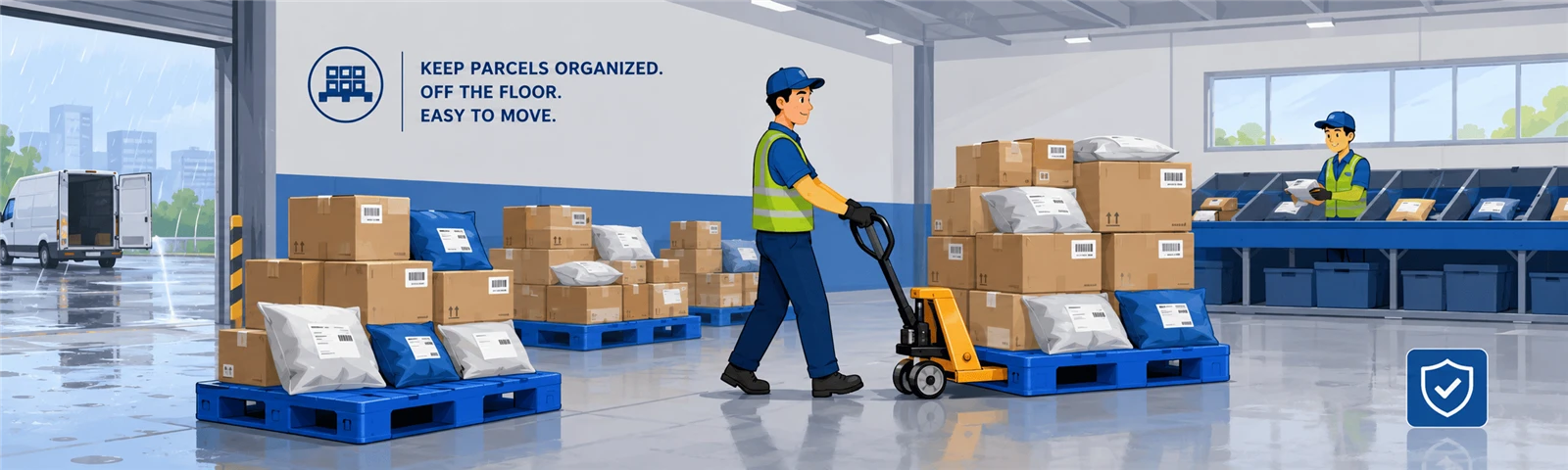
Yes. Plastic pallets give parcel sorting centers a raised platform for cartons, mailers, bags, and other packages. Parcels can stay on the pallet while they wait for sorting, delivery, or transportation. Workers can also move a full pallet instead of carrying packages one by one.
This is useful in busy parcel stations, warehouses, and loading areas. It becomes even more useful on rainy days, when wet floors, dust, and mud can affect cartons placed directly on the ground.
However, one pallet design does not fit every parcel station. Parcel size, total load, handling equipment, floor space, and empty pallet storage all affect the choice. A small local delivery point may need a simple lightweight pallet, while a large logistics or warehousing center may need a stronger design for frequent forklift use.
Why Do Parcel Sorting Centers Use Plastic Pallets?
Parcel stations handle many packages every day. Plastic pallets mainly help with storage, movement, and basic sorting.
First, parcels do not need to sit directly on the floor. Cardboard boxes and plastic mailers can collect dust and dirt when they stay on concrete for long periods. This is more common with parcels that wait for sorting, loading, pickup, or the next transportation route.
A pallet creates a clear storage area above the floor. Workers can place parcels on it as soon as they arrive instead of putting them on the ground first and moving them again later.
Second, pallets make group handling easier. Parcels for the same route, delivery area, or truck can stay together on one pallet. A pallet jack or forklift can then move the whole load to another part of the warehouse.
This can reduce repeated manual handling. It is especially useful in larger parcel hubs where workers move many cartons between receiving, sorting, staging, and loading areas.
Third, pallets help keep the sorting area organized. One pallet can hold parcels that still need sorting. Another can hold completed orders, returns, or parcels for a certain delivery route.
This does not require a complex warehouse management system. It is a simple way to separate packages and keep floor areas easier to manage.
How Do Plastic Pallets Help on Rainy Days?
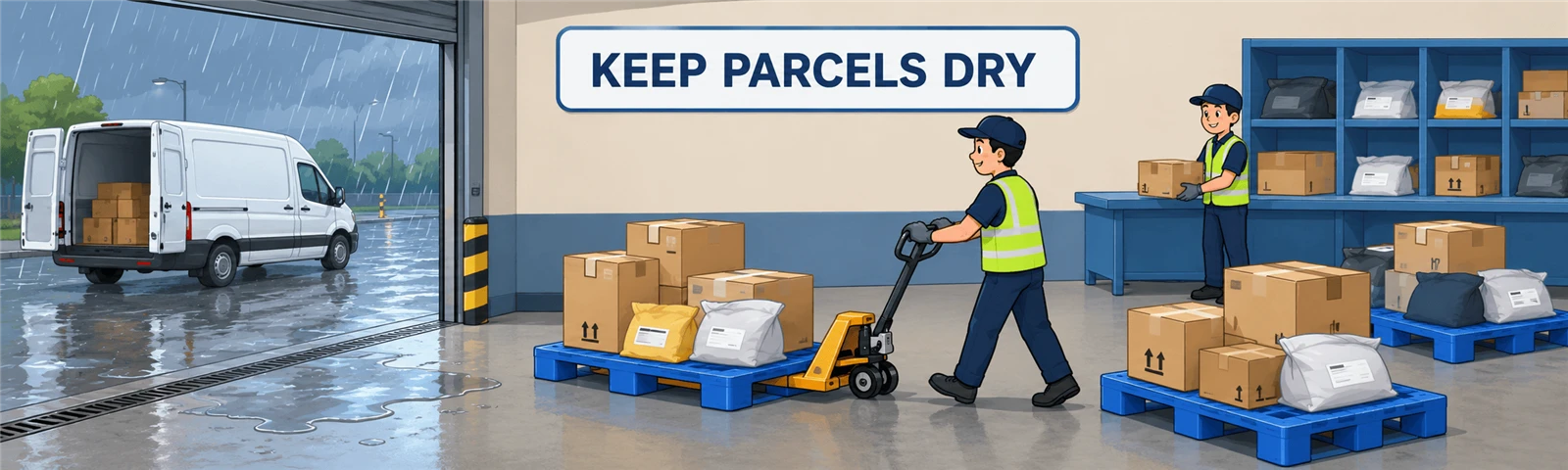
Rain can create problems around warehouse doors, loading docks, and vehicle unloading areas. Water can enter on shoes, wheels, carts, and forklifts. The floor near the entrance may stay wet even when the main warehouse is covered.
If cartons sit directly on a wet floor, their bottoms can absorb moisture. The cardboard may become soft, and dirt or mud can also stick to the package.
Plastic pallets raise parcels above the floor. This creates space between the bottom cartons and wet concrete, so parcels have less direct contact with water.
HDPE and PP plastic pallets do not absorb water like wood. If the pallet gets wet, workers can wash or wipe it and return it to service. Wood pallets can absorb moisture and may change shape after repeated exposure to wet conditions.
A pallet does not make a parcel waterproof. It cannot replace a roof, covered loading area, or waterproof packaging. Its main job is to reduce direct contact between parcels and wet floors.
Why Are Plastic Pallets Easier for Daily Cleaning?
Parcel stations need regular cleaning because people, vehicles, packaging, and incoming goods bring dust and dirt into the work area.
If dozens of parcels sit directly on the floor, workers must move them before they can sweep or clean the area. After cleaning, the packages may need to be moved back again.
A pallet makes this work much simpler. Workers can use a pallet jack to move the full load aside, clean the floor, and then return the pallet to its original position.
Plastic pallets are also easy to clean. Mud, dust, and common package leaks can usually be removed with water or normal cleaning methods. Plastic does not produce wood chips, and there are no damaged wooden boards that can trap dirt.
For parcel logistics, the main benefit is simple daily maintenance. Food-grade cleaning rules or pharmaceutical hygiene standards are normally not the main concern in this type of application.
Plastic Pallets vs. Putting Parcels Directly on the Floor
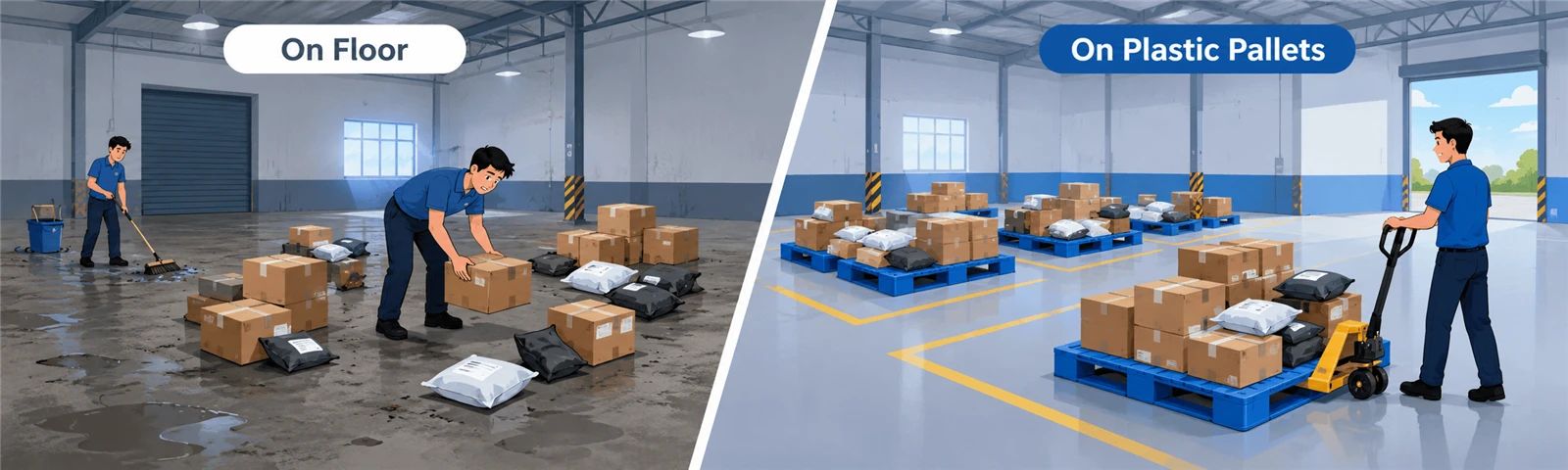
The difference becomes clear when parcel volume increases.
|
Parcels Directly on the Floor |
Parcels on Plastic Pallets |
|
More contact with dust and dirt |
Parcels stay above the floor |
|
Wet floors can reach cartons |
Pallets raise cartons away from moisture |
|
Packages must be moved before cleaning |
A full pallet can be moved together |
|
Large batches require more manual work |
Forklifts or pallet jacks can move the load |
|
Different parcel groups may become mixed |
Parcels can be separated by route or area |
Most of these benefits start with one simple change. The packages no longer sit directly on the ground.
Once parcels stay on pallets, cleaning, sorting, storage, and internal transportation become easier to manage.
Which Plastic Pallet Design Works Best for Parcel Stations?
Parcel sorting centers can use several pallet structures. The right choice depends on load weight, available space, and handling equipment.
Nine-leg plastic pallets have a simple base with separate support feet. Many models are lightweight, and some can nest inside each other. This helps save space when empty pallets are not in use.
Nine-leg pallets are a practical choice for local parcel stations, small distribution points, floor storage, and regular cartons. They work well when the main purpose is to keep packages above the floor and support normal warehouse handling.
Three-runner plastic pallets have three long runners under the pallet. They provide more continuous support and are often a better choice for frequent forklift or pallet jack movement.
Large parcel hubs may use this structure when pallet loads are heavier or when workers move pallets many times each day. Pallet jack compatibility should still be checked against the actual wheel position and entry height.
Full-perimeter plastic pallets have a more complete bottom structure. They can provide greater stability for heavier loads and repeated mechanical handling.
Not every parcel station needs this type. The extra structure makes more sense when the load, handling method, or operating conditions require it.
Open Deck or Closed Deck: Which Is Better?
The top deck also affects how a plastic pallet performs in a parcel station.
Open deck plastic pallets have gaps across the surface. They are often lighter, and water or loose dust can pass through the openings instead of staying across the full deck.
They work well for standard cartons, woven bags, and many general warehouse applications. However, very small packages should have enough surface contact to stay stable on the pallet.
Closed deck plastic pallets provide a continuous surface. They offer more support for small cartons, parcel bags, and soft packages that may not sit well across large openings.
The smooth surface is also easy to wipe. This can be useful in a parcel station that handles many small packages or cleans its pallets often.
Neither deck is always better. The choice depends on package size, packaging type, cleaning needs, and daily use.
What Should You Check Before Buying Plastic Pallets?
Start with the size and weight of the parcels. Check the common carton sizes in the station and estimate the total weight that one pallet must carry. Do not select a pallet based only on the weight of one box.
Next, check the handling method. Some stations mainly use manual handling. Others use pallet jacks or forklifts. The pallet base, fork entry, and overall structure must match the actual equipment.
The working area also matters. A pallet that stays inside a dry warehouse has different needs from one that often moves through loading docks, warehouse doors, or wet receiving areas.
Empty pallet storage is another practical issue. A small parcel station may not have much free floor space. Nestable plastic pallets can help reduce the space needed for empty units.
Pallet size should match the packages, warehouse layout, doors, aisles, and handling equipment. A pallet that is too small may leave cartons hanging over the edge. A pallet that is too large can waste valuable floor space.
If a parcel center uses conveyors or other automated equipment, pallet dimensions and base design require a closer check. The pallet must match the actual support points, conveyor design, and equipment tolerances before bulk use.
When Are Plastic Pallets Not the Best Choice?
Plastic pallets are useful, but every parcel station does not need a large number of them.
A very small delivery point may handle only a limited number of packages each day. If workers can move everything by hand over short distances, a large pallet purchase may not provide enough value.
Very small, loose, soft, or irregular parcels can also be difficult to keep stable on an open pallet. Plastic crates, boxes, roll containers, or other containers with side walls may work better for these items.
The best choice depends on the real parcel flow. A station should look at its package volume, handling method, available space, and transportation process before deciding how many pallets it needs.
How to Choose Plastic Pallets for a Parcel Sorting Center
Small parcel stations often need a lightweight pallet that is easy to store and use on the floor. Nestable nine-leg pallets can be a practical option when empty pallet space is limited.
Larger parcel hubs and logistics centers often need more support for repeated handling. Three-runner or full-perimeter pallets may be better when forklifts move full loads many times each day.
Enlightening Pallet can supply nine-leg, three-runner, and full-perimeter plastic pallets with open or closed decks. HDPE and PP materials are available for different product designs and working conditions.
Color, size, and logo customization are also available for bulk orders. Different colors can help separate warehouse areas or pallet uses. Custom logos can help companies identify their own pallet assets.
Our minimum order quantity is 300 pieces. Buyers can provide the parcel size, expected pallet load, handling equipment, and working conditions before ordering so we can help match the pallet to the actual application.
FAQ
Q: How much weight can a plastic pallet hold in a parcel station?
A: It depends on the pallet model and structure. Check the total weight of the full pallet load before selecting a model.
Q: Can plastic pallets be used outdoors?
A: Yes, they can handle rain and wet areas, but long-term outdoor storage and strong sunlight can affect plastic over time.
Q: Are plastic pallets better than wood pallets for parcel stations?
A: Plastic pallets are easier to wash and do not absorb water. They also avoid common wood pallet problems such as splinters, loose boards, and exposed nails.
Q: Does a small parcel station need many plastic pallets?
A: Not always. A small station can start with pallets in wet areas, sorting zones, or places where packages need to stay off the floor.
Q: Can plastic pallets work with automated sorting equipment?
A: They can be used with compatible equipment, but pallet size, bottom structure, support points, and equipment tolerances must be checked first.
Q: How long can a plastic pallet last?
A: Service life depends on load weight, handling frequency, impacts, temperature, and storage conditions. Regular inspection and correct use can extend its working life.
