


What is the nesting ratio of the 1111 Nestable Pallet?
As a supplier of 1111 Nestable Pallets, I often get asked about the nesting ratio of these pallets. Understanding the nesting ratio is crucial for businesses that deal with storage and transportation, as it directly impacts space utilization and cost - efficiency.
What is Nesting Ratio?
Before delving into the nesting ratio of the 1111 Nestable Pallet, let's first clarify what nesting ratio means. The nesting ratio refers to the relationship between the height of a stack of nested pallets and the height of a single pallet. A high nesting ratio indicates that pallets can be stacked closely together, taking up less vertical space when not in use. This is especially important for warehouses with limited storage space or for companies looking to reduce shipping costs by maximizing the number of pallets that can be transported in a single shipment.
The Nesting Ratio of the 1111 Nestable Pallet
The 1111 Nestable Pallet is designed with a specific geometry to achieve an optimal nesting ratio. Typically, the 1111 Nestable Pallet has a nesting ratio that allows for significant space savings. When pallets are nested, they fit neatly into one another, reducing the overall height of the stack. For example, in a well - designed 1111 Nestable Pallet, the nesting ratio can be such that a stack of ten nested pallets might only be a few times the height of a single pallet. This is due to the carefully engineered legs and deck design of the pallet.
The legs of the 1111 Nestable Pallet are shaped in a way that they can slide into the space beneath the deck of the adjacent pallet. The deck, on the other hand, is designed to have minimal interference when pallets are nested. This combination of leg and deck design results in a nesting ratio that is highly favorable for storage and transportation.
Benefits of a High Nesting Ratio
A high nesting ratio for the 1111 Nestable Pallet brings several benefits to businesses. Firstly, in terms of storage, it allows warehouses to store more pallets in a given area. This is a significant advantage for companies that need to keep a large inventory of pallets on hand. With a high nesting ratio, less floor space is required to store the same number of pallets, which can lead to cost savings on rent and utilities for the warehouse.
Secondly, during transportation, a high nesting ratio means that more pallets can be loaded onto a truck, container, or other transport vehicle. This reduces the number of trips required to move a certain quantity of pallets, thereby cutting down on transportation costs. It also helps in reducing the carbon footprint associated with transporting pallets, as fewer trips mean less fuel consumption and lower emissions.
Factors Affecting the Nesting Ratio
Several factors can affect the nesting ratio of the 1111 Nestable Pallet. One of the most important factors is the manufacturing precision. If the pallets are not manufactured to the exact specifications, there may be slight variations in the size and shape of the legs and deck. These variations can prevent the pallets from nesting properly, resulting in a lower nesting ratio.
The material used in the construction of the pallet also plays a role. For example, if the material is too flexible, the pallets may deform slightly over time, which can affect their ability to nest. On the other hand, a material that is too rigid may make it difficult to nest the pallets due to minor manufacturing tolerances.
The condition of the pallets is another factor. Damaged pallets, such as those with broken legs or a warped deck, will not nest as well as undamaged ones. Regular inspection and maintenance of the pallets are essential to ensure that they maintain their optimal nesting ratio.
Comparison with Other Pallet Types
When compared to other types of pallets, the 1111 Nestable Pallet stands out in terms of its nesting ratio. For instance, non - nestable pallets take up a lot more space when stored or transported. Each pallet has to be stacked on top of another without the ability to nest, resulting in a much taller stack for the same number of pallets.
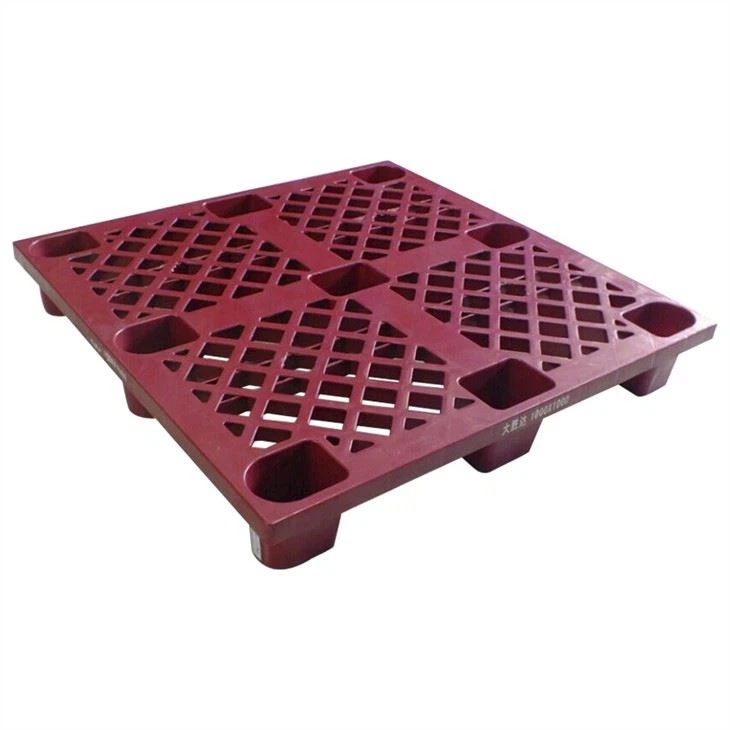

Even compared to some other nestable pallets, the 1111 Nestable Pallet often has a more favorable nesting ratio. Some pallets may have a complex design that makes nesting less efficient, or they may not be as well - engineered to fit together tightly.
Our Product Range and Related Offerings
As a supplier of 1111 Nestable Pallets, we also offer a range of other high - quality pallets. For example, we have the Export One Time Use Plastic Pallet, which is ideal for single - use applications in export scenarios. These pallets are lightweight, durable, and cost - effective, making them a popular choice for businesses looking to reduce waste and save on pallet costs.
We also provide the Light Weight HDPE Plastic Pallet with Nine Legs in 1200L X 800 W X 140H. This pallet is made from high - density polyethylene (HDPE), which gives it excellent strength and durability. The nine - leg design provides stable support for heavy loads, and its light weight makes it easy to handle.
Another product in our portfolio is the Single Vented Deck Plastic Small Euro Pallet Sale 1200*800. This pallet is designed for European - standard applications and has a single - vented deck, which allows for better air circulation and easier cleaning.
Conclusion and Call to Action
In conclusion, the nesting ratio of the 1111 Nestable Pallet is a key feature that offers significant advantages in terms of storage and transportation. Our company is committed to providing high - quality pallets with optimal nesting ratios and other beneficial features. Whether you are looking for a pallet for short - term use, heavy - duty applications, or European - standard requirements, we have a solution for you.
If you are interested in learning more about our 1111 Nestable Pallets or any of our other products, we encourage you to reach out to us for a detailed discussion. We can provide you with more information on product specifications, pricing, and customization options. Let's work together to find the best pallet solution for your business needs.
References
- "Pallet Design and Engineering Handbook", Industrial Pallet Association
- "Optimizing Warehouse Space with Nestable Pallets", Journal of Logistics and Supply Chain Management
